Hey there, Christophe from TheFrenchHerbal.
Today, I’d like to talk to you about the pomegranate tree and its fruit. It’s a tree that’s cultivated in my region in the southeast of France. Like many of you, I was familiar with the fruit and the fruit juice, but I had never really looked into its medicinal properties—until some of my clients in my private practice started giving me positive feedback for various conditions.
That’s when I started doing some research. And to my surprise, I discovered that there’s an enormous amount of information and studies on pomegranate. So, to simplify the discussion, I decided to split it into two episodes. The first one, today’s, will focus on the tree, its origin, its main constituents, and its traditional uses.
The second episode will focus on the recent scientific literature, and you’ll see that this is a very promising fruit for preventing many modern chronic diseases. So we’re going to clear some ground together—I hope you’ll discover or rediscover a fruit packed with health benefits.
Before we begin, let me remind you that I am neither a doctor nor a pharmacist nor a healthcare professional. I’m here to share information with you. But this does not replace medical advice.
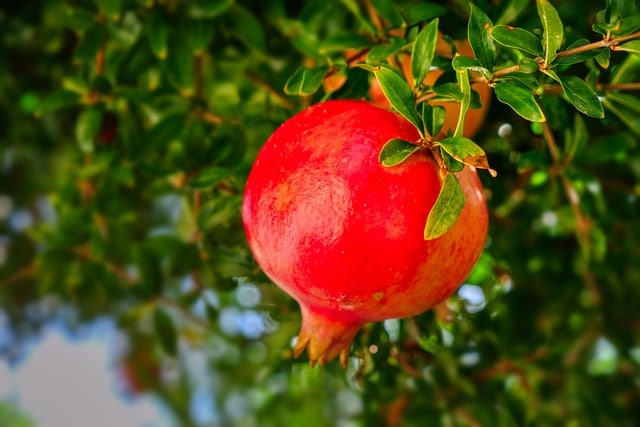
Let’s start, as usual, with a bit of botanical information. The pomegranate tree (Punica granatum) is a shrub belonging to the Lythraceae family. This botanical family includes both small plants and trees. Among the trees, we have henna (Lawsonia inermis), which you may know for hair coloring or body painting in certain traditions. Among the non-woody plants, we have purple loosestrife (Lythrum salicaria), which grows near waterways. Both henna and purple loosestrife are rich in tannins, and we will see that it seems to be a common theme in that family.
The pomegranate tree is cultivated in Mediterranean climates. It loves sunlight—we’re in the same zone as the olive tree and the almond tree. It originates from Western Asia, and it spread (through human migration and trade) throughout Eastern Asia, Asia Minor, and eventually the Mediterranean countries. Pierre Lieutaghi, a famous French ethnobotanist, explains that along with fig and grape, pomegranate was probably one of the first crops domesticated by Neolithic farmers in those regions.
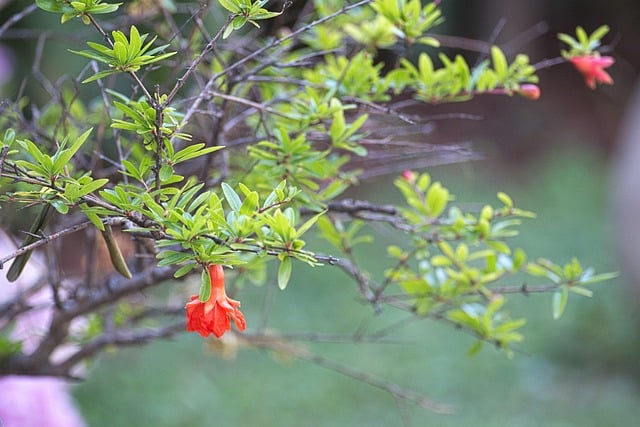
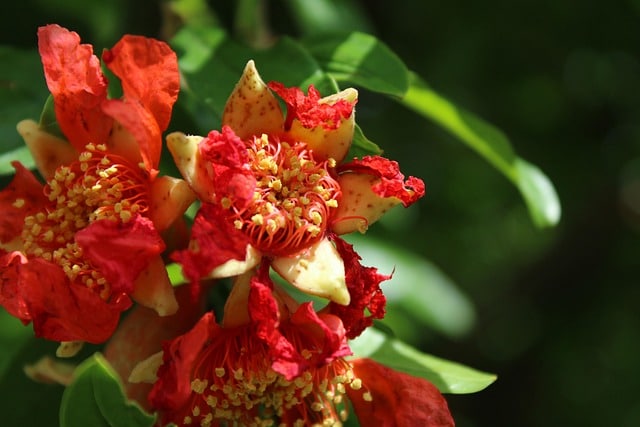
I don’t know if you’ve seen the red flowers in June and July; they are magnificent. Then the fruit develops. It matures late and can remain on the tree until winter.
The tree needs well-drained soil to avoid water stagnation around the roots. It tolerates limestone and poor soils, just like those in my area.
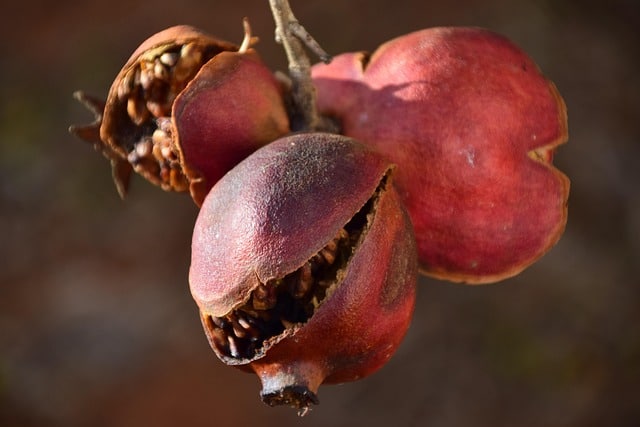
It’s drought-resistant once well established (after 2–3 years). But if you want to produce large, juicy, sweet fruits (the kind that burst open because they’re so full), regular watering during flowering and fruiting is recommended.
As for maintenance, it’s a tree with few pests, requiring little labor—just pruning every 2 to 3 years to stimulate fruit production.
A very interesting point is that pomegranate is a zero-waste fruit. You can eat the pulp, the rind is medicinal (as we’ll see), and the seeds produce an oil highly valued in cosmetics.
OK, let’s review the traditional uses of pomegranate—because they go way back!
Pomegranates have been found in Egyptian tombs dating back to 2500 BCE. The Phoenicians—great explorers that they were—were likely responsible for its cultivation in North Africa. Then the Arab civilizations introduced it to Spain in the early 8th century. The city of Granada is named after the tree, after all.
Because it was cultivated so early in human history, we find very ancient medicinal uses.
The first notable use is as a worm-killing agent, including tapeworm, both in humans and animals. This is mentioned in the Ebers scroll, dating to around 1500 BCE. It appears in the writings of Dioscorides, in his famous De Materia Medica (dating to the 1st century BCE). The root bark was used in that context. But be careful—the bark is also toxic because of its alkaloids. This is why it is effective for killing worms. It is no longer used today because of the risk of toxicity.
As we’ll see in a minute when we talk about its constituents, the different parts of the tree contain significant amounts of tannins. This astringent effect has been used throughout the centuries. So it astringes any tissue it is in contact with. Like all plants rich in tannins, it shrinks inflamed mucosa and slows down fluid loss and microbleedings.
Let’s get a little more specific. Dioscorides explains that it can tighten loose gums. Arabic physicians used it for hemorrhoids and bleeding. The fruit juice was used for sore throat—which is a good example of inflammed and swollen tissues.
For diarrhea, entire fruits were placed in clay pots and dried in the oven, then ground and taken as a powder.
Pomegranate is used in Chinese, Tibetan, and Mongolian traditional medicine (1), to slow down bleeding, discharges, and excessive diarrhea. As you can see, the recurring theme here is a drying energetic profile—it reduces fluid and blood loss caused by inflammation or tissue damage.
The fruit rind, once called malicorium in old writings, was used to tan leather—proof of its high tannin content. The flowers, called balaustium, also had strong astringent properties and were used as tea.
Let’s now look at the constituents of the different parts of the plant. Knowing the constituents will help us understand the traditional and modern uses of pomegranate.
Let’s start with the bark. As mentioned earlier, the bark of the root and trunk contains alkaloids such as pelletierine, named in honor of a French pioneer in plant chemistry (his name was Pierre Joseph Pelletier). And for the little story, Pelletier, along with his colleague Caventou, also isolated quinine and caffeine in the 1820’s.
The alkaloids of the bark are responsible for the anti-tapeworm effect—and also for the toxicity in humans.
The bark also contains tannins, phenols, flavonoids, sterols. So there is a strong possibility that the bark has other interesting properties, but its use is extremely limited today and even strongly discouraged to avoid toxicity. So no usage of the bark today.
Now let’s move on to the leaves. They contain tannins and flavonoids. They give the leaves anti-inflammatory, antioxidant, neuroprotective, antiviral, and anticancer properties (reference here… in French).
They’re also rich in minerals such as calcium, potassium, and iron. Young leaves contain higher potassium levels, while older leaves contain more calcium and iron. Although with so much tannin content, we may wonder if absorption of the mineral part will not be partially bloqued by tannins. Probably.
Now, what about the fruit rind? Well, it is very rich in tannins as well (surprise!)—especially the white inner layer beneath the colored skin. It can contain up to 26 % of tannins in dry weight, according to some studies (3)—a huge amount for a plant part.
The rind contains different types of tannins (like gallic and ellagic acids). But it also contains coumaric acid, flavones (in the yellow pigments), and anthocyanins (in the red pigments). This makes the rind anti-inflammatory, antioxidant, and antiseptic.
As for toxic alkaloids, one study reports that they can be found in the fruit rind (4), depending on the test used—probably not in meaningful quantity, but worth noting. Recent studies show that fruit rind toxicity is low to negligible at “normal doses”.
What about the flowers? Well, they contain the same compounds found in the fruit rind, such as gallic acid and ellagic acid (5). They also contain ursolic acid (5), a triterpene that brings anti-inflammatory, anticancer, and neuroprotective properties. The flavonoids of the flowers contribute to its antioxidant and anti-inflammatory effects.
So, could we add those magnificent pomegranate flowers in tea blends? Could they act as antioxidants and overall protectors? And add some color and some beauty to a blend? Probably.
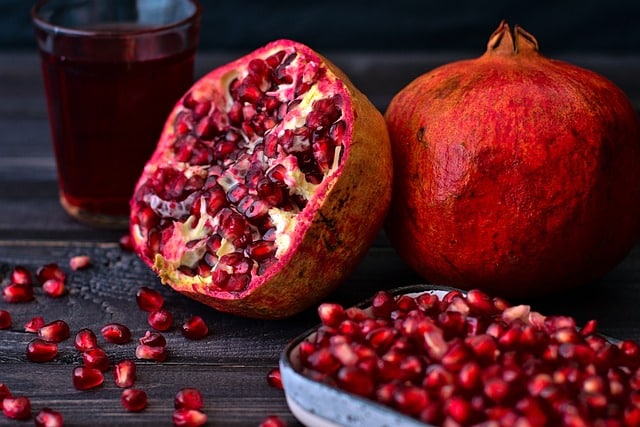
As for the fruits, they contain vitamin C (though I could not find precise quantities in studies), a good amount of tannins (you’ve surely noticed the astringent, mouth-puckering feel of the juice), anthocyanins, flavonoids, and phenolic acids. In other words, the juice is an excellent antioxidant cocktail.
They also contain sugars, citric and malic acids, which, together with ascorbic acid, give the fruit its sweet and acidic taste.
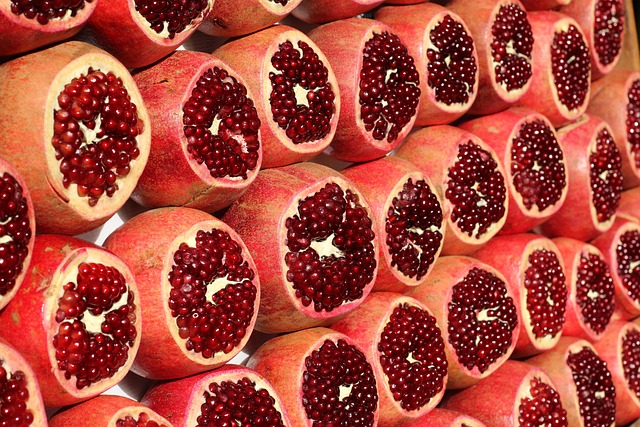
Let’s move on to practical applications. Let’s play a little game here. Let’s assume we know nothing about the scientific literature. We also don’t have all the constituent analyses, and we rely purely on taste and mouthfeel.
We immediately notice the strong astringency. Yes, the tannins, them again! If we were to rank astringency in a tea preparation, the leaves would be the most astringent, followed by the fruit rind, then the flowers, then the juice. I’ll put the values in a table on my site so that you can see the amount of tannins per gram of dry weight for the different plant parts.
| Part of the pomegranate tree | Tannin content (hydrolyzable), mg/g dry weight, aqueous extract (infusion) |
|---|---|
| Fruit juice | 32.86 |
| Flower | 57.04 |
| Fruit rind | 62.71 |
| Leaf | 64.40 |
We would choose the part of the plant depending on how strong an astringent effect we want. And we obviously avoid the bark due to toxicity risks.
We would use it to “tan” the skin and mucous membranes—that is, in any situation where these tissues have lost their integrity, are swollen, flaccid, leaking fluid due to strong inflammation. Sorry for the image, but you really need to visualize the kinds of situations where tannins shine. We are not talking about mild irritations here. These used to be medical indications for tannins in the past, before modern pharmacy brought its molecules. And of course, these may require medical intervention, so please be careful.
Dr. Valnet, one of our famous French herb doctors, recommends pomegranate flowers (as a tea) for female discharges such as leucorrhea (which is mucus discharge caused by infection, for instance), heavy periods (which we call menorrhagia), or bleeding outside of menstruation (which we call metrorrhagia). Valnet only mentions metrorrhagia—I’m not sure why; perhaps based on his observation. But logically, the plant should also help with menorrhagia.
I have no personal experience using pomegranate for these purposes, so I cannot tell you which form or quantity to use. But perhaps a simple juice would help. Maybe a decoction of fruit rind would work better. Maybe the leaves or flowers, combined with other astringent herbs like white dead-nettle, blackberry leaf, purple loosestrife, or lady’s mantle.
Similar blends can be used for diarrhea.
You can use pomegranate for a sore throat, just like you would use a blackberry leaf tea. The more swollen the throat and tonsils, the more you’d choose highly astringent parts—flowers or leaves or fruit rind. Used as a gargle, after medical consultation to make sure you don’t have strep throat.
For gingivitis, you can use a decoction of fruit rind or an infusion of leaves or flowers as a mouthwash. You can make it a bit concentrated since you’re spitting it out.
Fruit rind was used in the “Countess’s Ointment,” an astringent ointment probably meant for mature skin needing tightening and firming. It appeared in the Madrid pharmacopoeia in the 1800s. Today, we could maybe combine the astringent effect of the rind with the richness of the seed oil to make a firming cream.
If you only had pomegranate rind powder and a slow-healing wound, its astringent and antibacterial nature could probably be useful. The idea would be to finely sift the powder and sprinkle it on the damaged area to promote healing—of course not for deep wounds and never as a substitute for medical care.
The juice is pleasant to drink—sweet, tangy, refreshing. It was considered a fortifier during fatigue or convalescence. As we’ve seen, it’s rich in vitamins and minerals, so it makes sense for filling deficiencies. One glass per day, diluted if necessary. I’ve had some of my aging male clients in my private practice use it to reduce nighttime urination when there is prostatic hyperplasia.
I’ll end this episode by giving you the traditional recipe used to eliminate tapeworm. It’s a preparation with toxicity, so today, please, do not use it, since safer options exist. But it’s interesting to see what previous generations did—you never know, it might come in handy someday.
The recipe goes back to a Dr. Laboulbène, cited in later work of French herbal authors. Laboulbène was a French physician expert in parasites, known in the 19th century for his research.
Here is the preparation:
Macerate 60 g of pomegranate root bark in 2 glasses of water for 24 hours. Boil it down to 1 glass. Drink in the morning in 3 doses, 15 minutes apart. Very bitter—can be flavored with mint and sweeteners. May cause nausea. In fact, severe nausea, according to what I’ve read.
An hour and a half later, take a purgative tea made with one tablespoon of senna and one tablespoon of buckthorn bark per cup. A powerful laxative.
For intestinal worms and other parasites, old medical texts always follow this two-step pattern: first kill the parasite (whether we are talking about pumpkin seeds or more toxic agents like pomegranate bark or male fern—do NOT play with those please), then followed with a strong laxative to expel the parasite.
I couldn’t let you go without answering the burning question: “So what about grenadine?” That very sweet French syrup that many kids of my generation have consumed.
I’ll quote Pierre Lieutaghi, one of our famous ethnobotanist:
“In Spain, real grenadine was prepared by mixing 4 parts pomegranate juice with 7 parts sugar in a jar that was gently shaken several times a day until the sugar dissolved. The syrup could be heated slightly to clarify it, then filtered through paper. Diluted with iced, sparkling, or still water, it made a delicious and very refreshing summer drink. The ‘grenadine’ served in cafés and bars today is, of course, nothing more than cheap sugar syrup colored with artificial dye, which—unfortunately—is often given to children who would much prefer real fruit juice.”
Thank you, Mr. Lieutaghi. And thank you for staying until the end. I will be back very soon for the second part of this discussion on the pomegranate tree and its fruit, which will focus on modern clinical research.
(1) Li H, Ruan J, Huang J, Yang D, Yu H, Wu Y, Zhang Y, Wang T. Pomegranate (*Punica granatum* L.) and Its Rich Ellagitannins as Potential Inhibitors in Ulcerative Colitis. *Int J Mol Sci.* 2023 Dec 16;24(24):17538. doi: 10.3390/ijms242417538. PMID: 38139367; PMCID: PMC10744232.
(2) Moga, M.A.; Dimienescu, O.G.; Bălan, A.; Dima, L.; Toma, S.I.; Bîgiu, N.F.; Blidaru, A. Pharmacological and Therapeutic Properties of *Punica granatum* Phytochemicals: Possible Roles in Breast Cancer. *Molecules* 2021, 26, 1054. [https://doi.org/10.3390/molecules26041054](https://doi.org/10.3390/molecules26041054)
(3) Fischer, Ulrike A., Ariane V. Jaksch, Reinhold Carle and Dietmar Kammerer. “Influence of origin source, different fruit tissue and juice extraction methods on anthocyanin, phenolic acid, hydrolysable tannin and isolariciresinol contents of pomegranate (*Punica granatum* L.) fruits and juices.” *European Food Research and Technology* 237 (2013): 209-221.
(4) Alexis Vidal; Adyary Fallarero; Blanca R Peña; Maria E Medina; Bienvenido Gra; Felicia Rivera; Yamilet Gutierrez; Pia M Vuorela. (2003). Studies on the toxicity of *Punica granatum* L. (Punicaceae) whole fruit extracts. 89(2-3), 0–300. doi:10.1016/j.jep.2003.09.001
(5) Laurindo LF, Barbalho SM, Marquess AR, Grecco AIS, Goulart RA, Tofano RJ, Bishayee A. Pomegranate (*Punica granatum* L.) and Metabolic Syndrome Risk Factors and Outcomes: A Systematic Review of Clinical Studies. *Nutrients.* 2022 Apr 16;14(8):1665. doi: 10.3390/nu14081665. PMID: 35458227; PMCID: PMC9032502.
(6) Elfalleh, Walid. (2012). Total phenolic contents and antioxidant activities of pomegranate peel, seed, leaf and flower. *Journal of Medicinal Plants Research.* 6. 10.5897/JMPR11.995.