
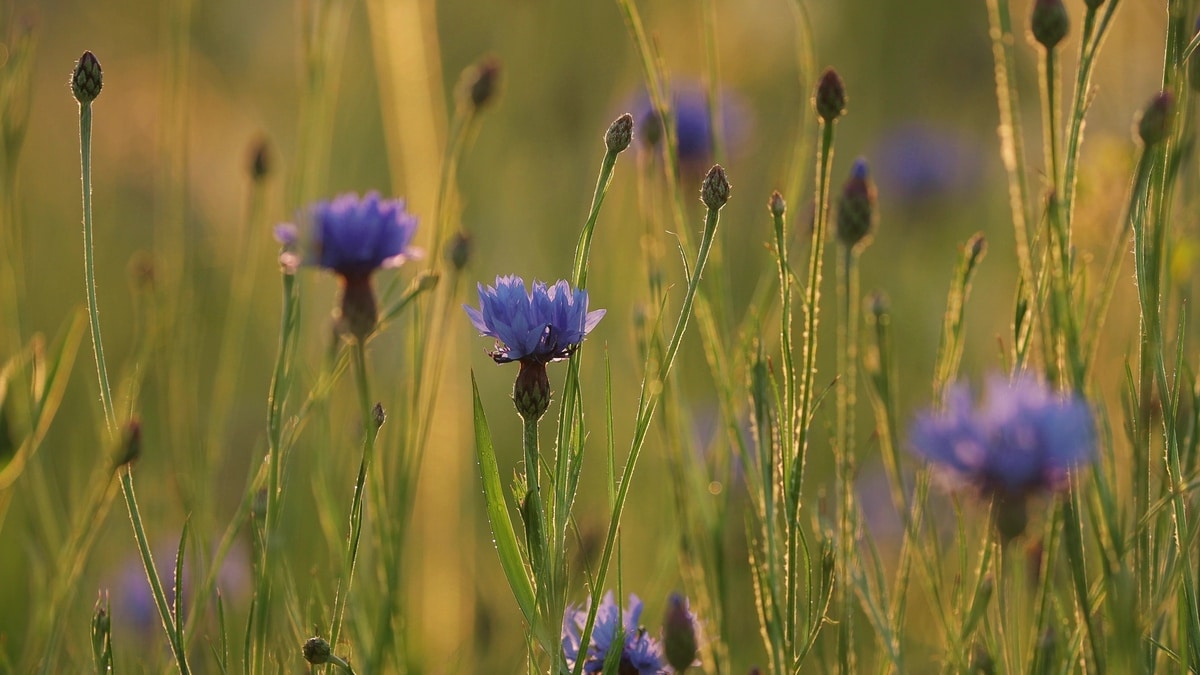
I don’t know if you have seen those spots of vibrant blue color in wheat fields. That’s what we call cornflowers, a medicinal plant so simple, so unassuming, and yet so stunning that it’s hard to believe it’s disappearing from our countryside.
It was once a common sight in farmland across Europe and North America. And now, well, it became a rare appearance in modern fields, pushed out by pesticides and industrial farming. But here’s the good news: it’s making a quiet comeback, and you can help bring it back—whether in your garden or in your tea blends.
Why should you care? Because the cornflower isn’t just pretty—it’s useful. For centuries, herbalists have turned to its deep blue petals to calm tired eyes, ease inflammation, and add a pop of color to tea blends. And let’s be honest: in a world of overcomplicated wellness trends and super complicated formulations and mixes in capsules, there’s something refreshing about a plant that does just a few things but does them well.
You guessed it; in this episode, it is my pleasure to present a traditional medicinal plant we like very much here in France. Cornflower.
Before we start, a quick but important reminder: I am not a doctor, pharmacist, or licensed healthcare professional. The information shared in this episode is for educational purposes only. It is not intended to diagnose, treat, or cure any condition, and it does not replace professional medical care. Always consult your physician before starting any new herbal protocol, especially if you are pregnant, nursing, or taking medication.
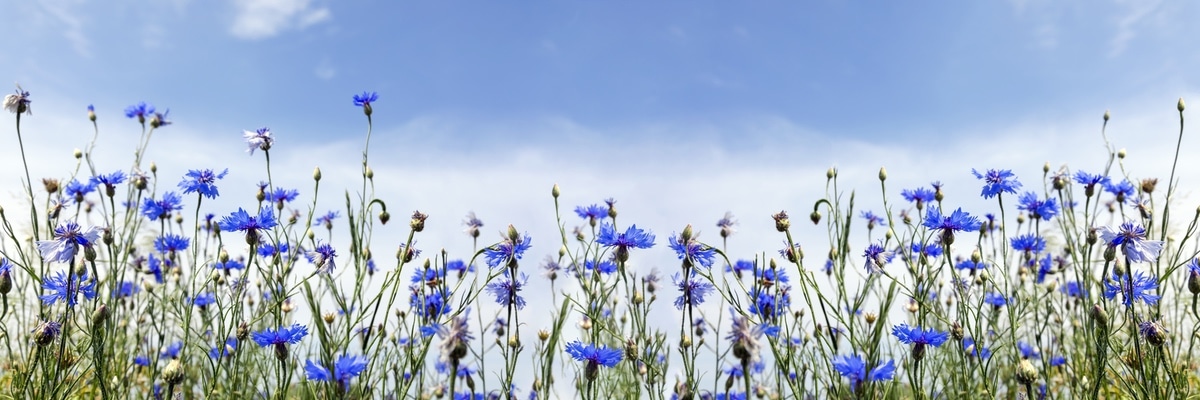
Cornflower is an annual plant. Its Latin name is Centaurea cyanus. It belongs to the Asteraceae family, a very large family that contains many medicinal plants. It’s a type of centaury; its flowers look like those of its perennial cousin, Centaurea montana.
You won’t find it growing just anywhere. And it is not as urban as dandelions or shepherd’s purse. This is a true field dweller. Hence its name. In the past it often grew as a weed in cornfields, and here “corn” is to be taken in the broader sense of grains (so it could be in fields of wheat, barley, rye, or oats).
The cornflower loves cultivated fields. So you’d think, given how much farmland there is, that it would grow everywhere. Unfortunately, the opposite is true. It’s highly sensitive to pesticides and is disappearing fast.
Some regions are concerned about its decline. Maybe this is the perfect excuse to plant some in your garden! If you gather them in the wild, always pick from areas where they grow abundantly, and only take a small amount. And never near conventionally farmed grain fields—only organic ones.
In herbalism, the part of the plant we use is the beautiful blue flower. When properly harvested and dried, it retains a deep blue for many months.
In terms of harvesting & drying :
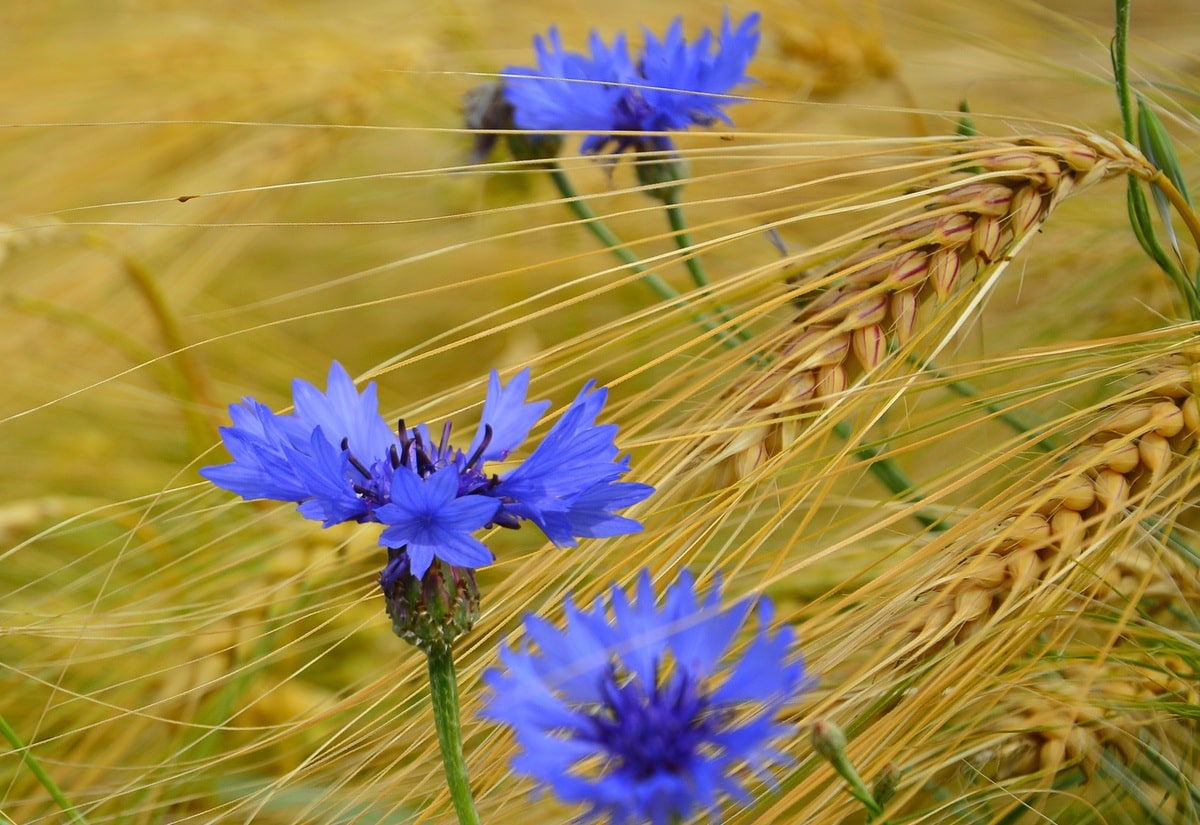
Herbal stores in France often use cornflowers to make their herbal tea blends more appealing to the eye. And here is a fun fact: they’re part of the original Lady Grey tea recipe (though modern versions may vary). You might know Earl Grey, which is a black tea flavored with bergamot. Lady Grey is similar but includes more citrus notes and is milder in bergamot, and it should have a few cornflower petals in it.
In terms of constituents, the flower contains:
This adds up to a very promising profile: antioxidant, tissue-protective, anti-allergy, and anti-inflammatory. Historically, in France, cornflower has been used as a diuretic for cystitis, for joint inflammation, as a blood purifier (what we call a “depurative” plant).
However, there is one set of indications that seems to bubble up over all the other ones. According to French practice, it is especially useful for one organ in particular—the eye.
In my experience, for internal use, it’s a bit mild (in other words, it is not a very active plant, but it can come as a nice complement to other plants in the blend). However, for external applications, it’s highly effective.
The energetics : cooling and drying.
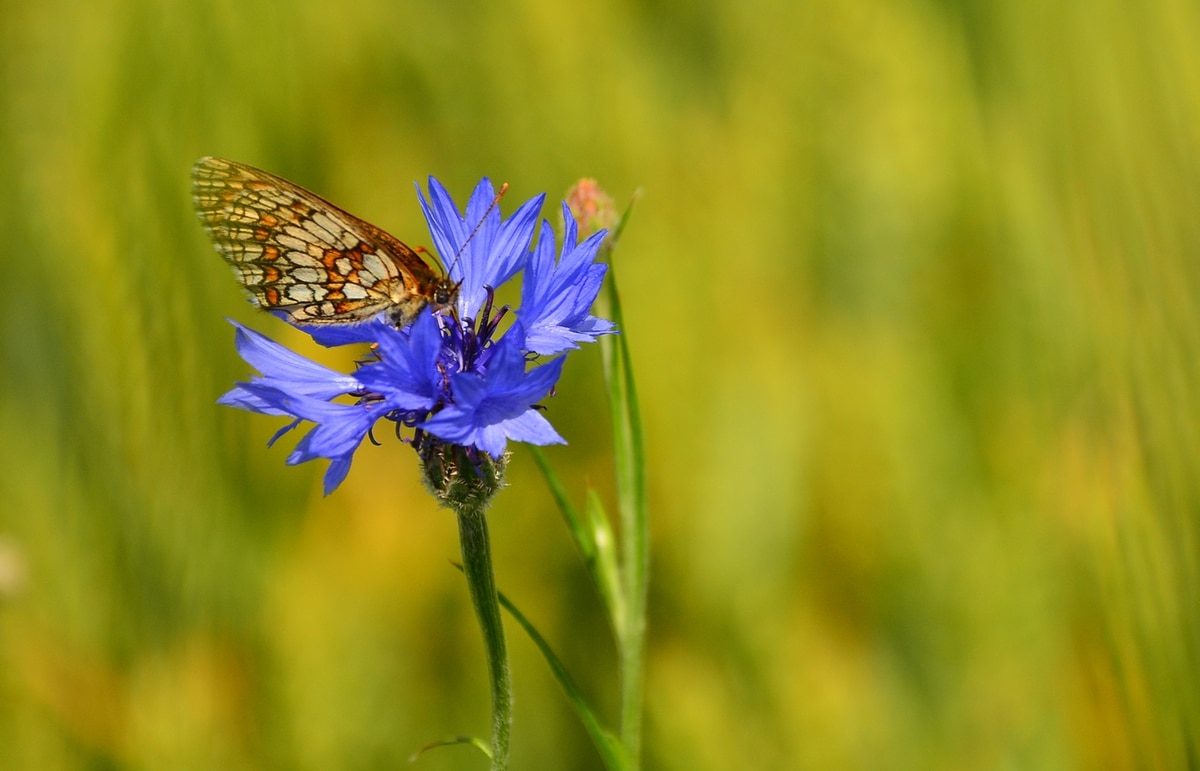
Which brings us to its French traditional use as an “eyeglass-breaker”.
Although it will not give you the vision you had when you were in your 20s. But it’s fantastic for caring for your eyes. You can use it to relieve tired, puffy, irritated eyes (which is common after long screen time or exposure to pollution if you live in a big city, for instance). Its astringent properties help tone the eye’s mucous membranes and the surrounding skin and tissues (the eyelids, and the region under the eyes).
Here is how to use it:
Cornflower can help with allergic reactions (red, watery, itchy eyes). And here, for best results, you can apply directly to the eye. But there are a few precautions to take. So here is how to prepare an eyewash, or an eye bath.
Here is a great combo: Mix with plantain (any type of Plantago will do) and eyebright (Euphrasia officinalis)—1/3 of each in your preparation. But really, if you only have cornflowers, that will be just fine.
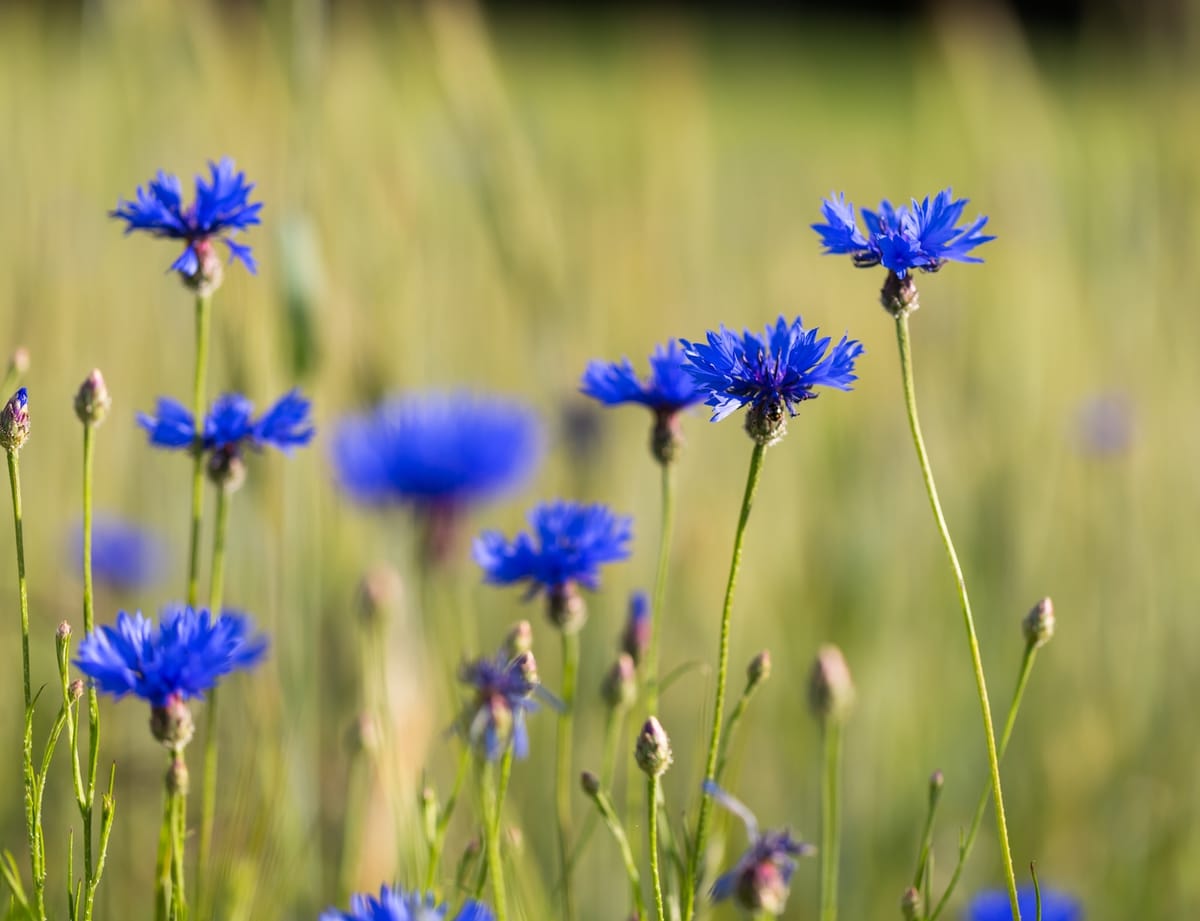
Dr. Valnet recommends cornflower for conjunctivitis, but hygiene is critical here because it is highly contagious! That said, you can also use the dropper method to relieve the eyes. Again, good combinations with plantain, eyebright, and Roman chamomile.
If you don’t have access to the flowers or don’t want to prepare a decoction, hydrosols are also a good option. However, my preference always goes to the whole plant—it’s the best way to learn self-sufficiency instead of relying on processed products.
And that is all I had for cornflowers. Quite simple, so beautiful, and it brings much relief for tired or inflamed eyes.
Thanks for being here. I will see you very soon for the next episode of TheFrenchHerbal!
(1) Garbacki N, Gloaguen V, Damas J, Bodart P, Tits M, Angenot L. Anti-inflammatory and immunological effects of Centaurea cyanus flower-heads. J Ethnopharmacol. 1999 Dec 15;68(1-3):235-41.
(2) Escher GB, Santos JS, Rosso ND, Marques MB, Azevedo L, do Carmo MAV, Daguer H, Molognoni L, Prado-Silva LD, Sant’Ana AS, da Silva MC, Granato D. Chemical study, antioxidant, anti-hypertensive, and cytotoxic/cytoprotective activities of Centaurea cyanus L. petals aqueous extract. Food Chem Toxicol. 2018 Aug;118:439-453.