
When you pick a bottle of herbal capsules in your favorite store, you need to know what’s inside. Obvious, right? Well, not that obvious based on what I’m hearing from herb lovers.
If you open a capsule, you will see some kind of powder. And you will be tempted to think that they are all the same. A powder is a powder. And it’s just the plant. Nothing else, nothing added, nothing transformed. Well, think again.
In reality, there are two big types of preparations that can go inside an herbal capsule. The whole plant in powder or a dry concentrated extract. And you need to know which one you have in order to use the product properly.
That’s the purpose of this episode. We will look inside an herbal capsule, and try to understand the different types of powders.
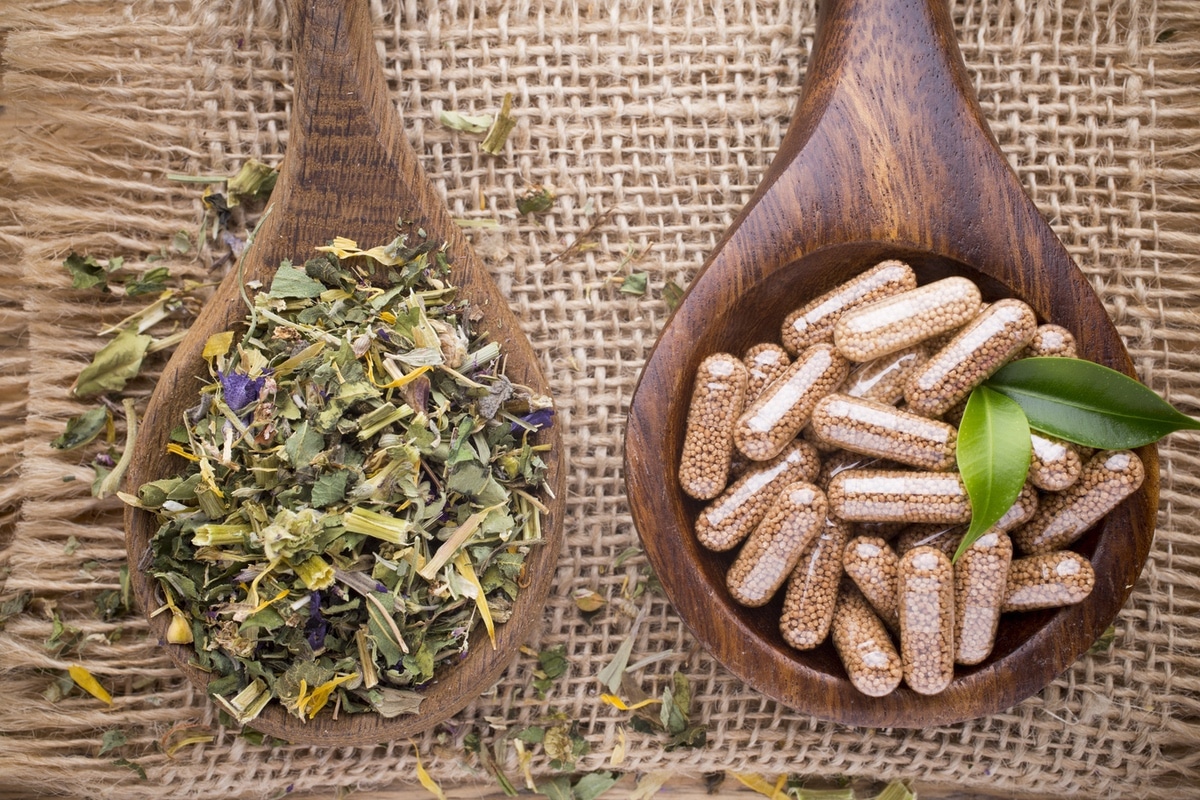
Let’s start with the simplest form: the whole herb ground into a powder.
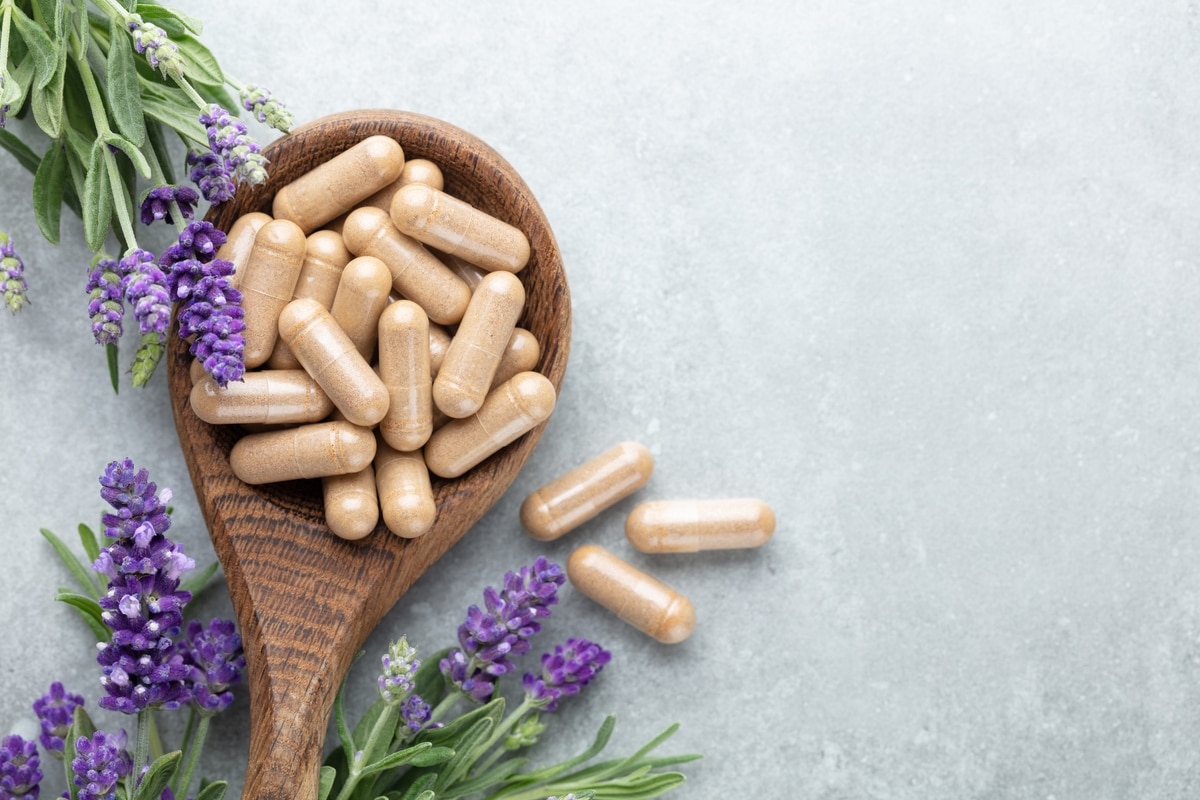
This is precisely what it sounds like. Well, almost. A manufacturer buys some bulk dried herb from a supplier—whether it’s leaves, flowers, roots, barks, or seeds—and they will grind it into a fine powder. This powder will be put into a capsule shell.
You have different sizes of shells, starting with 000 (the largest one, very big and not very common), then 00 (which is already big), then 0, 1, 2, 3, 4 and 5, 5 being the smallest (quite tiny actually). 00 and 0 are the most common for herbal supplements.
There is a whole discussion around what the shell is made of. Gelatin capsules are animal-derived. Plant-based capsules are made from HPMC or other semi-natural, semi-synthetic compounds suitable for vegetarians/vegans. Sometimes they contain other ingredients, like coloring agents. The white capsules often contain titanium dioxide, which is not that great to absorb. Anyway, there is a whole debate here, which I will not cover because today, I just want to explain what goes inside this empty shell.
The manufacturer will select a size and type of shell, then fill it with the plant powder. The herb is in its simplest form, just cut into very tiny bits to make it more convenient to swallow and absorb.
You can make these types of capsules yourself at home, by the way. You can buy kits to fill your own empty capsules. A simple coffee grinder will do the trick to grind the herb. Then you have to sift the powder using a sieve. You keep the fine powder to fill your capsules, and what’s left in the sieve, the larger parts, goes back into the grinder for another spin.
There are actually good reasons to choose whole herb powder capsules. First, in theory, you know exactly what you’re getting—it’s the whole plant, nothing added, no complicated transformation. That is, if the manufacturer has not cheated, which unfortunately can happen in the world of supplements, especially if the supply chain is complicated with lots of suppliers selling to intermediaries, etc.
Not sure what the situation is in your country, but in France, we can find more and more growers that grow the plant, then do the transformation for us. They mostly do tinctures, infused oils, tea blends, etc. But sometimes they do capsules. And when they do, the traceability is very straightforward – from the seed to the capsule. They do it all.
But then, the more players you add in the supply chain, the more opportunity to cheat. And I am not just making this up; we have lots of studies showing adulteration of herbal products. One study shows that 27% of all herbal products are adulterated (Ichim 2018). Almost a third! Outrageous, right? It goes up to more than 37% for weight-loss supplements (Phan 2025). And 61% for sexual enhancers for males, which are sometimes spiked with Viagra®! (Gilard 2014) Crazy. All references are on my website as usual.
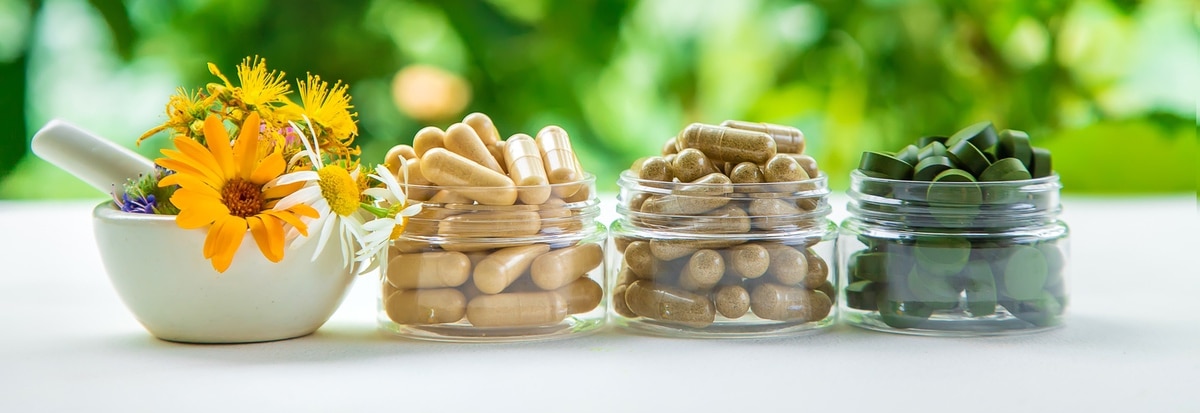
What happens, too, is that not the best-looking plant parts go in the grinder. In France, we have this expression, “the bottom of the bag”. You see what I mean? Imagine a big bag of beautiful feverfew flowers. You sell the best parts for a good price, then when the bag is almost empty, you end up with the debris. Small pieces of stems, little bits that do not belong there, a bit of soil, etc. The bottom of the bag is a perfect candidate to go into the grinder, if you are a supplier that does not care about quality and ethics, of course. Hey, it will be cheaper.
One last point, manufacturers will often add anti-clumping agents like magnesium stearate, bulking agents like rice bran, etc. Not ideal, but that’s the way it goes.
Anyway, let’s simplify for the sake of this argument and assume that what’s written on the label is accurate, that the powder has not been spiked, that the supplier did not use just the bottom of the bag. Just the whole plant ground into a powder. And you buy a bottle of those capsules.
At this stage, I encourage you to open the capsule, empty it, wet your finger, get some of the powder on your finger, and taste it. Check whether the powder tastes like the actual plant.
How do you know what the herb tastes like? Well, if you are serious about herbalism, you will have to build your own “library” of tastes. If you buy capsules of valerian root powder, it should taste and smell like valerian roots. How do you know? Well, maybe you have bought a good valerian tincture made from fresh roots directly from a grower or a trusted lab, and you have trained your taste buds on that.
In my experience, the quality of whole-herb capsules varies a lot. And let me tell you, I have tasted many herbal capsules. Everything I could get my hands on during my first years of practice. My clients would sometimes bring me their capsule bottle; I would open one capsule and taste it. It could be fine, or I could say “no wonder why this product is not helping you; it tastes like… nothing”.
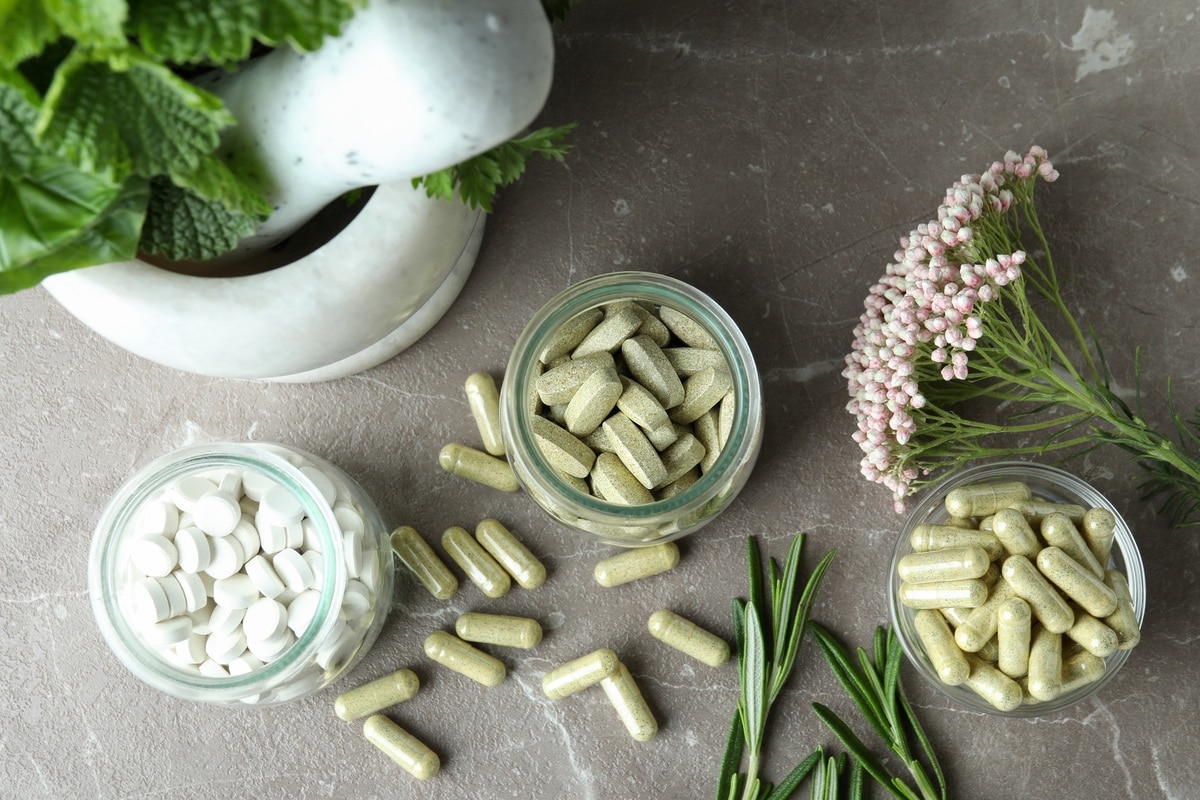
Now, a crucial point. Here is where whole herb powders actually have a real limitation.
Not all herbs tolerate being dried and powdered. Some herbs are used specifically for their aromatic compounds—the volatile oils that give them their flavor, smell, and some of their therapeutic action.
Think about fresh mint. When you crush fresh mint leaves in your hand, you smell that remarkable minty aroma. Those are volatile essential oils. Now, when you dry that mint and grind it into powder, something happens: many of those aromatics evaporate. They are volatile, meaning they literally float away during the grinding process. If it gets to your nose, it is not in the plant anymore. The powder still has some benefit, but you’ve lost a significant part of what made that herb special. You lost that during grinding.
And then, since the herb has been cut so small, there will be a much larger surface that is in contact with the air. So the powder will age much quicker than the whole uncut herb. That’s a shame.
This is true for many herbs: thyme, oregano, rosemary, basil, lavender, peppermint, lemon balm, German chamomile, Roman chamomile, and countless others. The drying and grinding process will damage them.
Even plants like burdock or elecampane, the root is kind of aromatic for burdock, and very aromatic for elecampane. I don’t like to see ground and powdered versions. I think that’s a shame. Again, the whole herb capsules will retain some benefits, but not all of them.
Let me take a bit of a tangent here. I love tulsi, also called holy basil. I have grown many types in the garden. I love the fragrance. They all have a different aromatic profile. At some point, I heard about manufacturers that were selling ground tulsi. And I thought… what? No way! What a shame! But I am a very curious guy, so I bought samples from 2 labs that I know well and that specialize in Ayurvedic plants. And I was very pleasantly surprised. That powder was quite aromatic. But still, nothing compared to a fresh plant tincture or even a tea made from the recently dried, uncrushed leaves.
So as a rule, if the herb is aromatic or fragile or doesn’t tolerate drying well, then no grinding, and no whole herb powder capsules. Well, at least that’s my rule.
One last point about this first type of capsule: whole herb powder capsules are generally less expensive than concentrated extracts because the manufacturing process is straightforward. You’re not paying for the cost of extraction and concentration.
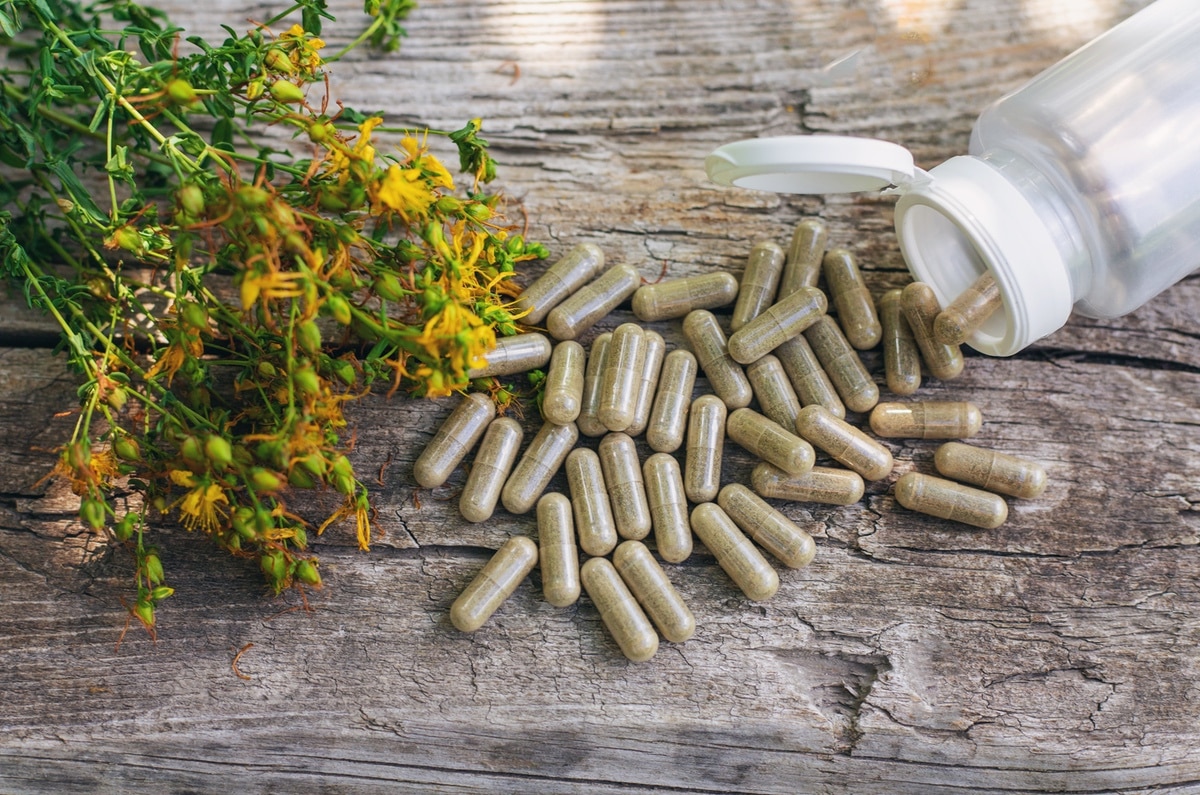
Alright, now let’s talk about the second big type of powder you can find in a capsule. We call it a “concentrated dry extract”.
This is where things get a little more sophisticated. To make that extract, the first step is to do an extraction using a solvent. Usually water, alcohol, or both, or something else. So the starting point is some kind of a strong tea or a tincture. Then the liquid will be evaporated, usually in a vacuum to make sure the aromatics are not lost. You end up with a powder, which will be put in capsules. And there will be other ingredients to prevent that fine powder from becoming chunks.
This powder, the dry extract, is a lot more concentrated than the whole plant. And the lab is supposed to give you the concentration. 5:1 or 8:1 or 10:1, depending on the product. If you see 4:1 at the back of the capsule bottle, that means 1 g of this concentrated extract is equivalent to 4 g of the dried plant. If you see 10:1, then 1 g of the extract is equivalent to 10 g of dried plants.
You need this information to know what type of dosage you will use. Should you take 1 or 2 or 3 capsules a day? It depends. Very often, we end up following the instructions on the labels. But over here in France, the recommended dosage on the label is often a little too low; the labs are very cautious, and they are following the European labeling rules, which are also very precautionary.
To know how to dose your capsule, you first need a good reference book, written by experienced practitioners. For instance, the outstanding reference book from Simon Mills and Kerry Bone “Principles and Practice of Phytotherapy“. I go to the valerian monograph, and I see “3 to 9 g/day of the dried root/rhizome”. Yes, I know, it’s a wide range, but we herbalists need those ranges because we could work with chronic/mild or acute conditions.
Now let’s assume that I buy a concentrated dry extract of valerian that is 6:1. My dosage bracket now becomes “0.5 to 1.5 g of the dry extract”. I just divided the numbers by 6. So far so good? Now let’s assume that each capsule contains 250 mg of the extract. This means 2 to 6 capsules per day depending on the situation. Of course, you would always start with the lowest dosage. But you would allow for experimentation with the higher range if necessary, again based on solid references like Mills & Bone.
Now, I doubt the lab will write that type of dosage on the label. They are very cautious, and it’s very often something like “1 to 2 capsules a day”, or sometimes “1 to 2 capsules 1 to 2 times a day”. In France, as I told you, very often, the product is dosed too low for certain situations, based on the calculations I showed you.
Now, let’s make things a little more complicated. Let’s talk about standardization of an active compound in the product.
Here’s the key idea: plants contain thousands of compounds, and not all of them are equally active. A standardized extract guarantees the dosage of one specific compound in the product.
Why do manufacturers do this ?
In my practice, I have used standardized extract because I knew that one particular constituent is very active. It’s the case for milk thistle, for instance. We know that silymarine is very active. And just to be clear, silymarine is actually a collection of constituents. But anyway, extracts standardized on silymarine from reputable manufacturers work fine in my experience, so I have used those when convenient.
But for most other cases, it is very reductionist. I am sorry, ashwagandha is not just withanolides. Rhodiola is not just rosavins. St. John’s Wort is not just hypericin. Too simplistic. The herbal world is a lot more sophisticated than this.
So to conclude, let me tell you what I do in my work as a clinical herbalist. I am not saying it’s the best way; I am just saying it is one way that makes sense to me.
I am OK with herbal capsules. I use them with clients that do not have the time nor the patience to prepare an herbal tea, do not want the alcohol in a tincture, or maybe they are already overwhelmed with their life, travel a lot, and prefer capsules. I don’t judge. It’s a starting point. Sometimes we have to start small. We practitioners do our best to adjust to our clients. My goal is to slowly take them to a world of herbal tea blends, tinctures, syrups, and salves. But you need to start somewhere.
I do not like concentrated dry extract because I have attended conferences where independent labs have analyzed a whole range of those products, including from known manufacturers, and a lot of them are of poor quality because they buy from a supplier who buys from a supplier who buys from a supplier… very complex traceability. The lab is not trying to cheat us, but they are competing on prices, and they sometimes buy from the cheapest suppliers.
Once in a while, I have a client who comes with a bottle of capsules containing a concentrated extract. They tell me, “Hey, I already bought those, and I have a limited budget”. If the herb makes sense and I know the lab, I am OK with that. I look at the concentration ratio, and I try to recommend a dosage that will work for that person.
But most other times, I will go with whole herb capsules made from local growers ideally. If I need a particular plant that my local suppliers do not carry, I may try another manufacturer, and I will buy and sample their herbal capsules. I will taste them myself to get an idea of the overall quality of the lab. That may sound simplistic. I do not have a chromatograph in my mouth or in my nose. But it is the best I have. And by now, I trust my senses. I think you can do the same.
That’s it for today. I hope you found that discussion useful. If yes, do let me know. And if not, please let me know what type of subjects you would like me to cover. Thanks for being here; I will see you soon for the next episode of TheFrenchHerbal.
Ichim, M. (2019). The DNA-Based Authentication of Commercial Herbal Products Reveals Their Globally Widespread Adulteration. Frontiers in Pharmacology, 10. https://doi.org/10.3389/fphar.2019.01227.
Phan, D., Kongkaew, C., Heinrich, M., Dao, T., & Vo, T. (2025). From ‘traditional’ remedies to ‘modern’ supplements: a systematic review and meta-analysis of pharmaceutical adulteration in weight-loss natural products. Frontiers in Pharmacology, 16. https://doi.org/10.3389/fphar.2025.1594975.
Gilard V, Balayssac S, Tinaugus A, Martins N, Martino R, Malet-Martino M. Detection, identification and quantification by 1H NMR of adulterants in 150 herbal dietary supplements marketed for improving sexual performance. J Pharm Biomed Anal. 2015 Jan;102:476-93. doi: 10.1016/j.jpba.2014.10.011. Epub 2014 Oct 22. PMID: 25459948.
Caesar, L., & Cech, N. (2019). Synergy and antagonism in natural product extracts: when 1 + 1 does not equal 2.. Natural product reports, 36 6, 869-888 . https://doi.org/10.1039/c9np00011a.