
Motherwort has some character… I mean, you want to pick those beautiful flowering tops, and you end up with punctured fingers. You want to taste a leaf because you think it belongs to the mint family, so it must be pleasant, right? And wham, you get that bitter slap in your mouth. You think, “That’s disgusting; who would want to drink that?”
And yet, what a powerful herb. One that you can easily grow in your garden. One that is absolutely stunning when it flowers. And so useful in your herbal cabinet.
You guessed it; in this episode, we are talking about motherwort.
But before we start, a quick but important reminder: I am not a doctor, pharmacist, or licensed healthcare professional. The information shared in this episode is for educational purposes only. It is not intended to diagnose, treat, or cure any condition, and it does not replace professional medical care. In this episode, we will discuss heart, thyroid, and other types of issues that do require medical follow-up.

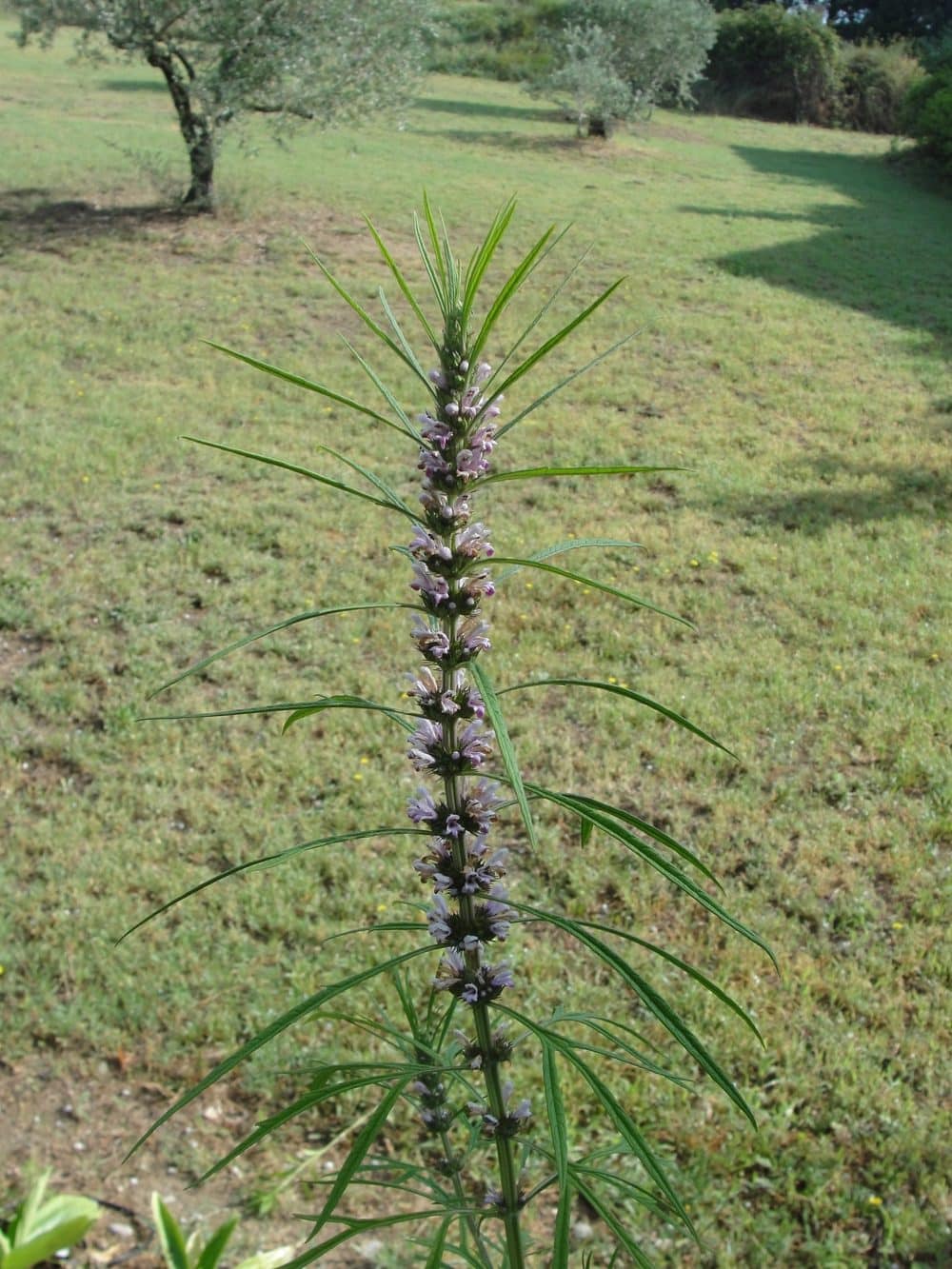
OK, so motherwort is a perennial plant that belongs to the Lamiaceae, the mint family. Its Latin name is Leonurus cardiaca.
Leonurus, literally “lion’s tail”, likely referring to the appearance of the plant’s flowers or seed heads.
Cardiaca, related to the cardiac functions. We will talk about that in a few minutes.
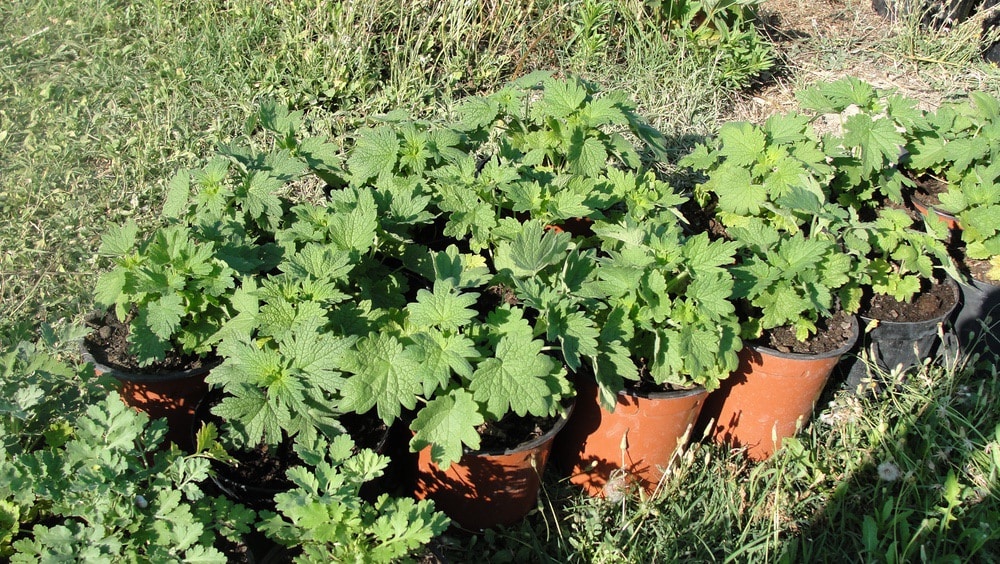
It is very easy to grow from seeds. I got mine years back from Strictly Medicinal Seeds (this is not a paid endorsement; I just love the team and the project). And since then, I have used the seeds from my own plants.
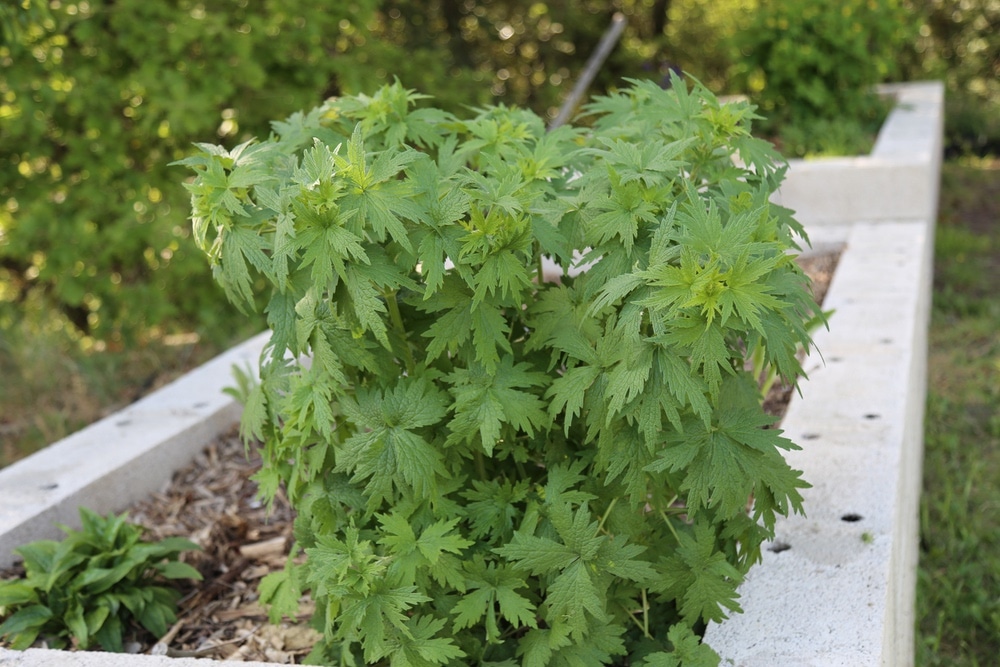
I have grown Leonurus cardiaca and Leonurus sibiricus; the properties are very similar. The plants are magnificent in the garden. I keep mine in an area with partial shade because the full sun is pretty strong in Provence, where I live, and I keep it well watered. Regular garden soil will do. It is not difficult to grow, but it does need regular watering.
I have never seen the plant in nature in France. The exception would be if it escaped from a garden. If it grows in the wild in your region, let me know; I am curious.
The parts used are the aerial parts, more specifically the leaves. You pick it before the flowering heads become prickly, from early spring when you have just the leaves, to the beginning of the flowering period. You can dry the leaves or use them fresh; we will discuss the preparations in a few minutes.
The big stalks are kind of inert, so you can compost them.
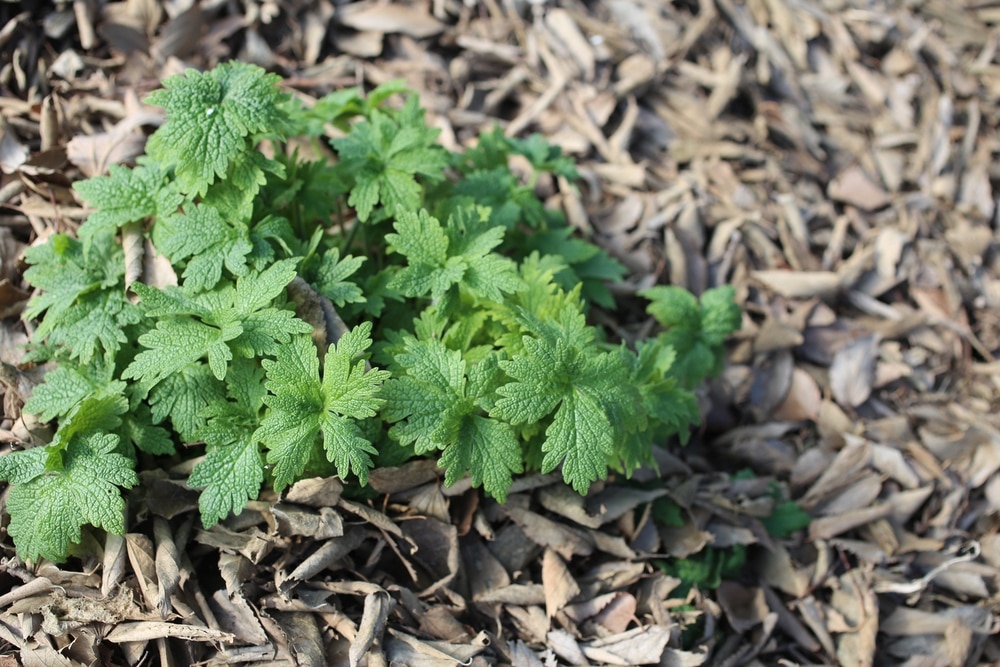
In terms of constituents, the mix is quite complex.
We could try to piece together the properties based on the constituents, but it will just give us a very partial picture. At the end of the day, it is a complex cocktail, and we don’t really know which constituent is responsible for what action. Although we have indications that the alkaloids participate in the cardiac properties, for instance, the flavonoids bring anti-inflammatory effects along with the iridoids, etc. This is a complex exercise. For practicing herbalists, much better to move to the properties.
In terms of taste, it is definitely bitter, a bit acrid, and maybe slightly aromatic.
The energetics are very cooling, calming, and drying.
OK, let’s talk about the properties and indications.
Let’s start with something easy to understand. It is a calming plant. It cools down a hot and overactive temper.
But let’s go beyond that and talk about a specific indication for motherwort. Anxiety and stress with heart palpitations. The person may suffer from poorly defined fears, anxiety, and anguish with the impression of chest tightening and a racing heart (so, palpitations) due to the anxiety.
To remember this property, let’s go back to the name “Motherwort”. Taking motherwort in these states of undefined fears is a bit like having a mother at our side—protective and reassuring, whispering to us that everything will be okay.
Very quickly, we see that motherwort works well when the heart participates in the situation. When the heart rate is erratic. Of course, the first thing to do here is consult a cardiologist. And if everything is fine and he or she tells you that it’s benign and it’s probably your nervous system playing tricks on you (as was my case a few years ago with extrasystoles), then motherwort can help.
Those arrhythmias, by themselves, are very anxiogenic. I know because I had them. I had extrasystoles a few years ago. I still have them once in a while. And they are not fun. Your heart literally skips a beat and then catches up by beating stronger for one beat. It feels weird; it gets to your nerves. So there is this huge interplay between the heart and the nervous system.
Motherwort will regulate the heart rhythm directly, but will also do a fine indirect job by regulating the sympathetic excess, the domination of the sympathetic nervous system that gets activated whenever we get into periods of stress.
On the French side, Dr. Paul Belaiche (Belaiche, 1983) studied motherwort in the early 1980s. He tested it on 64 patients with great states of stress and anxiety and suffering from cardiac rhythm issues. He noted the following actions.
Most patients in his study reported:
The association between motherwort and the heart dates back to ancient times. And here is a good combination: motherwort and hawthorn. Those two for distress of the emotional heart, and for distress of the physical heart, if there are no organic issues detected by your doctor, of course.
Let’s stay with the cardiovascular system and talk about hypertension. Motherwort is sometimes used in formulas against elevated blood pressure. And here again, please check with your cardiologist first. It will be particularly useful for blood pressure that varies a lot during the day. In the morning maybe you’re fine, and then mid-day there is a peak, then it goes down, and then it goes back up at night. This usually means the nervous system plays a role.
If the elevated tension stays more or less flat during the day, there are probably much better plants, although motherwort will have a generic antispasmodic action on the arteries (one of the alkaloids, leonurine, seems to be responsible for that action). So it will relax those smooth arterial muscles to bring the pressure down a bit. That said, I believe it is better suited for hypertension of nervous origin with this fluctuating component.
A study (Shikov, 2011) conducted on patients suffering from hypertension (stage I and II) accompanied by anxiety and sleep disturbances demonstrated that motherwort improves the person’s psycho-emotional status as well as their hypertension. Clear improvement was observed in 32% of patients, moderate improvement was observed in 48% of patients.
Now, what other condition do you know that creates a state of tension, anxiety, agitation, palpitations, sweating, disrupted sleep… if you think hyperthyroidism, you are correct. This is another key indication for motherwort.
Good pairing with bugleweed (Lycopus europaeus or other types of Lycopus). Lemon balm and hawthorn would also bring some welcome cooling and calming properties to the thyroid and the heart here. Again, this is a medical condition so work with your doctor first.
OK, now let’s switch gears a little bit. The common name for the plant is “Motherwort,” the herb of the mother, the herb of women.
Motherwort is very useful for stimulating the arrival of menstruation when it is either delayed or absent, particularly when these imbalances are due to a state of anxiety or stress (here we go again).
There is a phenomenon, not sure if you heard about it, called “pregnenolone steal”. There is a lot happening from a sexual hormone perspective when we are stressed. And it’s happening right in the adrenal glands.
I will simplify a lot, just for the sake of not getting lost. Pregnenolone (which is derived from cholesterol) is the starting point for the synthesis of all steroid hormones in the adrenal glands. And it can basically branch into two pathways: one producing DHEA and then testosterone and estrogens. The other branch produces progesterone and then cortisol.
Estrogen to regulate the menstrual cycle. Cortisol to regulate the stress response. Which one do you think has priority from a survival perspective? If you guessed cortisol production, you are correct. And this happens at the detriment of estrogen production. In other words, chronic stress can mess up the menstrual cycle through hormonal dysregulation.
Motherwort will work on both systems. It can help calm the person (we already discussed this), and also bring back function to the reproductive organs.
Cazin, one of our famous countryside French doctors of the 1800s, tells us that “a concentrated motherwort tea causes abundant menstrual flow.” This property can be welcome in cases of amenorrhea, lack of menses.
But wait, could it also be problematic if the menstruations are present and regular? Actually yes, it could mess up the cycle a bit. Let’s say a woman wants to use it to calm down an overexcited nervous system. And her cycle is fine. Well, it could provoke unexpected bleeding in this person. The plant is somewhat unpredictable in this regard. Have I seen that happen? Yes, I have, several times. So let’s keep that in mind.
Motherwort can also help a person get through painful periods with pain and cramps. What we call dysmenorrhea. Again, it will work better if this is accompanied by a state of stress or if stress makes the pain and the cramps worse.
Motherwort’s alkaloids have a slightly vasodilatory effect. This vascular effect probably also contributes to the decongesting effect on the uterine sphere, promoting better circulation and organ function. But if the circulation is already fine in this area, if there is no congestion, maybe that blood moving effect is a bit too much.
Let’s stay with women’s conditions and talk about menopause. The most common complaint is hot flashes. Motherwort, as we’ve seen, is cooling and calming in nature. It can be combined with sage (Salvia officinalis), sage bringing some warmth if the constitution of the person is already cold.
It is particularly indicated when there are palpitations or anxiety or both with the hot flashes.
Here is an old indication: absence of lochia. Lochia refers to normal vaginal discharge right after childbirth (containing blood, mucus, and other things to be evacuated).
Professor John King, a leader of eclectic medicine in the United States in the 1800s, considered motherwort superior to any other remedy for the absence of lochia after childbirth. He recommended internal use and external application as a poultice on the lower abdomen and achieved excellent results.
Of course, today, this situation will be handled by the medical profession in most countries.
In terms of forms and quantities.
If you want to use it as a tea, formulate a blend with other tasty herbs. If you wanted to calm the axis nervous system-heart, you could do a blend with hawthorn, rose petals, and fresh lemon balm, for instance. That is a lot more balanced.
The tincture is the preferred form.
In terms of precautions, there are a few you should be aware of…
And that is all I wanted to share regarding motherwort, and that’s already a lot.
I left several indications that I thought would dilute the profile of the plant. For instance, it has some digestive properties as a bitter, it is a diaphoretic, etc. But I love this simple trio of properties: action on the nervous system, on the heart, and on the female reproductive system. We add a fourth system, which is the thyroid. And we keep in mind that the overall energetics is cooling, calming, slowing certain functions. Although on the uterine blood circulation, it does have a moving, invigorating effect, sometimes a little too much.
And that goes a long way toward understanding what this complex herb can do for us. I hope I did not make this too complicated.
Thanks for being here. I will see you very soon for the next episode of TheFrenchHerbal!
Belaiche, « Phytothérapy », n°6, 1983
Shikov AN, Pozharitskaya ON, Makarov VG, Demchenko DV, Shikh EV. Effect of Leonurus cardiaca oil extract in patients with arterial hypertension accompanied by anxiety and sleep disorders. Phytother Res. 2011 Apr;25(4):540-3.