
I love basil. Just plain, culinary basil. It comes in all kinds of shapes and colors, and it adds wonderful tastes to your meals. One classic preparation in France for the summer is fresh tomatoes, slices of mozzarella cheese, a good, strong olive oil, and fresh basil leaves. Salt and pepper. That is a whole meal in itself.
But today, we are not here to talk about cuisine but to discuss the health benefits of basil. It is so simple that it is often ignored. And yet, you will find it in just about every kitchen and garden.
And I also want to address a mental block we all run into at some point when studying herbs: If it tastes good on my plate, it can’t possibly be a good remedy. Which, of course, is totally wrong. Basil is a major medicinal plant.
Before we start, a quick but important reminder: I am not a doctor, pharmacist, or licensed healthcare professional. The information shared in this episode is for educational and informational purposes only. It is not intended to diagnose, treat, or cure any condition, and it does not replace professional medical care. Always consult your physician before starting any new herbal protocol, especially if you are pregnant, nursing, or taking medication.
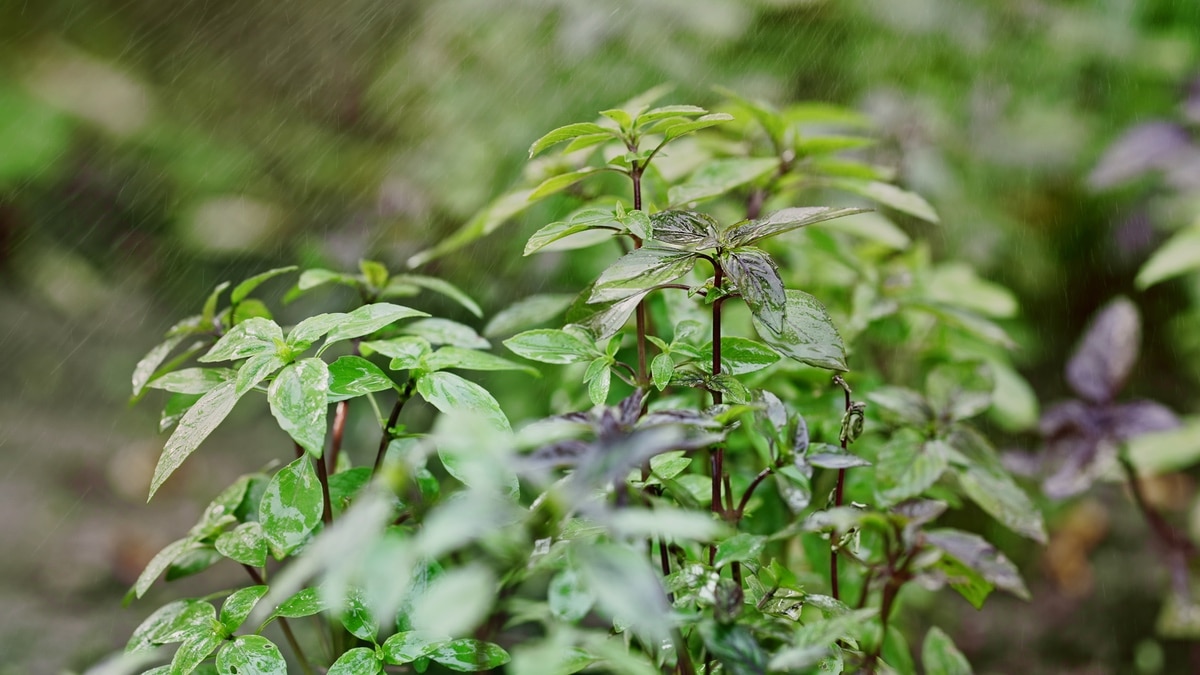
Let’s start with some basics. Culinary basil is Ocimum basilicum. It’s a cultivated plant—you won’t find it growing wild unless it has escaped from a garden, which is pretty rare, I must say.
We grow it as an annual. I won’t describe the plant in detail because you already know it well. Maybe you’ve got a pot on your balcony or windowsill, so you have seen it up close.
It’s not a plant native to our countries. Originally, it’s thought to come from the tropical belt of Asia and Africa—so, Southeast Asia and Central Africa. It’s been around since ancient civilizations, cultivated in Egypt, then Greece and Rome under the Roman Empire.
And its strong, aromatic scent meant it quickly became both a culinary and medicinal staple.
It’s super easy to grow. Where I live in Provence, I don’t put it in full sun because summers can get too hot and dry, and it struggles. So partial shade works better, and I mix it with lots of other plants, I like diversity in my garden.
Some people recommend pinching off the flower tops as soon as they appear to boost leaf production. Personally, I just let it grow the way it wants. And I plant lots of basil to make sure I have enough. That said, the flower tops are great for teas or tinctures, so you can kill two birds with one stone—trim the tops to encourage more leaves and stock up for remedies.
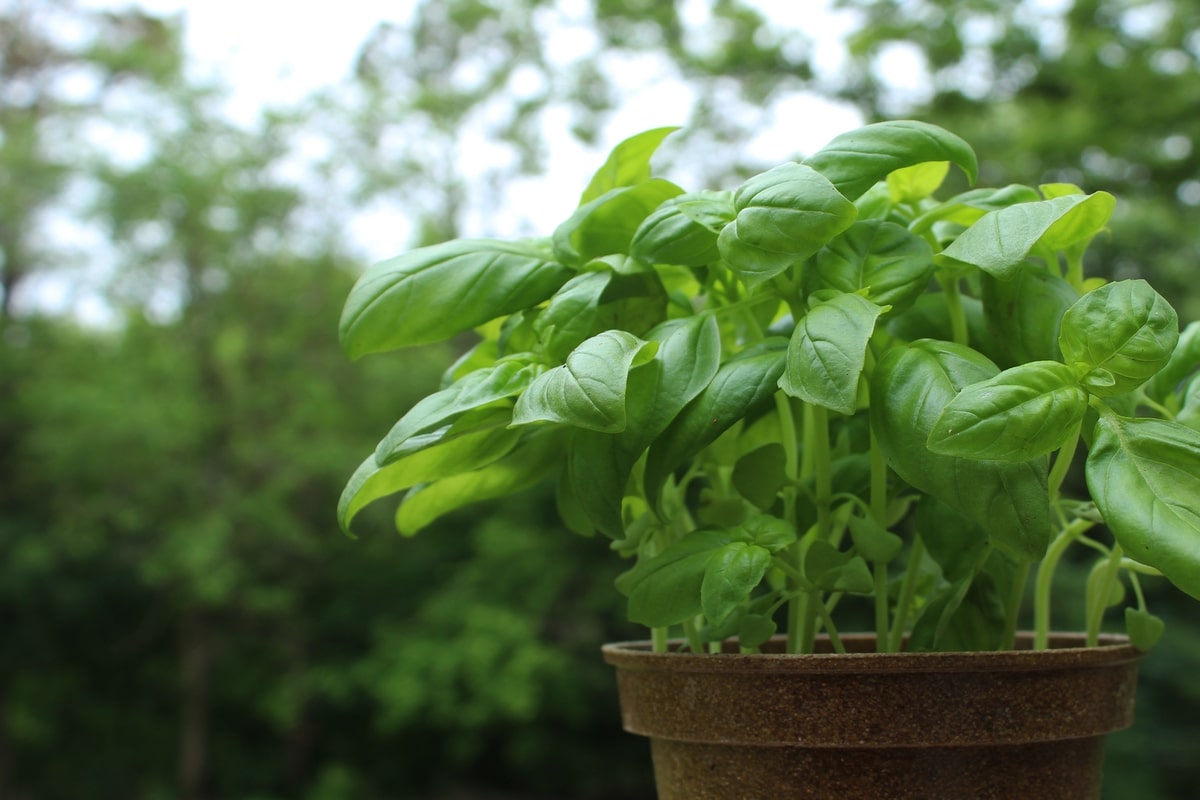
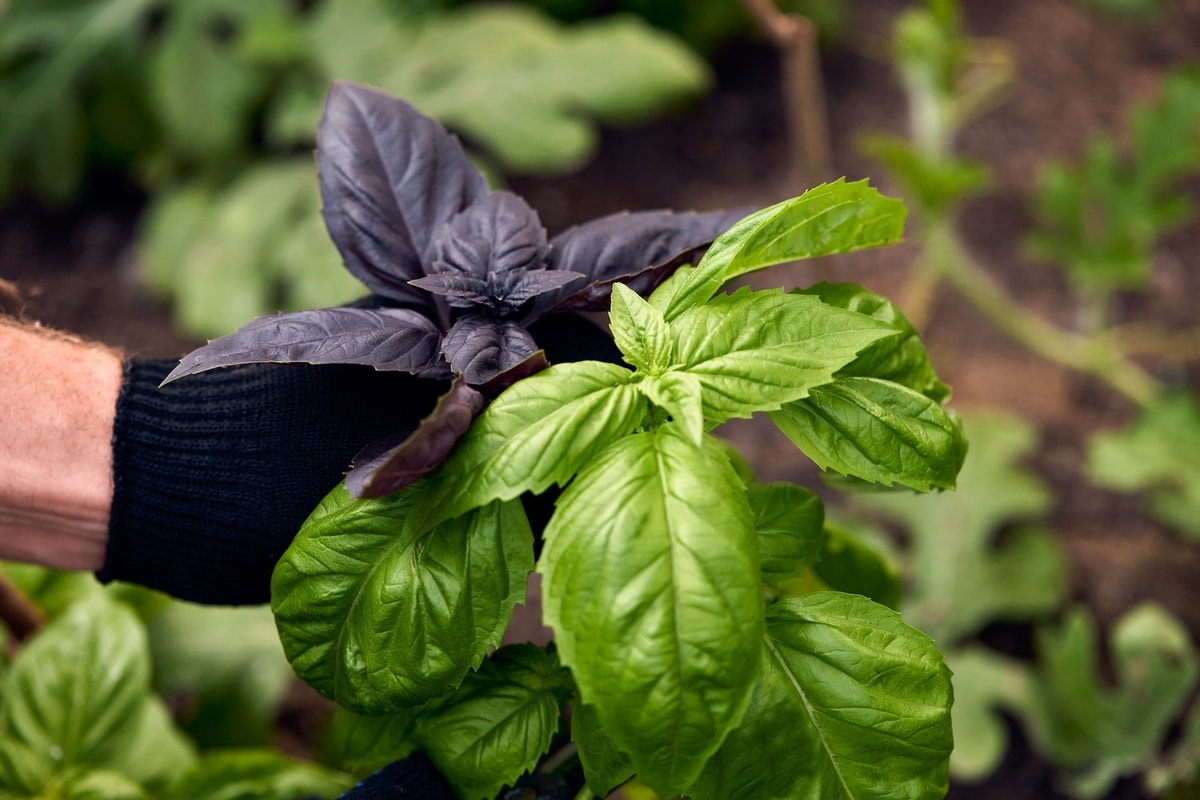
You’ll find tons of basil varieties at nurseries or in seed packets. Green, purple, big leaves, small leaves—some smell like cinnamon, others like lemon. The options are endless. I love experimenting with different types, but I always keep the classic green, large-leaf basil on hand for teas. Call me a traditionalist—I’ll take it!
(Side note: I won’t be covering tulsi, or holy basil, here—but I will do a full episode on that very special basil)
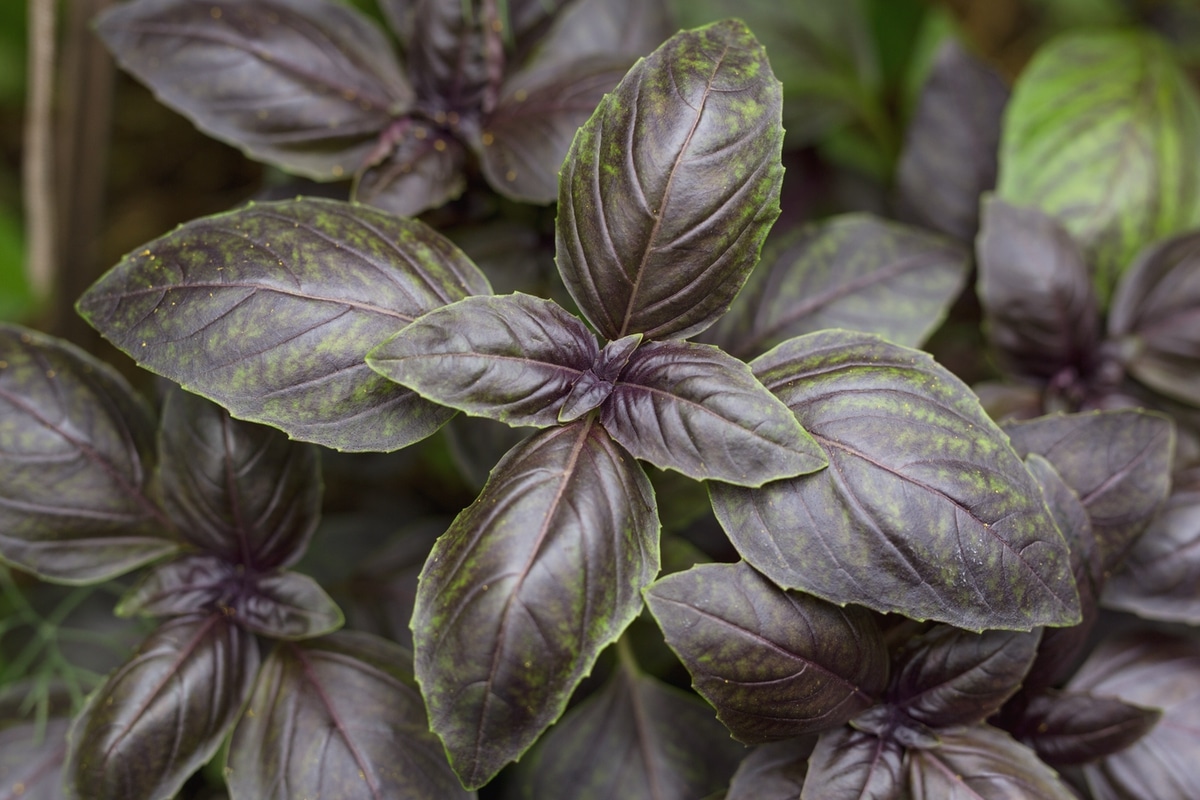
You can pick basil throughout its growing season. Yes, its constituents peak when it starts flowering, but honestly? Harvest as needed. Your basil will still be great. And unless you’re distilling it, the difference is minimal.
One tip, though (and this goes for most aromatic herbs): Don’t harvest right after rain or heavy watering. The flavor—and benefits—will be weaker.
In terms of constituents :
So lots of good constituents that act as anti-inflammatory, anti-oxydant, antispasmodic, relaxant.
The energetics: for me, and this is personal, it feels hot and stimulating. But more on that later.
Let’s talk about basil’s properties, starting with its most useful one in my opinion: it’s a remarkable antispasmodic.
Early in my herbal studies, I caught a nasty intestinal infection with cramps so bad I was doubled over. I had almost nothing in my pantry. I flipped through my books, looking for an antispasmodic to ease the pain, and there it was: basil.
I made the classic mistake: If it’s good in tomato sauce, it can’t be a serious remedy. But it was all I had, so I brewed a strong liter of tea, sipped it with a hot water bottle on my stomach, and—surprise—it worked amazingly well.
I was guilty of that assumption. And I’m here to tell you: culinary herbs can be powerful, fast-acting remedies.
Basil is an excellent antispasmodic for:
That antispasmodic effect also helps with menstrual cramps.
A hot basil tea with a heating pad on your lower belly brings relief. Pair it with German chamomile, yarrow, or ginger for even better results, keeping in mind that in a small proportion of women, yarrow and ginger can make periods more abundant (we will discuss that when we talk about yarrow and ginger – and yes, yarrow is used to slow down bleeding; it’s what we call a hemostatic plant, but sometimes it does the opposite during menstruation, again in a small percentage of women, but it can happen).
Basil is also carminative, meaning it reduces gas when you’re feeling bloated. That’s why we put lots of it in what we call soupe au pistou—a classic Provençal dish with lots of beans. Beans + basil = less bloating, more enjoyment of legumes, cabbage, and other gas-producing foods.
Basil is known as a liver decongestant. In some traditions, it’s believed to support liver detox. If you’re going through a period where you feel your digestion is particularly sluggish, even with normal meals, basil can help. We usually think of dandelion root for this bloating, engorged sensation, but basil works too—alone or with a bit of Roman chamomile or artichoke leaf for extra bitterness.
Basil is great for nausea. Some people hesitate because it reminds them of food (like tomato sauce and pizza), and that association alone can make nausea worse.
But if that’s not an issue for you, basil can help. Try it with peppermint—I love that combo—basil and peppermint tea, delicious, or basil and fresh ginger, another top nausea remedy.
Now, let’s talk about the nervous system. This might surprise you, but basil has interesting effects here.
Try this at home: If you have fresh basil, make a tea of the fresh leaves and/or flowering tops and notice whether it feels stimulating or calming. (Pause the episode if you want to test it!)
For me, basil feels warm and stimulating, slightly peppery and spicy, but with a subtle cooling, calming side. And here, herbalist Matthew Wood, whom you may have heard of, describes this dual effect best. He cites two French doctors actually, Cadéac and Meunier, who found basil first stimulates, then relaxes the nervous system. That is why in some Mediterranean cultures, it’s used before bed for insomnia and in the morning to boost alertness.
So heating… or cooling… or maybe both?
Now, for the nerve-calming effects.
For sleep specifically, I had no idea that basil was used as a sleep aid in certain countries like Iran.
We have a very interesting Iranian study from 2023. It was triple-blind, placebo-controlled, and done on 60 menopausal women randomly assigned to a basil extract or placebo for 1 month (Karimi 2023). Two weeks into the trial, the intervention group moved into the “acceptable” sleep range, whereas the placebo group was unchanged. And 1 month into the trial, the intervention group was sleeping well, whereas the placebo group was unchanged. The Pittsburgh Sleep Quality Index was done for the evaluation.
We have another Iranian study done in 2025, with 60 patients suffering from major depressive disorder with anxiety (Talaei 2025). They wanted to see if basil could help with the anxiety part.
This time they used a basil syrup or a placebo for 4 weeks as an adjunct to an antidepressant drug (which was an SSRI). And indeed, basil acted as an anxiolytic. Interesting, right? So again, a calming, soothing influence here.
But I use it differently. I use it more as a warming, stimulating herb—great for cold, fatigued periods. And I like it for brain fog. A combo that I love to keep my brain working is basil + rosemary. And please check my rosemary episode; you will see me sitting in the hot and rocky hills of my beloved Provence with my beloved wild rosemary.
Here is a property that I’ve worked with quite a bit: basil for blood sugar regulation (Mbaoji 2014).
It’s useful for metabolic syndrome (prediabetes). I learned this from Paul Bergner, a U.S. herbalist. Basil helps when there’s insulin resistance—a core issue in type 2 diabetes.
Important: If you’re on blood sugar medication, check with your doctor first—some herbs, depending on dosage, could cause a dangerous drop in blood sugar.
I have tested fresh basil teas after meals to help manage blood sugar spikes in my private practice. Even dried basil (if it’s good quality) works. And we could verify that with the use of glucometers. We’re not entirely sure how it works, but it may help cells regain insulin sensitivity. Pair it with cinnamon, fenugreek, or blueberry leaf for extra support.
We have yet another interesting Iranian study I wanted to mention. From 2024, randomized double-blind (Karimi 2024). 60 menopausal women were randomly assigned to 500 mg of basil leaf extract daily or a placebo for 1 month.
The basil group showed significantly lower symptoms. The overall score for all menopausal symptoms went down. That score captures physical symptoms (hot flashes and night sweats, sleep issues, muscle and joint pain), psychological symptoms (depressed mood, irritability, anxiety, and mental fatigue), and uro-genital issues (like urinary problems and vaginal dryness).
I have not seen the score broken down in the study, so I don’t know if basil specifically works on the hot flashes and night sweats part, which would confirm a cooling effect. But no breakdown of the numbers in that study.
In terms of preparations and quantities.
For the best results, use fresh basil—it’s the most potent. A simple tea of fresh leaves and flowering tops works well. Use a good pinch per cup for a strong, aromatic tea. It needs to be drinkable, though, so don’t put too much. 2 to 3 cups a day, or more if needed.
If you dry it yourself and it’s not too old, it retains most of its benefits. If you buy dried basil in stores, it varies in quality—some batches are good, others lose their punch. Don’t try to powder the dried leaves; they will lose their properties very quickly.
You can make a wonderful tincture with fresh basil, using high-proof alcohol (80% or higher if you have it).
For dosages of the tincture, I would suggest 40–60 drops up to 3 times daily, or as needed.
In terms of precautions.
First, don’t confuse whole basil with basil essential oil (like Ocimum basilicum var. basilicum from India, Turkey, etc.). Some oils are very high in estragole, which has different uses and precautions. I’m talking about the whole herb here, which is different—teas, tinctures, etc.
For the whole plant:
That’s it for culinary basil. I hope I’ve surprised you with all these benefits! If you thought basil was just for tomato sauce, think again—it’s a powerful natural remedy.
Thanks for being here. I will see you soon for the next episode of TheFrenchHerbal!
Mbaoji FN, Okoli CO, Ezike AC. Preliminary antihyperglycemic activity-guided studies on the leaf extract and fractions of Ocimum basilicum L. J Chem Pharm Res. 2014;6:575–80.
Karimi FZ, Hosseini H, Mazlom SR, Rakhshandeh H, Asadpour H. The effect of oral capsule of Ocimum basilicum leaf extract on sleep quality and insomnia severity in menopausal women: A randomized clinical trial. Phytother Res. 2023 Jun;37(6):2344-2352. doi: 10.1002/ptr.7753. Epub 2023 Feb 7. PMID: 36750371.
Talaei M, Zare K, Hashemi Y, Pahlevani AH, Fakhraei B, Namjooyan F, Hashempur MH, Kouhpaye A, Mosavat SH. Basil (Ocimum basilicum) to Alleviate Anxiety in Patients With Major Depressive Disorder: A Randomized Placebo-Controlled Clinical Trial. Brain Behav. 2025 Nov;15(11):e70994. doi: 10.1002/brb3.70994. PMID: 41236933; PMCID: PMC12617443.
Karimi FZ, Hosseini H, Mazlom SR, Rakhshandeh H. The effect of oral capsules containing Ocimum basilicum leaf extract on menopausal symptoms in women: a triple-blind randomized clinical trial. Eur J Med Res. 2024 Jul 16;29(1):367. doi: 10.1186/s40001-024-01965-7. PMID: 39014507; PMCID: PMC11253358.