
Hey there, Christophe from TheFrenchHerbal.
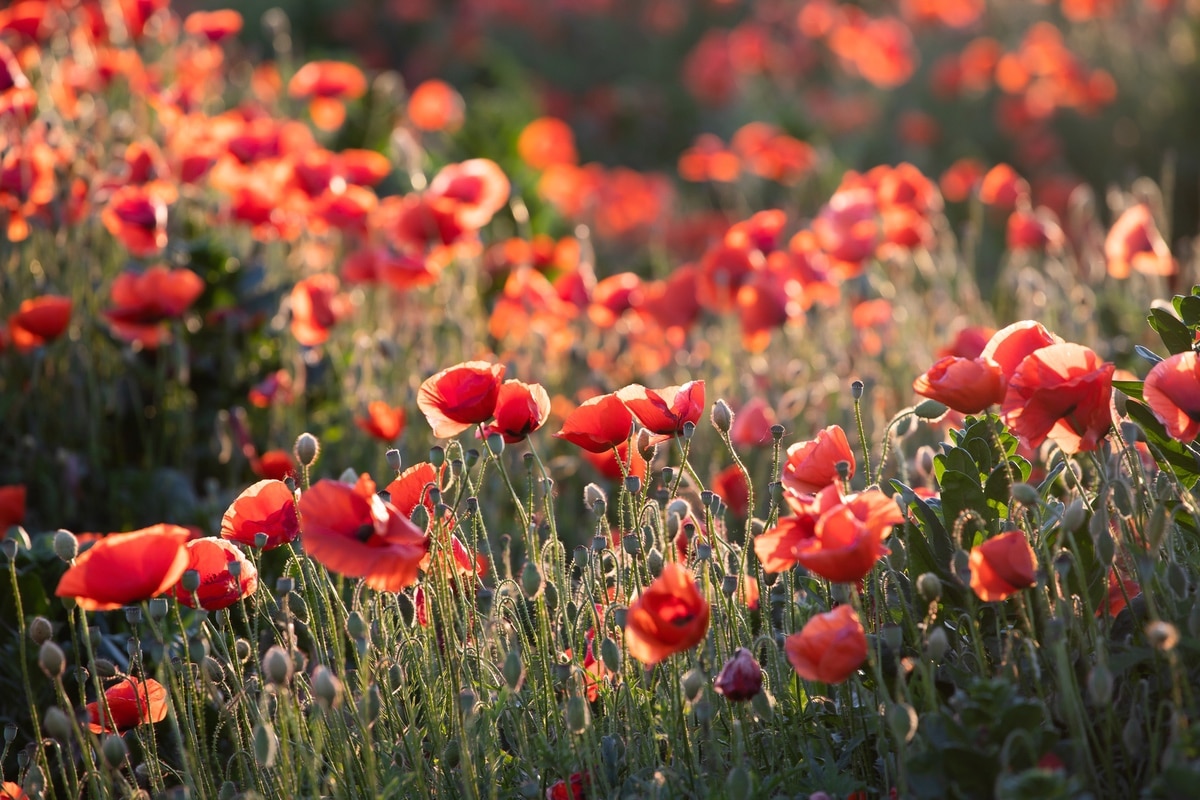
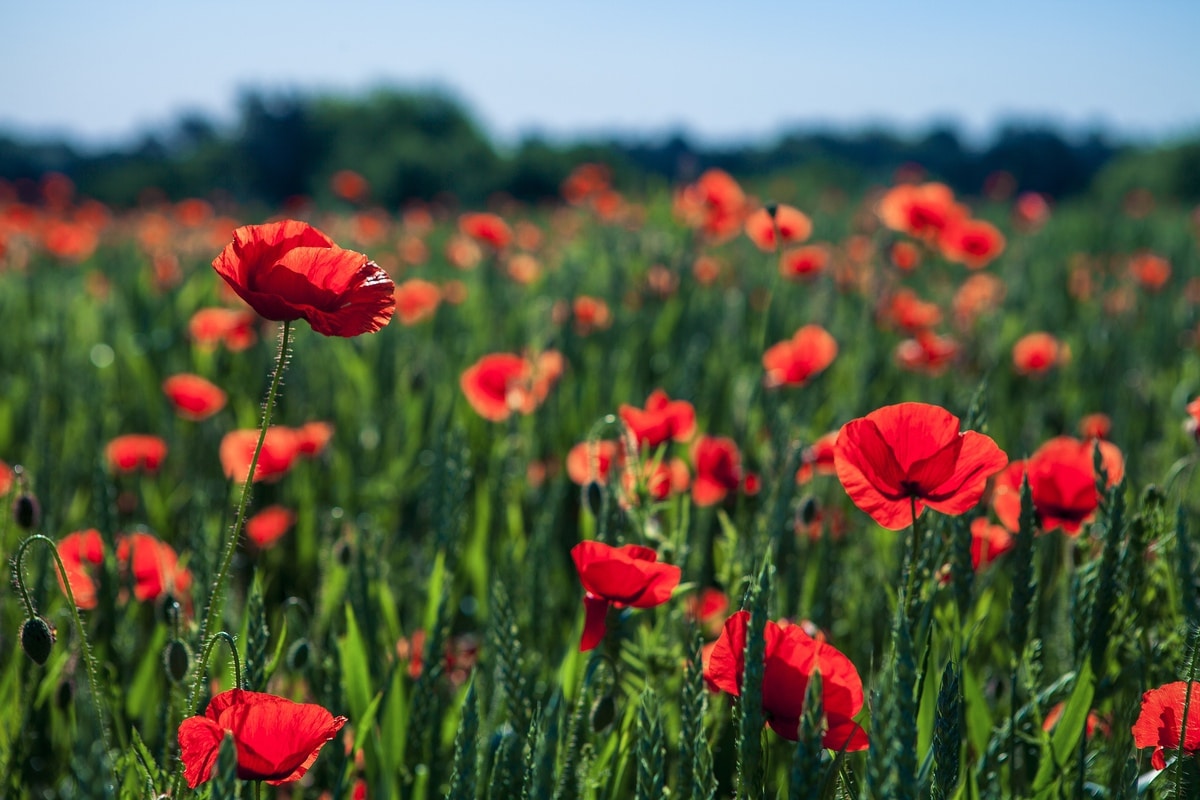
In the spring, the fields here in Provence turn bright red with poppies. It’s absolutely stunning. So there is no shortage of the plant. Very early in our history, humans probably noticed this bright red flower and wondered what to do with it. So we have a long history of traditional use to discuss today.
So yes, welcome to this discussion on the medicinal uses of red poppy, also called corn poppy, a very classic herb of French herbalism.
Before we start, a quick but important reminder: I am not a doctor, pharmacist, or licensed healthcare professional. The information shared in this video is for educational and informational purposes only. It is not intended to diagnose, treat, or cure any condition, and it does not replace professional medical care. Always consult with your physician before starting any new herbal protocol, especially if you are pregnant, nursing, or taking medication.
First, let’s start with a bit of botanical information.
The latin name of red poppy is Papaver rhoeas. It is an annual plant that belongs to the Papaveraceae family. The same family that contains the opium poppy and other strong, alkaloid-containing plants. Which is why there is often a bit of apprehension when we talk about red poppy in herbalism. But rest assured, as we will see, there are very few concerns with the red poppy.
If you look at the distribution map, it seems to be growing in pretty much all countries in the temperate zone of the globe (meaning the zones where it’s not too hot and not too cold, so much of Europe, North America, a big part of South-America, etc.
It grows quite abundantly in my region, southeast of France, in Provence. It reseeds itself very easily. So once it decides it is comfortable in your field, it won’t go away anytime soon. Unless you use pesticides, of course, which is one of the reasons why it is in regression in cultivated fields.
You can grow it in your garden. Very easy to grow. Under the right conditions, of course. The plant prefers full sun and regular to poor garden soils. If you have a wild, abandoned patch in your garden in full sun, it may prefer that spot, be warned! You can sow the tiny seeds in early spring, then keep moist until germination, which is quite rapid generally. After that, you let it grow and spread as it likes. Let it go wild.
In Provence, red poppy can be the source of serious accidents. Not when you ingest the plant. Not because it is toxic. But because tourists will stop their car willy-nilly along the side of the road to take pictures of those beautiful fields covered in red. I have seen this behavior with poppy fields, lavender fields, and clary sage fields. And those clary sage fields, oh my, so beautiful when they are in bloom.
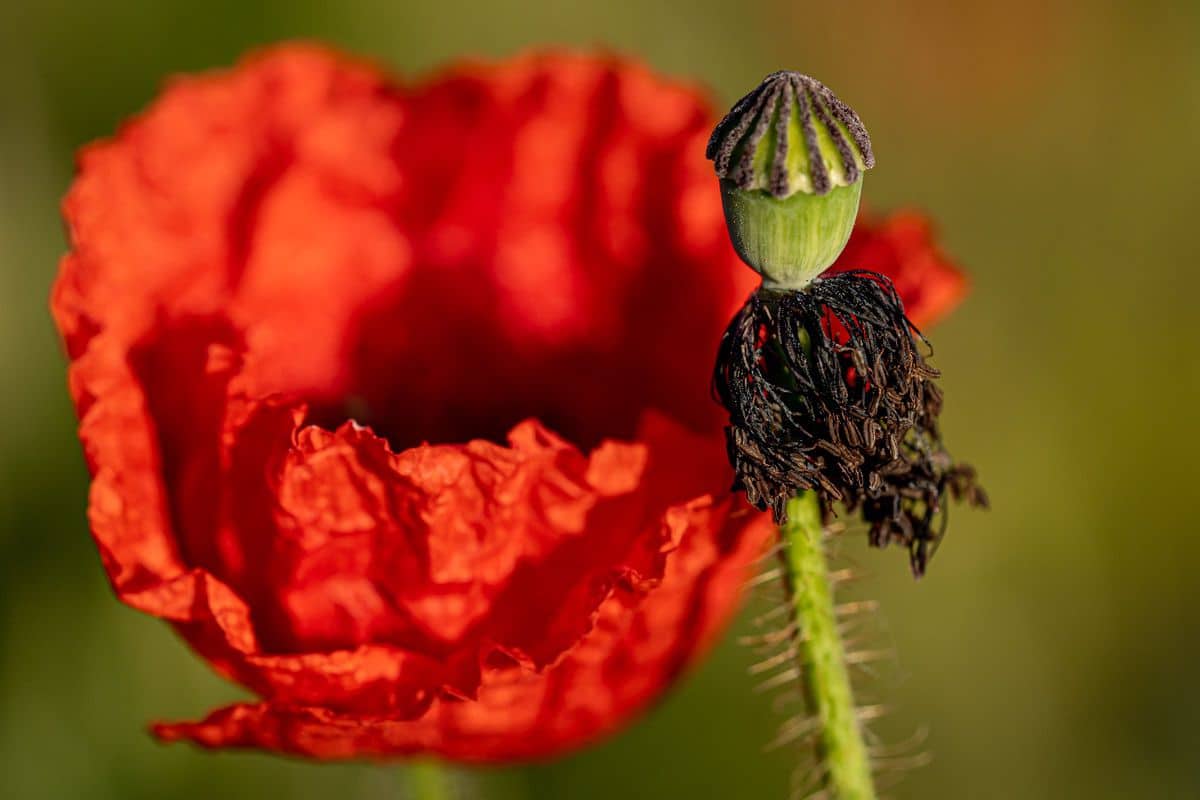
The parts used in herbalism are the petals, bright red, with a splash of black color. You can pick them, then you dry them and keep them in paper bags. They last for at least a year, if not more.
When people buy a bag of dried red poppy petals in a herb store, they sometimes complain about the price per gram. Well, let me tell you. Each petal is very light. And picking the equivalent of a small bag, say 30 grams or about one ounce, requires work. But it’s fun work, quite meditative actually. I love it.
When I was a kid, we were making poppy dolls. The seed pod would be the head, the petals the dress. I will link to a tutorial on my website if you want to make your very own poppy doll.
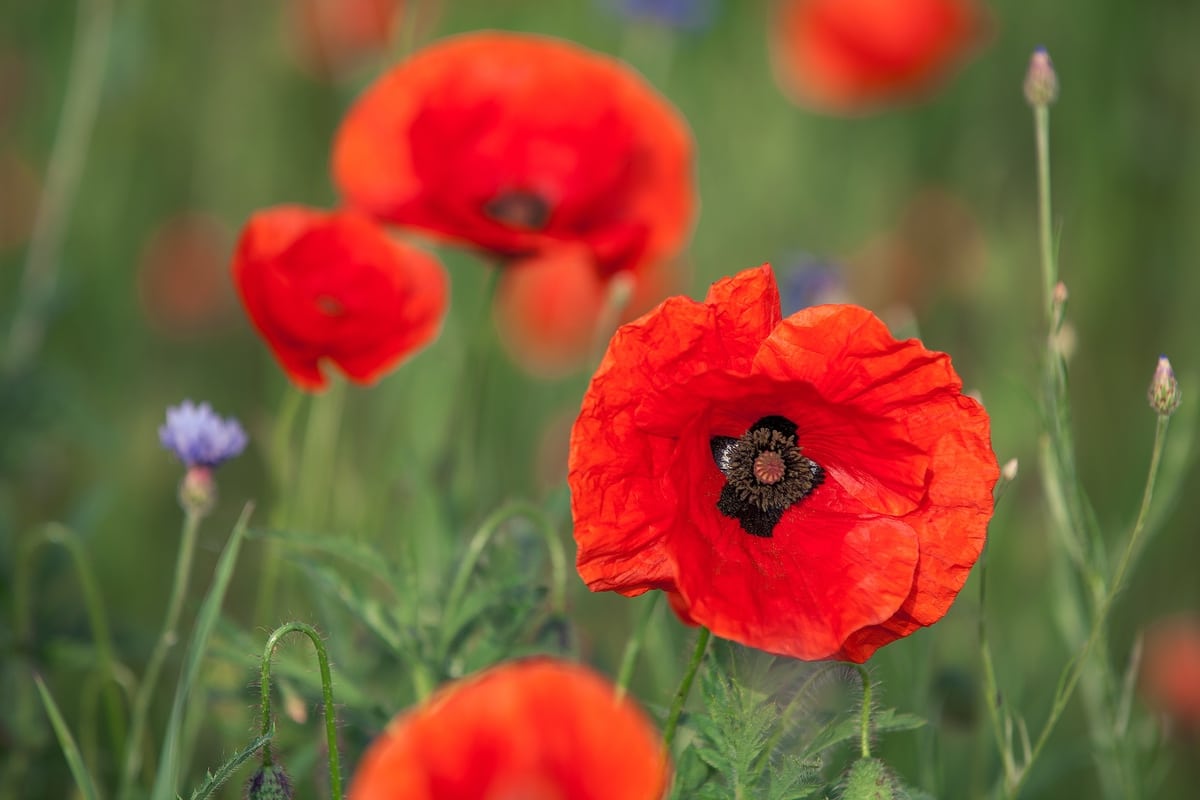
Let’s talk about the constituents of those beautiful petals. They contain :
Those three families of constituents together: a great combination, as we will see.
The energetics: cooling and moistening. Cooling due to the anthocyanins, flavonoids, and mucilage content. And moistening due to the mucilages.
Alright, let’s talk about the properties and indications of red poppy. Super useful in your family herbal cabinet.
First of all, poppy petals are used as an effective cough suppressant for dry/irritative or spasmodic coughs. Let’s break down all of these terms.
The first term that we have to think about is “suppressant”. Usually you don’t want to suppress a cough. The cough reflex is here for a reason: to expel irritants in the respiratory tract and to evacuate mucus production when there is an infection. However, sometimes, the cough reflex is triggered when the larynx is inflamed. So the problem is not located lower, down into the lungs, but more in the throat. We see this type of irritative cough during the allergy seasons, for instance.
Sometimes, little kids get this; it starts as a bit of irritation, maybe coupled with a bit of a nervous cough, and at some point, they cannot stop. The more they cough, the more the larynx gets inflamed, and the more the larynx is inflamed, the more the cough reflex is triggered. The worst part? It keeps them from sleeping! You have to break that cycle, because lack of sleep and exhaustion will tank their immune system.
That is when calming that cough reflex a bit would be desirable. So you see, here, I am not using the term “cough suppressant”, which is too strong for most of the plants we use in our practice. We calm the cough, quiet it down a bit. So that’s for the first part, “dry/irritative”, I think you get the picture.
Let’s talk about the spasmodic cough part. This is a type of cough where you get hit with spasms that are hard to control. In whooping cough, for instance, to help a child who’s getting wiped out by those scary, exhausting coughing fits. Here again, the plant will not block the cough reflex but temper it down a bit.
So that’s it for the type of coughs that indicate red poppy. Dry and irritative, or with lots of coughing fits and spasms that are difficult to control and that are exhausting.
Poppies do two really cool things here:
It’s a combo that’s perfectly suited for the situation.
At this stage, we need to talk about when not to use red poppy.

As you probably know, sometimes a cough can be “wet” or productive—like when you have bronchitis.
During an infection, your immune system creates mucus in the lungs as a defense mechanism. The person needs to cough that stuff up to get it out. In that case, you generally *don’t* want to suppress the cough reflex. It’s counterproductive—the gunk needs to come out.
Some people will tell you poppies are an expectorant. That’s true, a little bit, but the antispasmodic effect that comes with it isn’t ideal here. You’re better off using plants that thin out mucus and disinfect the bronchial tubes, like thyme (remember the episode on thyme?), hyssop, or eucalyptus.
You can still add a little poppy to calm down spasms when necessary, but think of it as a “sidekick” rather than the main star of the mix.
Of course, I’m oversimplifying to make it easy to understand. Sometimes with bronchitis, you still get those coughing fits that wear you out, and in that case, poppy can definitely help. But if you’re new to the world of herbalism, I suggest keeping it simple so you don’t get confused. Save the poppy for dry, spasmodic coughs, nervous coughs, or that itchy throat you get from allergies.
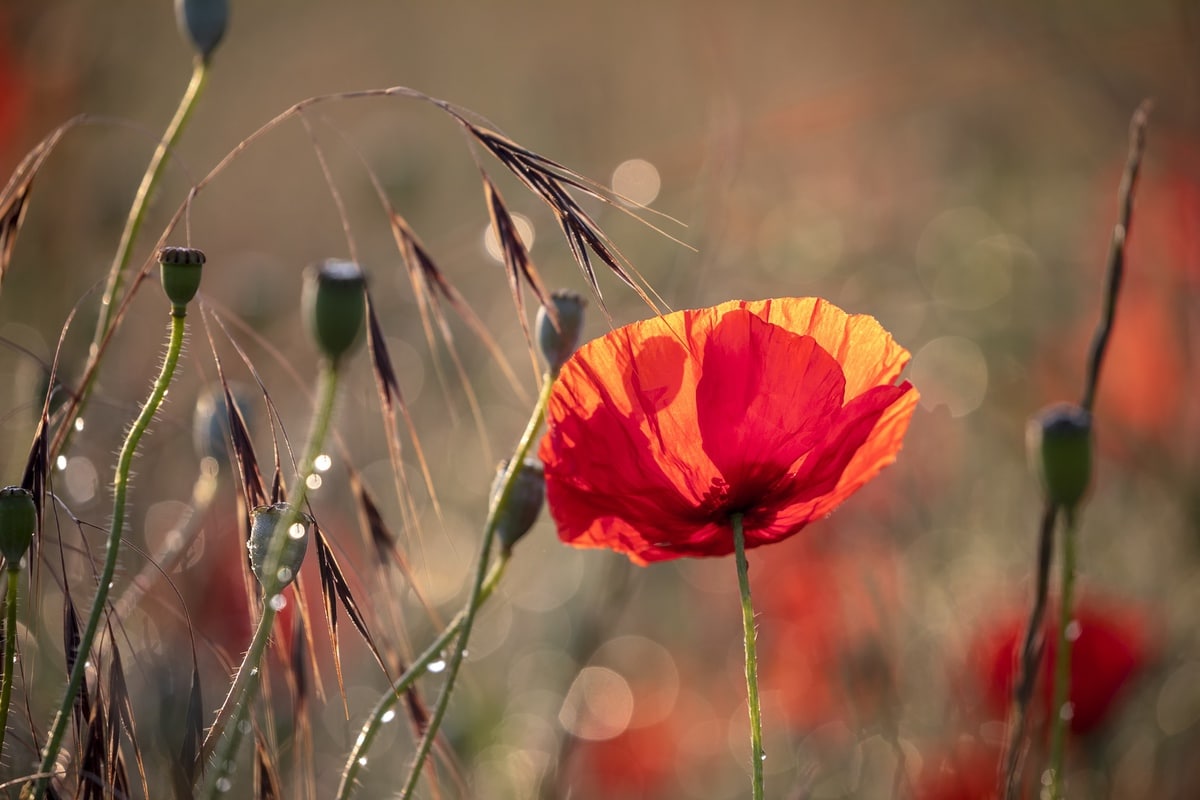
Next property. The petals have a mild sedative effect that works wonders for kids who have trouble falling asleep. Maybe they’re just wound up and can’t drift off because of the tension. Maybe they’re feeling a bit scared of the dark.
Whatever the reason, poppy can help gently take the edge off and help them fall asleep.
Red poppy syrup is a classic French preparation to help kids unwind in the evening when they are… you know… climbing the curtains to get the steam off.
Of course, this is no replacement for the lack of healthy habits, such as putting down the smartphone and the game console and going to that place we call “outside”. And good food, etc. Believe me, I am not here to play Mr Perfect; I have 3 grown-up boys, and I know what it feels like some days… I think I was the one who needed red poppy syrup the most…
OK, let’s talk about forms and quantities. Here are the two best ways to use poppy petals.
First, you can do a very simple tea of the petals. This is the easiest form for adults. Dr. Valnet, one of our renowned French herbal docs, suggests using 10 to 15 g of dried petals per liter of water. So for a standard 8 oz cup of tea, that’s about 2,5 to 3,5 g of petals. And you know what, you can also go by the pinch. Yes, it is very inaccurate, but sometimes, in the rush of daily life, the pinch can be quite handy.
The tea will become very dark in color. This is normal. You want that.
I’ve heard some people say that water is not the best solvent for the alkaloids of the petals. Sure, but if you take into account the overall constituent profile with anthocyanins, mucilage, and alkaloids, overall, hot water will do a pretty good job on those super thin, super fragile petals. It will get the stuff out. And the tradition tells us this preparation works, and we will use it as the basis to prepare the syrup.
So… let’s talk about the syrup! Here is a classical French recipe. This will be the best form to use with kids.
Here’s how to make it. I’m giving you the proportions for 1 liter of water (which is about a quart for you, american folks), but that doesn’t mean you have to make such a large quantity! I’d actually recommend starting with half of that, or even a quarter, just to test it out so you don’t waste these precious petals. Plus, it’s super easy to make more.
But anyway, here is for 1 liter, adjust as you see fit :
Generally, this syrup will keep for several weeks. If you see any mold appearing, obviously it’s time to toss it and make a fresh batch. Try to keep the bottle in the fridge as much as possible. Take it out, pour your dose, and put it right back in.
For dosages, Pierre Lieutaghi, one of our great French ethnobotanists who captured the wisdom of the past generations in the south of France, recommends:
Now, these doses are for cough, since you need to take it regularly throughout the day.
For the sedative effect, take it in the evening—about 30 minutes before bed. Depending on the child’s age, you could also do one more dose right before they brush their teeth and head to sleep.
Again, I am not saying it is ok to give this to kids as soon as they have trouble sleeping or as soon as they are a bit excited. Sometimes, it’s part of just being a kid. I am a practitioner. I spend hours with clients to understand the big picture. So I am assuming here that extra help is indeed needed, and not given as an easy way out or as a replacement for good habits.
In terms of precautions, classic authors have noted that some people don’t tolerate it well. Lieutaghi suggests starting with small doses for kids—maybe one teaspoon a day—to see how they react. There are reports of allergic reactions when large doses are given, so start slow.
There’s an interesting story from Dr. Cazin, a French country doctor back in the 1850s. His 3-year-old had whooping cough. So he gave him 16 g of poppy syrup in the evening (which is probably about 3 teaspoons), and mentioned the kid had hallucinations during the night.
However, he didn’t specify whether the syrup was made from petals or from the seed pods—the latter makes a much stronger syrup, and some doctors used the seed pods back then. We find a lot more alkaloids in the seed pods, so please just use the petals.
Overall, red poppy petals are a safe approach to calm irritative coughs and help us wind down and get ready for sleep. Not a miracle plant, but one that has demonstrated its use over and over throughout the generations as part of a simple family practice. And best of all, it is not an endangered species, although we find it less and less in the countryside, especially in cultivated fields, due to the use of pesticides. One thing is for sure, you can easily grow it in your garden.
That’s it for corn poppies. Thanks for being here, and I will see you very soon for the next episode of TheFrenchHerbal.
Lieutaghi, Pierre, “Le Livre des Bonnes Herbes“, 3rd Edition, 1996
Cazin, François-Joseph, “Traité pratique & raisonné des plantes médicinales indigènes“, 1868
Valnet, Jean, “La phytothérapie : Se soigner par les plantes“, 1986