Hey there, Christophe from TheFrenchHerbal.
If you’ve got issues with poor circulation or hemorrhoids, you’ll want to hear about red vine leaf. It is a classical remedy in French herbalism, super easy to prepare as a tea. It provides relief fairly quickly, and you can grow it and pick it yourself. So what’s not to love, right?
And why does it have to be red, by the way? Can you just pick any old vine leaf?
That’s exactly what I’m breaking down in this episode.
Before we start, a quick but important reminder: I am not a doctor, pharmacist, or licensed healthcare professional. The information shared in this episode is for educational and informational purposes only. It is not intended to diagnose, treat, or cure any condition, and it does not replace professional medical care. Always consult with your physician before starting any new herbal protocol, especially if you are pregnant, nursing, or taking medication.
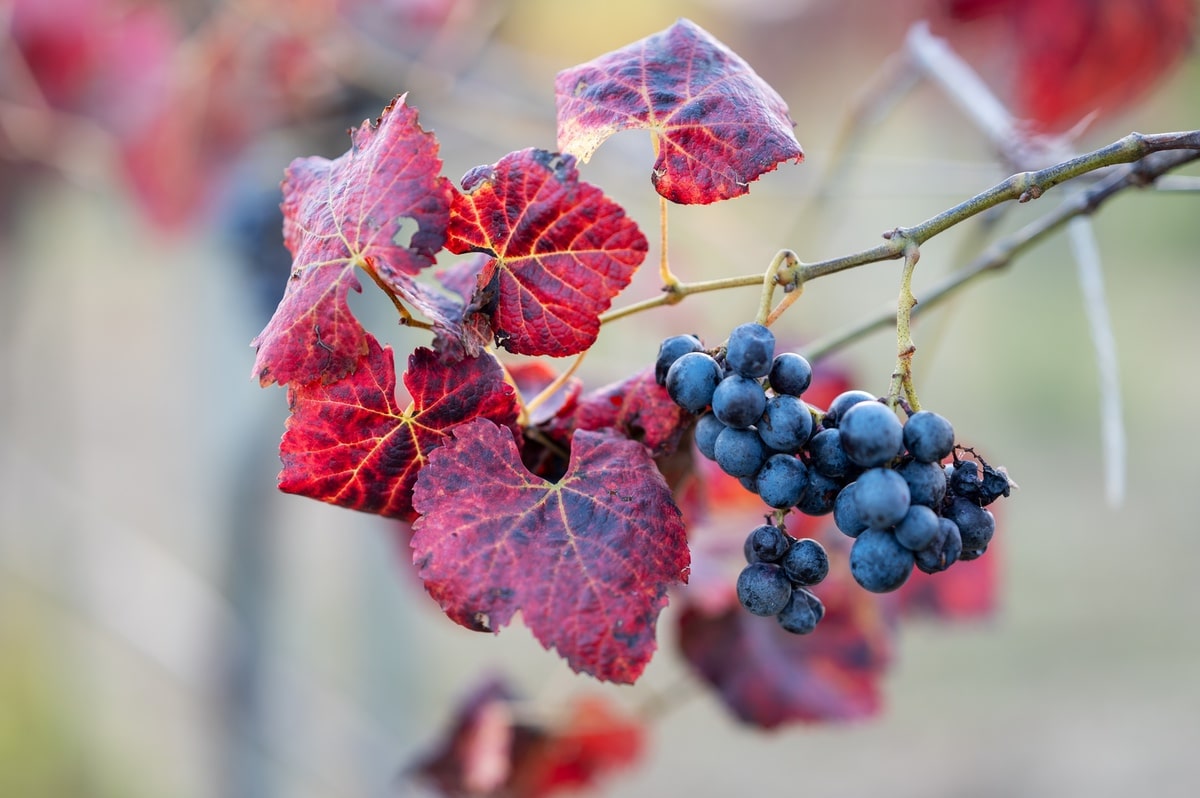
OK, let’s start with a bit of botanical information. You know grapevine, right, the kind that gives us table grapes and wine? It is a perennial plant that belongs to the Vitaceae family. The Latin name is Vitis vinifera.
They are grown pretty much everywhere in the world. There is a wild version of the plant that has been domesticated to produce big, plump, and juicy grapes. It’s a climbing shrub with little tendrils that latch onto stuff, and the leaves look like the palm of your hand, with 5 to 7 fingers. The term we use is “palmate leaf”.
The fruit grows in clusters you’re already familiar with. No need to go full botany mode here—you get the idea.
Grapevines have been used as medicine for ages. Back in the day, people used the leaves from any kind of grapevines, mostly for their astringent properties. They all have tannins, which we’ll get into very soon.
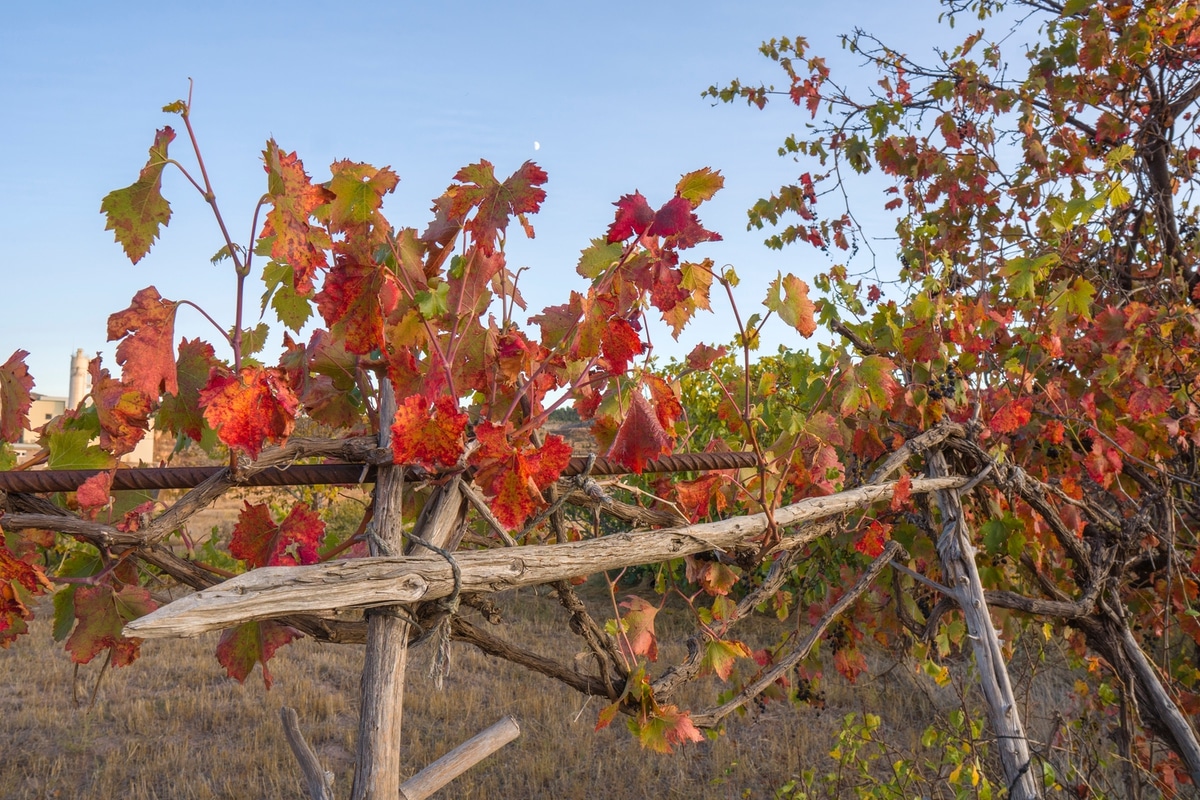
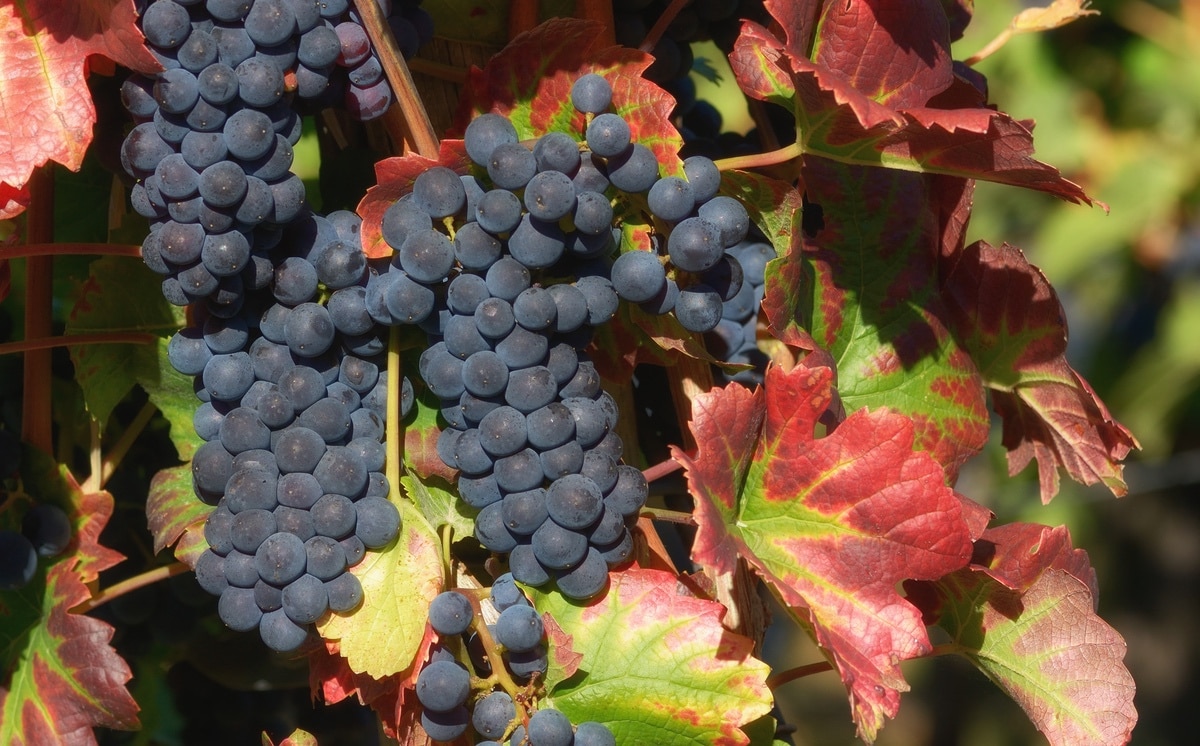
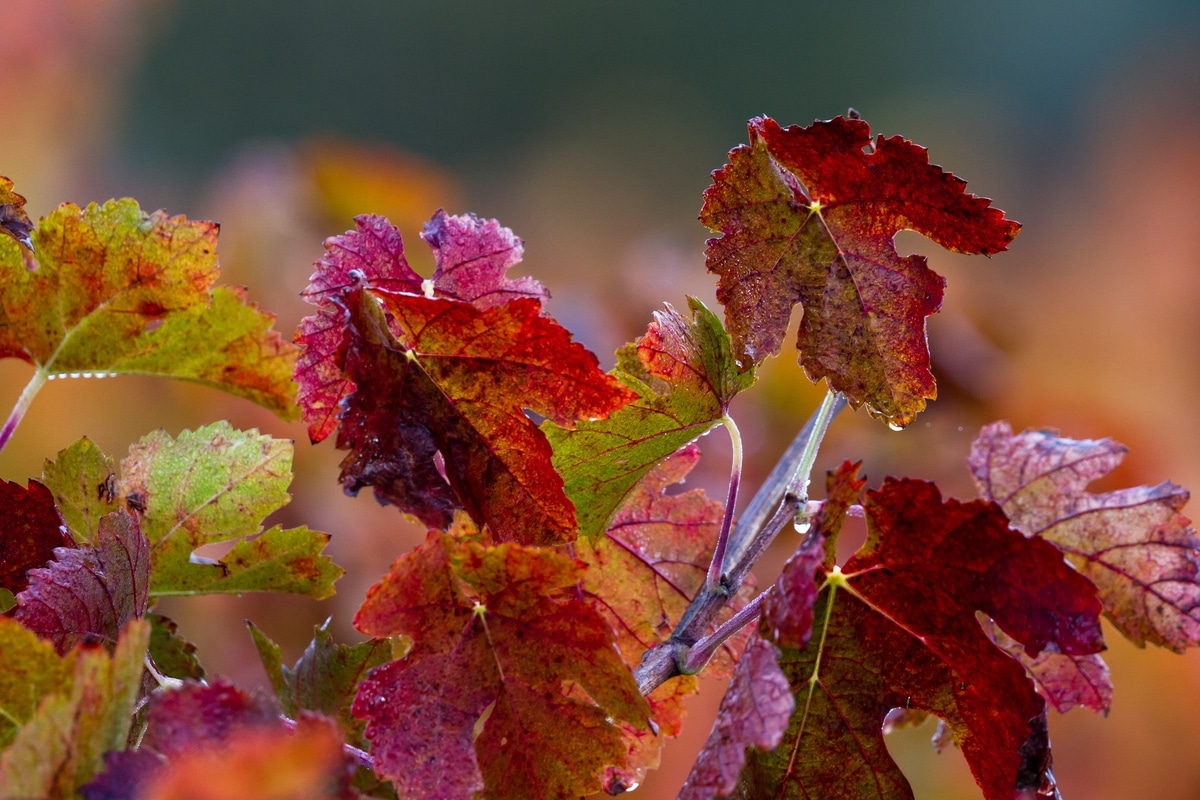
In the last few decades of herbalism, we started to pick only vine leaves that turn into a bright red color. Because those red pigments are very beneficial for our cardiovascular system.
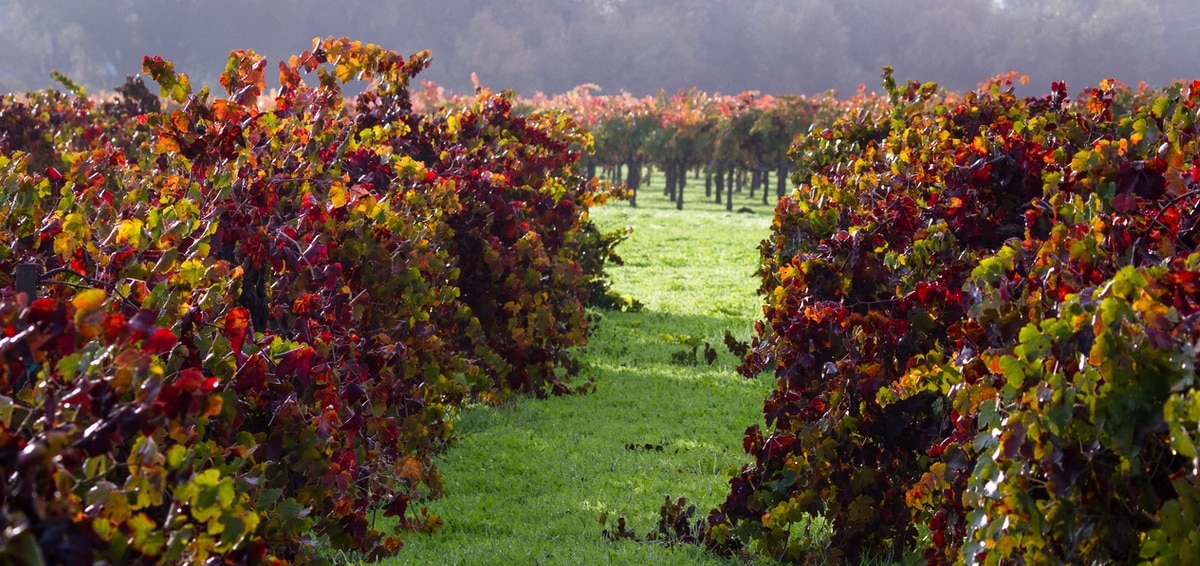
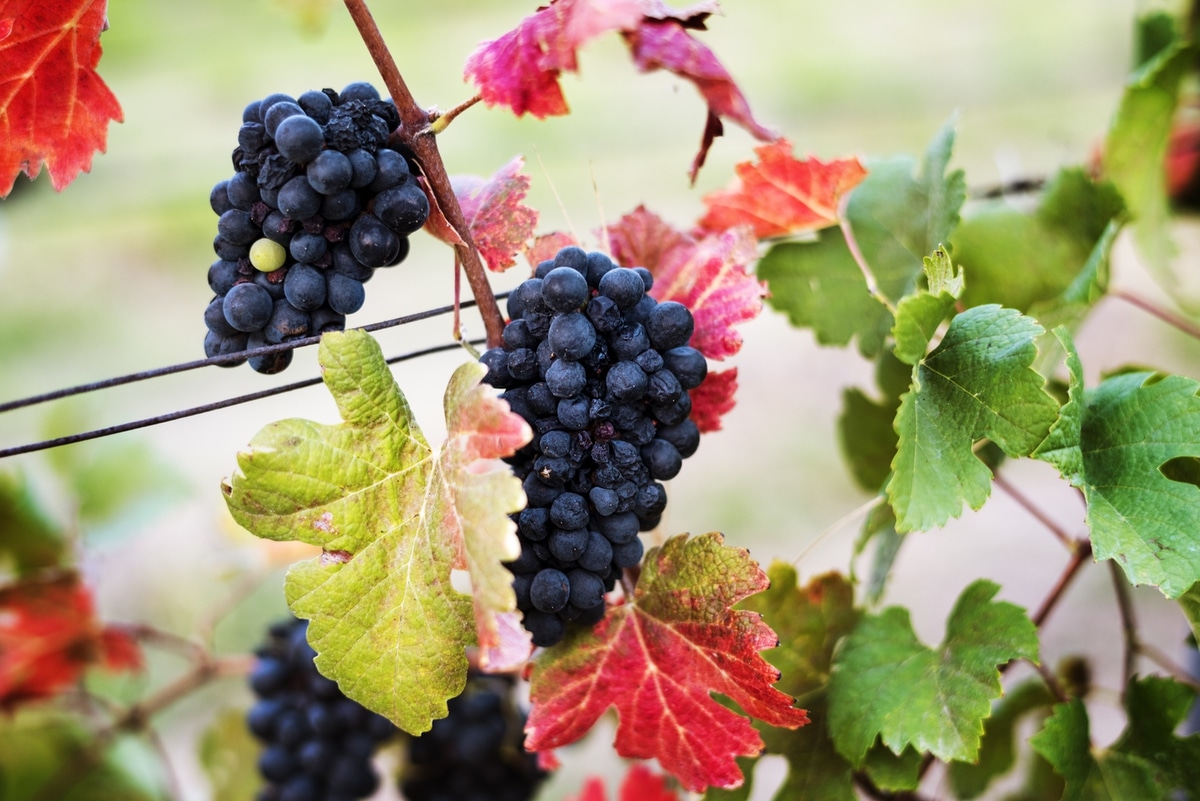
In France, we went one step further and started to use a specific cultivar—Vitis vinifera ‘tinctoria’. This one gives black grapes and leaves that turn partly or fully red in the fall in a very predictable manner. Not sure if that’s the case in other countries in the world; please do let me know if you have the information for your country.
You see, with regular grapevines, the leaves may or may not turn red in the fall. With this cultivar, they will, making it a lot easier to produce the herbal remedy, if that is what you care about. If you care about the grapes, the juice, the wine, well, that’s another goal.
But for the herbal remedy, you want the leaf to turn red. And if you use the ‘tinctoria’ variety, it’s kind of the “gold standard”. But more important than the cultivar is the color, it if turns red, you are good to go to prepare the tea, the tincture or capsules out of the leaves.
Now, please, do not confuse grapevines with any type of creeping decorative vines that you may find in gardens. For instance, in France, we have quite a lot of Ampelopsis glandulosa. This other vine does contain the red pigments that may medicinal, but it may contain other less desirable compounds (I don’t have the full data to conclude), so please do not use it. I am mentioning this because it’s a question French people ask me on a regular basis since it is a very productive and decorative plant creeping along the walls of old houses.
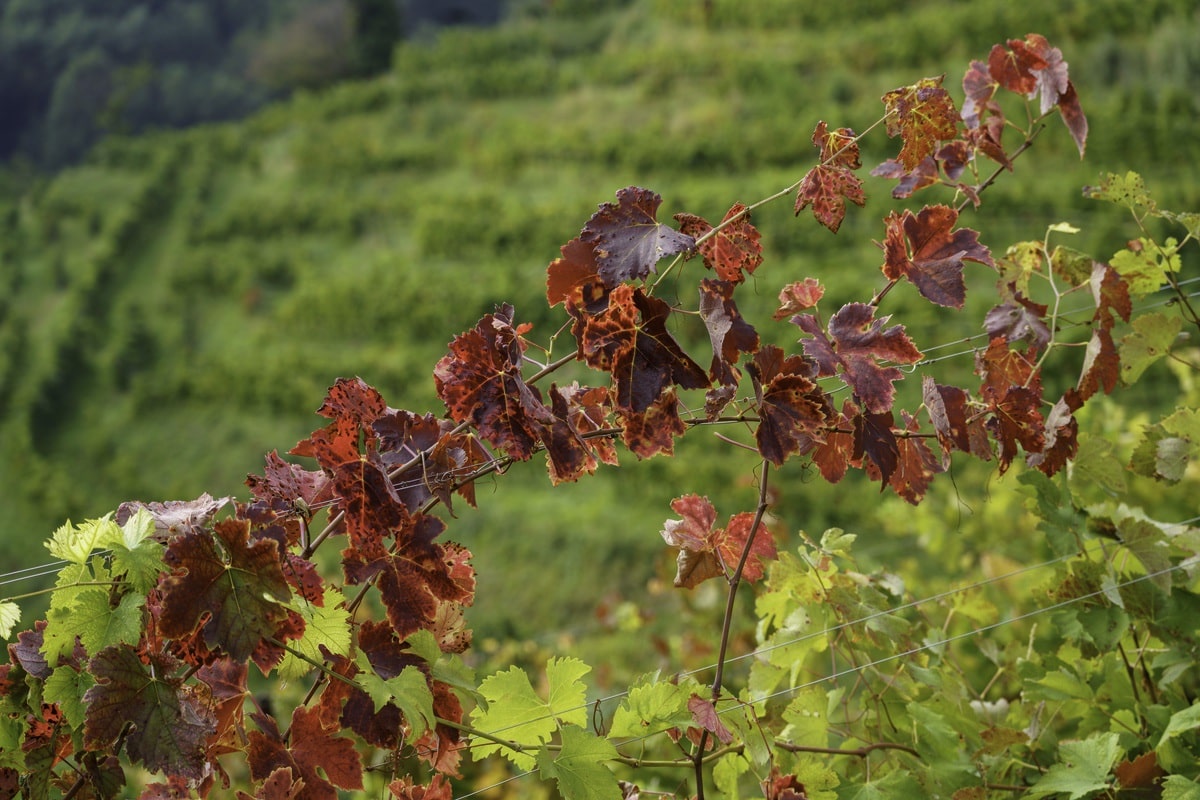
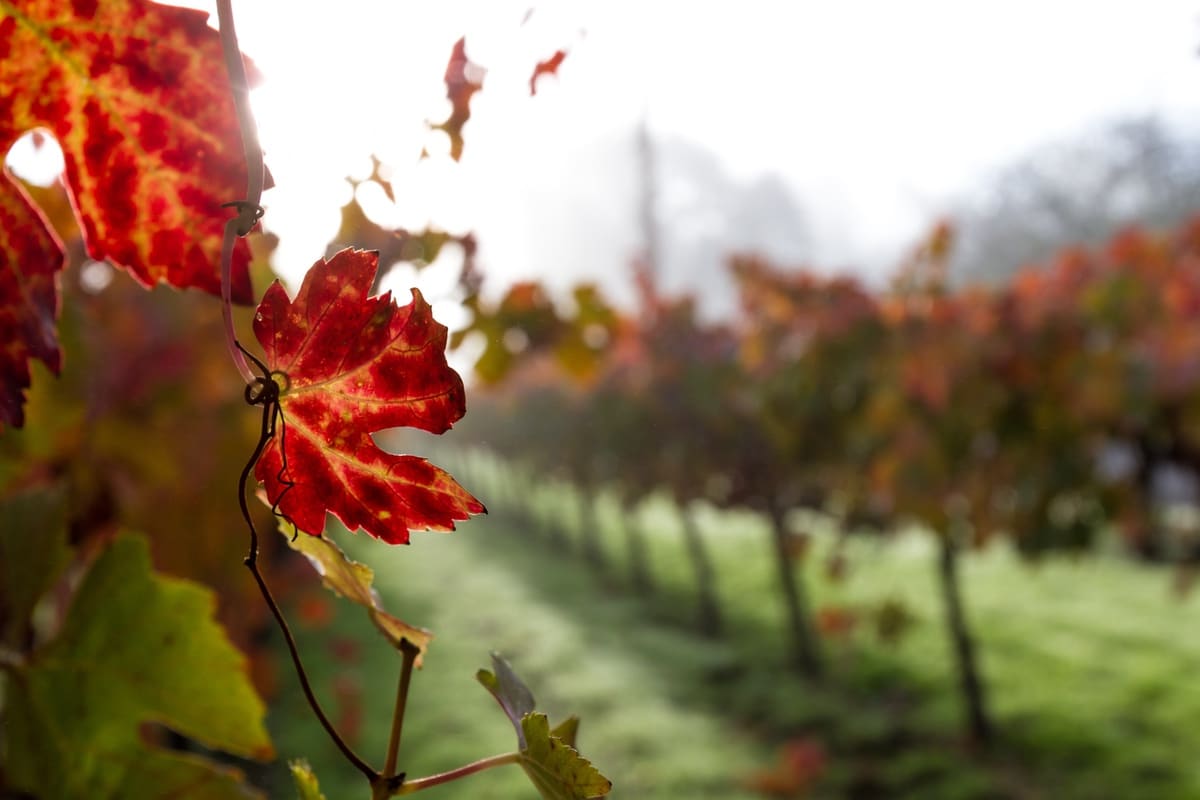
In terms of picking and drying, in the fall, you go check your grapevine plants, and you pick the leaves that turned a bright red, or darker red, doesn’t matter. Sometimes a portion of the leaf turns red, not the whole leaf. That’s fine. They just need to have the pigments.
Then, you dry them on a rack, which will be quite easy. Then, you can cut them, or even crush them a bit, before storing them in a dry and dark place, in paper bags for instance. They keep well for several years, although with time, they will start to lose their pigments and turn grey or brown, which is a sign that you need to renew your stocks.
In terms of constituents, whether they are red or green, grapevine leaves contain tannins. Lots of them. You will find the two major tannin families, hydrolyzable tannins and condensed tannins.
Roughly speaking, hydrolysable tannins are not absorbed and distributed systemically. They act more locally on contact (on the mucous membranes or the skin). Condensed tannins (which we also call proanthocyanidins), can be partially absorbed depending on their size, and therefore can have a systemic effect as well, on the vascular system in particular.
Grapevine leaves also contain different anthocyanins. And that’s where the “red” type becomes important. The redder it gets, the more anthocyanins we will have. Those pigments are very potent; they will have quite an effect, along with the tannins, on the vascular system. Studies have counted at least 14 different types (malvidine, cyanidine, delphinidine, etc) and they represent up to 0.3% of the dried leaves.
We also have at least 35 different types of flavonoids (like quercetin, rutin, different catechins), making it quite antioxidant and anti-inflammatory.
The energetics: very drying due to the tannins.
Alright, let’s talk about the properties and indications of grapevine leaves.
In France, red vine leaves are well-known for helping with chronic venous insufficiency, which can impact quality of life in a significant way (see EMEA monograph in the reference section). It usually gets worse if you have to stay static, in a sitting position, or worse in a standing position, because blood will pool down in the lower limbs.
It gets worse when it’s hot outside, or when you take the airplane. Your physician may have recommended you wear compression stockings during aggravations, which is always a good idea.
It can manifest as swollen legs, varicose veins, that heavy feeling in the ankles and feet, pain or cramps in the calves, leg fatigue, itching, tightness, etc. Go see your doctor to get a full examination and diagnosis, of course.
Sometimes, it runs in the family. If Mom and Dad had venous insufficiency, the risk will be higher for you, so preventative measures might be useful, say, in your 30’s or 40’s, not waiting until it fully manifests.
Red vine leaves will act as a tonic to those weak vein tissues. Here is what it does :
So it is a wide-ranging toning and protective action. Human studies have shown a reduction of heaviness, pain, tingling, and tension in the lower limbs (Azhdari et al., 2020; Monsieur & Van Snick, 2006; Rabe et al., 2011; Stücker et al., 2019).
What I like about red vine leaf is that it acts fairly fast; you will start to feel it after, say, 2 or 3 days of taking it, assuming you take enough of it. Of course, we are assuming here the situation is still manageable, because sometimes the venous insufficiency is so profound and advanced that herbs will be of limited use. But most of the time, they will bring some degree of relief.
And I will admit something to you. When I started my practice almost 20 years ago, I assumed that venous insufficiency was kind of irreversible. Sure, you could get relief with plants, but when those valves in the lower veins were busted, they were busted. There was no way to put them back together. At least, that’s the story I told myself.
But then, in my private practice, I saw cases that really got a little better, and then a little better, year after year of taking those plants like red vine leaf, butcher’s broom, horse chestnut, etc.
And I will tell you my story. When I was much younger (in another life and another job) I spent several years in airplanes, going to different countries to visit clients. It was intensive flying. Then in my early forties, I started to get calf pain, and this heavy leg feeling. So I went to see the doc (a phlebologist). He did a leg ultrasound, then he looked at me… He said, “I see a deep venous insufficiency. It ain’t right at your age. Did you spend a lot of time in airplanes ?“. Man, he got it right away. Reduced cabin pressure plus long-haul flights in a seated position. And a risk running in my family.
From that point, I made regular use of those plants, plus big changes in my lifestyle habits. And 5 to 7 years later, I had almost zero symptoms left. Today, all good. And listen to this. I had another leg ultrasound about 6 months ago because I thought I had phlebitis (I had this sharp pain in my calf muscle). It ended up being a torn muscle. But I told the phlebologist “do you still see my deep venous insufficiency”. He did not believe me. He said “what are you talking about”. He told me I had been misdiagnosed!
Now, let’s pause. Here is something you will never hear from me: that plants are a miracle cure. They are not. Believe me, I have enough experience to see that it’s never as easy as it seems. But I do have cases of much improved venous insufficiency to the point that there are no more symptoms. And that is quite encouraging. And please, I insist, do check with your physician first.
At this stage, you are probably wondering how to take the plant, what form, quantities, etc. We’ll come back to that in a few minutes.
On top of that, red vine leaves have a long history of traditional use for relieving itching and burning from hemorrhoids.
Hemorrhoids involve weakened and inflamed veins in the rectal area—similar to varicose veins elsewhere in the body. So red vine leaf’s astringent and vascular-toning properties can help here too. Logical, right? Same venous tissue but located somewhere else.
Here, you would take it internally, plus you would apply it locally, in the form of a sitz bath in which you have added a strong red vine leaf tea. Or a couple of drops of the tincture in a pea-sized amount of aloe vera gel. Put it in your hand, mix well and apply. Careful, not too much tincture, otherwise the alcohol will burn. An infused oil would also work.
Here is another use. It can help with fragile skin capillaries (like spider veins or easy bruising). Some people are very prone to that; they bang against something, and those tiny capillaries break very easily, turning the zone dark blue, whereas somebody else would barely get a scratch in the same situation
So it is usually some kind of a constitutional weakness that needs support, and in the realm of herbal medicine, we usually go to plants rich in proanthocyanidins (those condensed tannins we talked about) and flavonoids. So red vine leaf is perfect for this situation; taken regularly, over the years, it will strengthen capillary beds. You could add Centella asiatica to the mix (we’ll talk about that plant in another episode).
Here is another use. With all those tannins, red vine leaf can slow down diarrhea—without stopping it completely. That’s not the goal. Sometimes you just need to calm things down without blocking, especially with infectious diarrhea. Stuff needs to come out. And here, we should note that tannins are antibacterial, antiviral, and antifungal on contact, which is an added bonus for infectious situations.
The same goes for chronic diarrhea—tannin-rich herbs can help stabilize the situation, as can mucilages. We talked about that in the episode on linden flowers, the fact that old doctors thought that plants rich in mucilage were sometimes more helpful than plants rich in tannins to calm diarrhea, because soothing and calming the fire was more important than astringing.
Another category of herbs that can help with bouts of diarrhea are antispasmodic plants, because spasms and cramps are often involved. So here, we could think of fennel seeds, peppermint, German chamomile, and lemon balm, for instance.
Side note: you see how you could make a balanced blend by knowing your plant constituents. You could think… I need a bit of tannins: red vine leaf. I need a bit of mucilage: linden flowers. I need a bit of certain aromatic compounds to calm those spasms: fennel seeds, etc.
With practice, you will be able to formulate a nicely balanced blend. How you formulate this blend will depend upon what you want to accomplish, so the plant properties, and the constitution of the person. And understanding constituent families can help you in that process, because one property, say “anti-inflammatory”, may be achieved via different constituents and different routes of action. So having a basic knowledge of constituents can help you broaden the effectiveness of your blend.
It is not the only way to see herbs, of course, there are many ways, and they are all important. But don’t be scared of learning a bit about plant constituents. At least the big families.
Another classic use for tannin-rich herbs is to slow down bleeding. We call that property hemostatic.
Red vine leaf has been used for heavy periods, for spotting, for perimenopausal bleeding, and for bleeding caused by fibroids. The astringent action will “tightens and tones” those oozing capillaries to slow down bleeding.
Of course, whenever there is bleeding, please check with your physician first.
You can use a red vine leaf tea as a mouthwash for gum inflammation or as a gargle for sore throats.
It can be used for rosacea, which is a redness and swelling around the nose, cheeks, forehead, and chin. Superficial blood vessels are dilated; that’s why it looks so red. A red vine leaf tea, applied on the skin, will strengthen those overreactive blood vessels.
It will be slow-acting, so apply for several days in a row to see if it helps you. Additionally, internal use might complement the topical application and also tone up the vessels from the inside.
In terms of forms and quantities, you’ve got three options:
First, the tea of the dried leaves.
Fournier, one of our classical French herbalists of the past, suggests 30 to 60 g of leaves per liter of water. Which is a huge quantity, reflecting the herbal practice of the past. Today, our digestive tracts and our overall constitution have become a lot more reactive, so I would start with a lower dose. 5 to 10 g per liter is often mentioned in modern references, quite a difference.
1 tablespoon of the chopped leaves per teacup is more than enough. Valnet, one of our classical French herbal docs, recommends 2 to 4 cups a day between meals (we’ll see why in a second). He recommends a quick simmer (2-3 mins, so technically a decoction) + 10 mins steeping, then you strain and drink.
You can also use the tincture of the leaves (so an alcohol extract) .
The easiest way is to prepare or buy pre-cut dried leaves and 45% alcohol. I use the traditionnal 1:5 ratio, so 500 ml of 45% alcohol for each 100 g of dried leaves. You need to cut them very small, or the alcohol will not cover the leaves. Here is one trick: you put the alcohol in the blender, then you gradually add the cut leaves; mix it all together, and the alcohol should then be able to cover the leaves entirely when you pour that mush into a jar for maceration (shake the jar daily for two weeks before straining).
The dose: 30-60 drops in water, 2 to 3x/day depending on the situation. Great combos: horse chestnut tincture + red vine leaf tincture.
A third form would be to make capsules out of the leaves.
Here, you take the dried crushed leaves and you put them in a coffee grinder. Grind them, sift them with a little tea strainer. Then use a capsule making machine to fill your capsule. Quite easy and cheap to make at home, although it does require a bit of work. Depending on the size of the capsule, each filled capsule will probably weigh between 200 to 400 mg.
The dose would be between 1 to 2 capsules, repeated 2 to 3 times a day.
For circulation issues, 2-3 week courses minimum are recommended. The European Medicines Agency recommends a longer course of 12 weeks, so 3 months. You’ll often feel a difference in 2-3 days, but sometimes 2-3 weeks are necessary to really feel the benefits.
If you wanted to do a bit of prevention, if venous insufficiency runs in your family, you could do a 2 to 3 week course every trimester, for instance.
In terms of precautions, take red vine leaf preparations at least 1 to 2 hours away from meals, medication, or supplements—because tannins will interfere with the absorption of drugs or nutrients like iron, calcium, etc.
As with many plants rich in tannins, there could be some gastrointestinal upset or nausea depending on the dose and the sensibility of the person, although fairly rare at the doses I mentioned.
And that is it for a plant that grows abundantly around the world. If you pick in a field that does not belong to you, say belonging to a wine producer, always ask permission, of course. People are usually kind and curious, so they may ask you for advice along the way. And do pick on vines that have not been treated with pesticides; that is a given.
I hope this very simple remedy can help you. It is a must-have in every herbal cabinet.
Thanks for being here! I will talk to you soon for the next episode of TheFrenchHerbal.
Kiesewetter, H., Koscielny, J., Kalus, U., Vix, J., Peil, H., Petrini, O., Toor, B., & Mey, C. (2000). Efficacy of Orally Administered Extract of Red Vine Leaf AS 195 (folia vitis viniferae) in Chronic Venous Insufficiency (Stages l-ll). Arzneimittelforschung, 50, 109 – 117. https://doi.org/10.1055/s-0031-1300174.
Azhdari, M., Zilaee, M., Karandish, M., Hosseini, S., Mansoori, A., Zendehdel, M., & Khodarahpour, S. (2020). Red vine leaf extract (AS 195) can improve some signs and symptoms of chronic venous insufficiency, a systematic review. Phytotherapy Research, 34, 2577 – 2585. https://doi.org/10.1002/ptr.6705.
Stücker, M., Rabe, E., Meyer, K., Ottillinger, B., & Schütt, T. (2019). Therapeutic approach to chronic venous insufficiency – clinical benefits of red-vine-leaf-extract AS 195 (Antistax®).. Die Pharmazie, 74 4, 193-200 . https://doi.org/10.1691/ph.2019.9326.
Rabe, E., Stücker, M., Esperester, A., Schäfer, E., & Ottillinger, B. (2011). Efficacy and tolerability of a red-vine-leaf extract in patients suffering from chronic venous insufficiency–results of a double-blind placebo-controlled study.. European journal of vascular and endovascular surgery : the official journal of the European Society for Vascular Surgery, 41 4, 540-7 . https://doi.org/10.1016/j.ejvs.2010.12.003.
Monsieur, R., & Van Snick, G. (2006). Efficacy of the red vine leaf extract AS 195 in chronic venous insufficiency. Praxis, 95(5), 167–174.