OK. Dandelion. Where do we start when we have such a huge player in the herbal world? How do we give justice to this plant? I am not sure, but I will do my best to give you a Western herbalism overview of this precious herb.
When I was a kid, it was one of the first plants I learned to pick. Because during the winter season, here in Provence, we would pick bags of the leaves to make bitter salads. We would eat that at the beginning of the meal, all the way from the end of winter and into spring.
Much later, I learned to use it as a medicinal plant. It is fundamental to the French practice. And to all herbal practices around the world, actually. You will find it in pretty much all herbal books, in all languages.
So here we go! Today, it is my great pleasure to walk you through the properties and indications of this very common and very special plant. On my website, you will find additional content on dandelion, in the article associated with this episode, especially a yummy dandelion flower jam that we do here in France.
Before we start, a quick but important reminder: I am not a doctor, pharmacist, or licensed healthcare professional. The information shared in this episode is for educational and informational purposes only. It is not intended to diagnose, treat, or cure any condition, and it does not replace professional medical care. Always consult with your physician before starting any new herbal protocol, especially if you are pregnant, nursing, or taking medication
OK, let’s start with a bit of botanical information. First of all, dandelion is a perennial. Yep, not an annual as many people believe. In the winter, the leaves will disappear. But there is life in the roots. It will grow back stronger next spring.
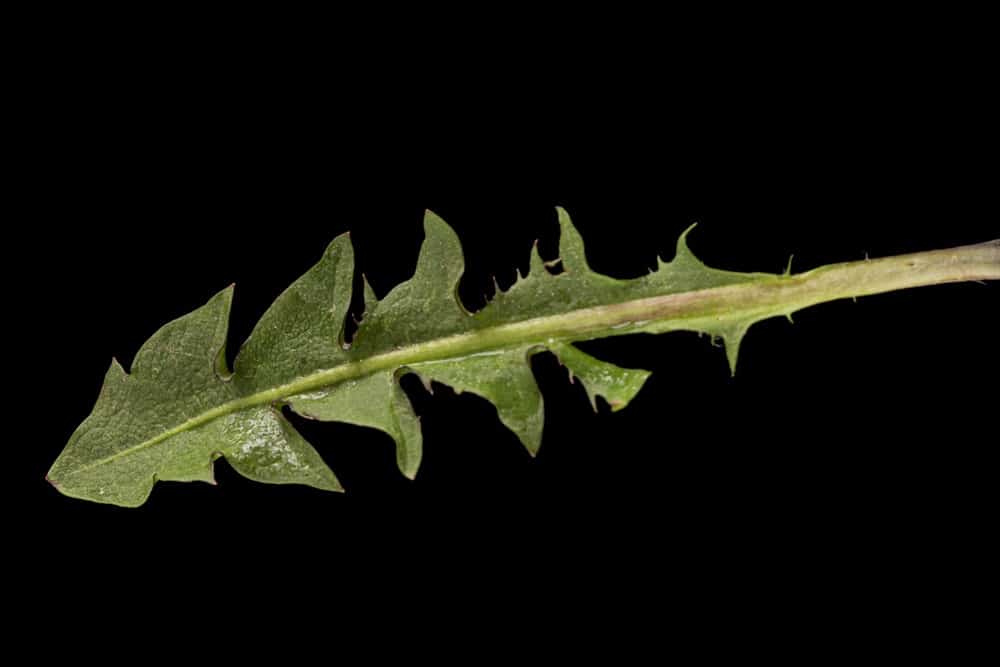
It belongs to the very large Asteraceae family. The English name “dandelion” comes from the French “dent de lion”, lion’s tooth, referring to the serrated shape of the leaf.
Its Latin name is Taraxacum officinale. Only one Latin name, but more than 1,200 species and subspecies in Europe (not to mention the rest of the world). Even botanists have a hard time distinguishing one subspecies from another. They crossbreed. They look alike.
We will therefore focus on a few common characteristics. The medicinal properties will be the same from one subspecies to another.
Dandelion grows pretty much everywhere. In cultivated fields, along roadsides, around houses. Some medicinal plants are hard to find. For dandelions, it’s quite the opposite—avoiding them would be way too complicated. And that’s all the better.
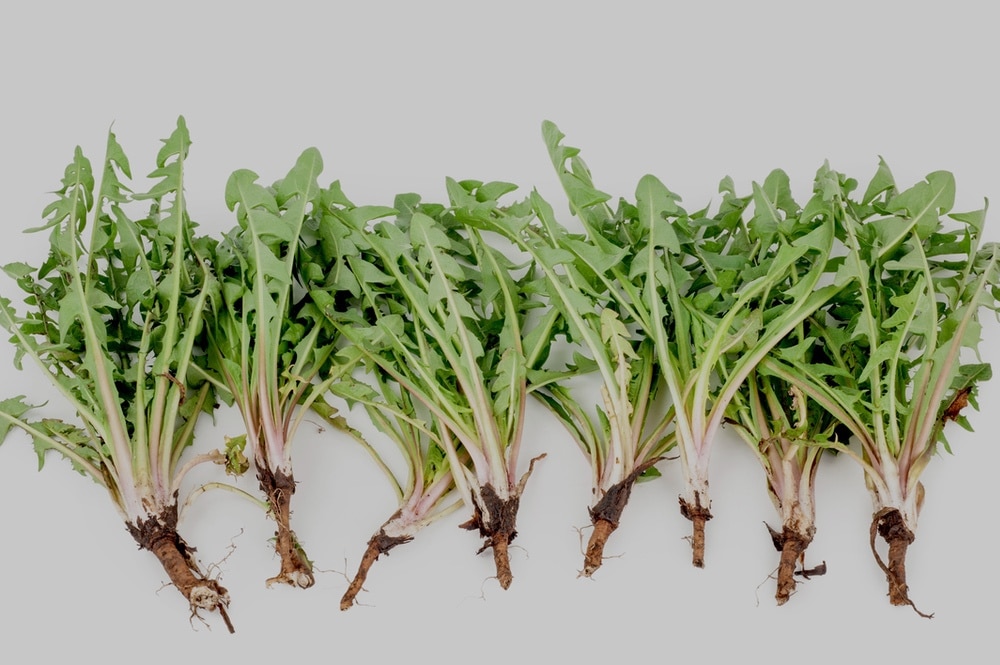
Dandelion is highly variable in size, depending on the environment in which it grows. The richer the soil, the greater its aboveground mass. The shape of the leaves also varies greatly, and is more or less cut and toothed.
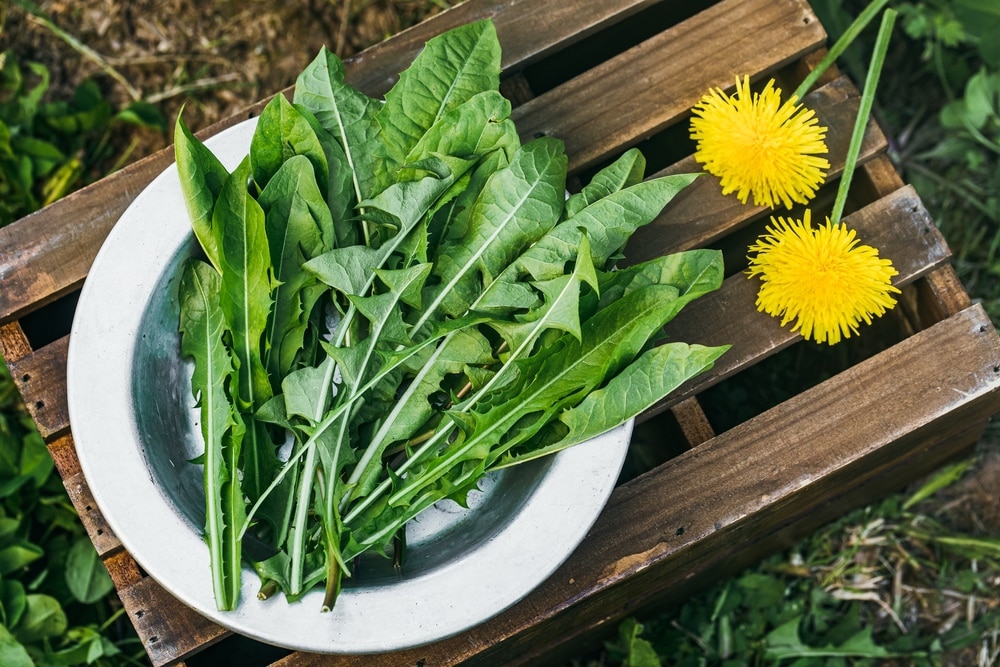
To be sure to properly identify the “traditional” dandelion, we will focus on the divided leaf that ends in an arrow point. The base of the leaves is often white, then the stem becomes reddish, then green.
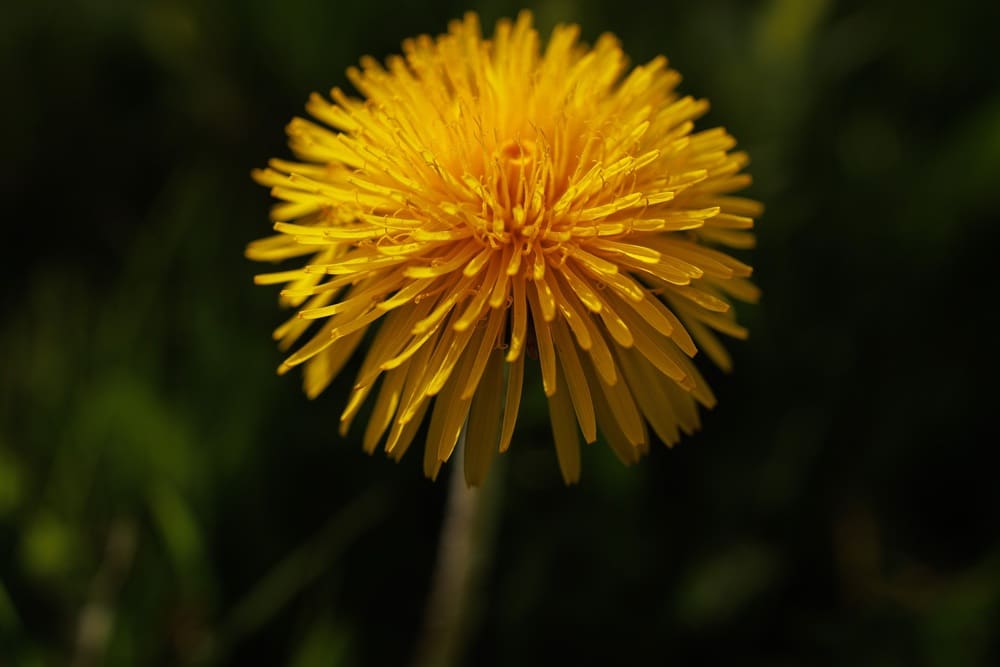
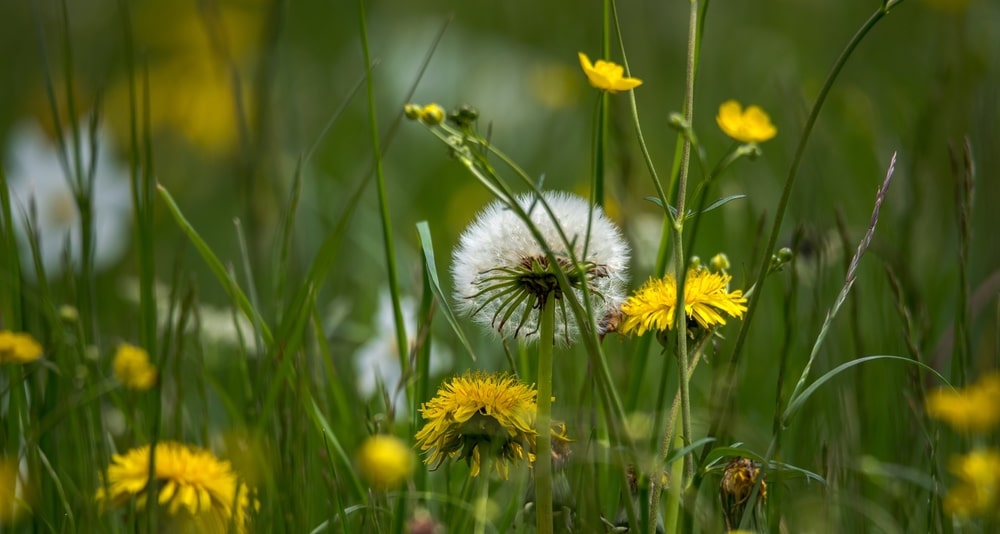
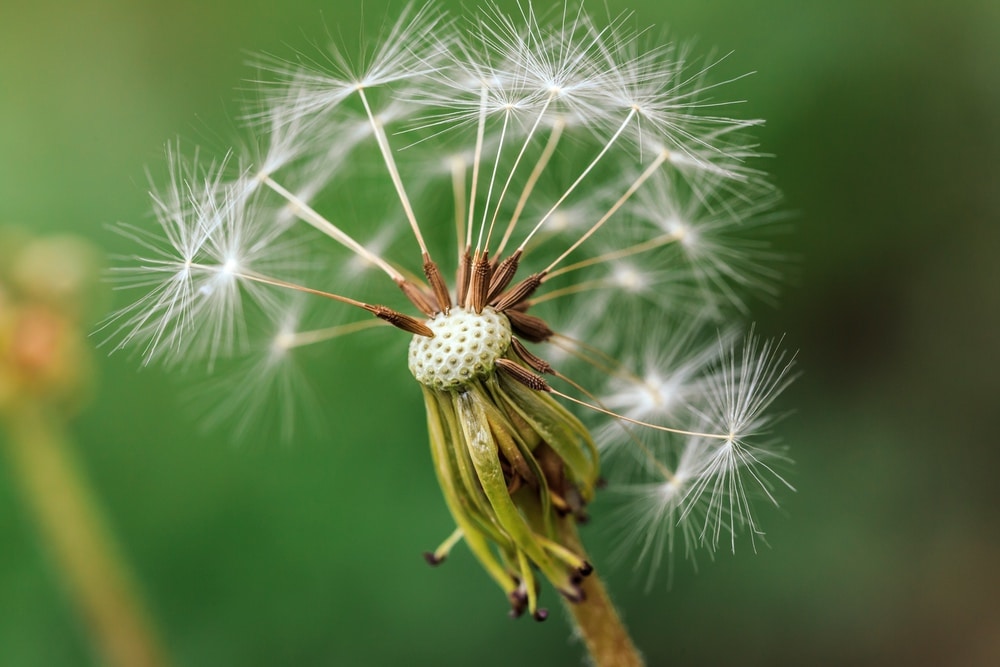
The flower stem is a hollow tube that releases a white sap when broken. What we call the flower (the yellow pom-pom) is actually a capitulum made up of lots of small yellow ligulate flowers. They look like a little strap-like petal. Well, that little strap is actually a flower. And the capitulum contains a multitude. It does not have tubulate flowers, which look like little tubes. Only ligulate ones. Take a close look with a botanical lens and be amazed at the beauty.
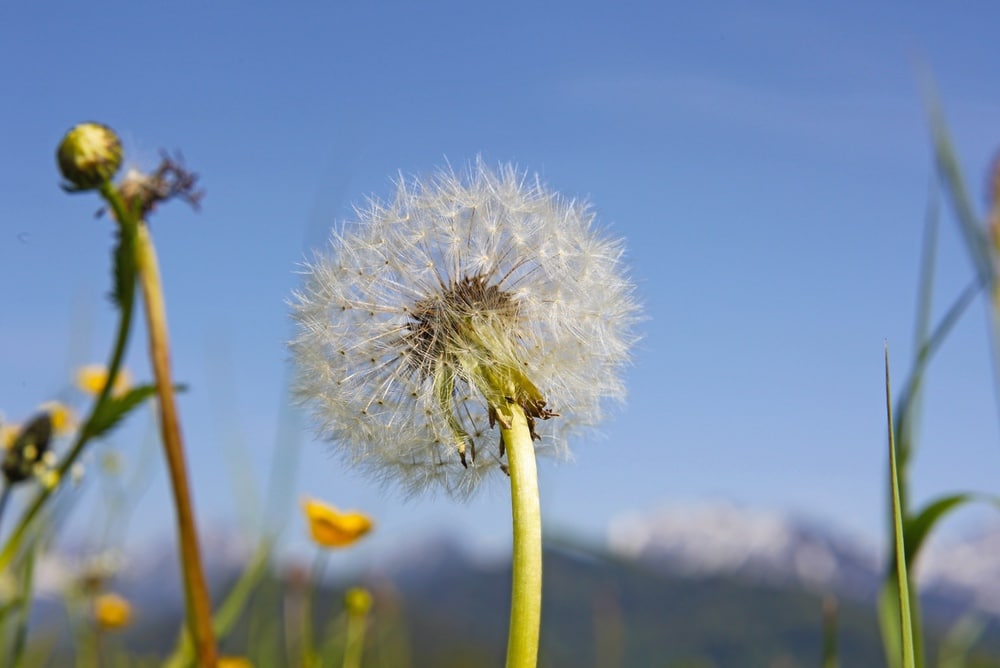
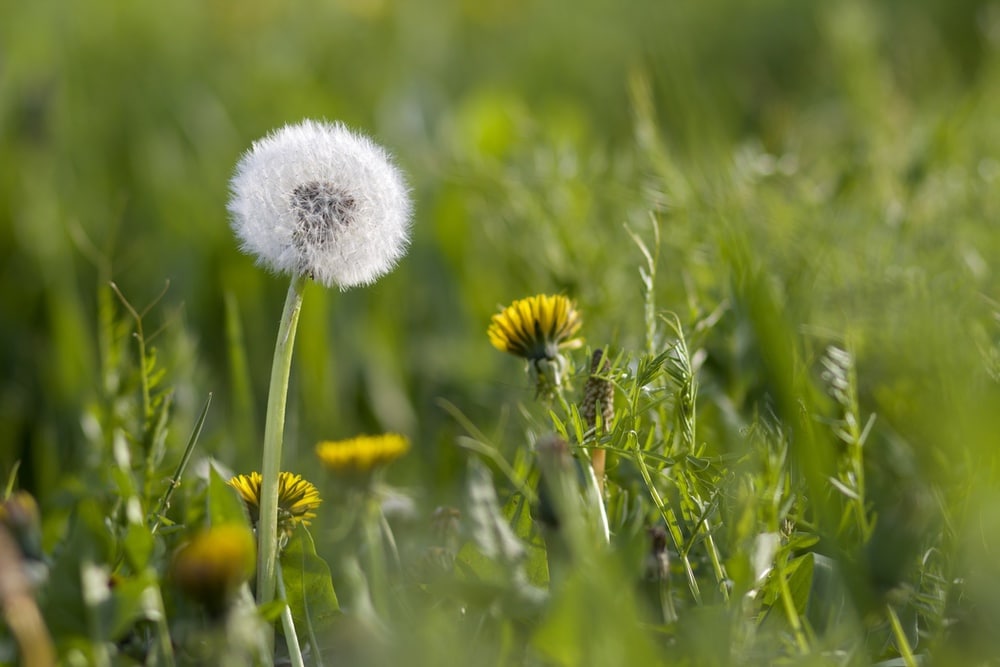
And there is only one capitulum per flower stem. When the capitula become mature, they close and then reopen to release the small parachutes carrying the seed.
The root consists of a fairly fleshy central taproot from which several much finer roots branch out. The root is also milky when broken. It is brown in color on its outer layer and white on the inside (you can scratch the brown layer with your fingernail to see the white color appear).
As we will see later, both the leaf and the root are medicinal. You can do fun stuff with the flower, but the traditional parts are leaf and root.
In terms of constituents, there are lots of them. We have many studies regarding the chemical profile of dandelion. If you want the full list, go to my website.
It contains:
The energetics: cooling and drying
The leaf is definitely bitter. The taste of the roots is interesting: slightly bitter, slightly salty, a subtle sweetness, and some kind of a smoked taste. It is not a pure bitter in the French tradition; it is a lot more complex.
In terms of properties and indications, I’d like to start with a quote from the very famous French herbal doctor Henri Leclerc. He said:
“Dandelion wrings out the hepatic sponge and rinses the renal filter“
I love this quote. Such a great summary of what the plant can do. Let’s start with the first part, “Dandelion wrings out the hepatic sponge”.
Dandelion roots stimulate the liver functions. The liver will excrete more bile. Bile contains metabolic waste from the liver. It needs to be evacuated. In other words, with dandelion, we open up one of the waste faucets a little more, and this will get rid of stuff through stools. Studies show that it increases the effectiveness of phase II detox pathways in the liver (11), the most critical phase today to get rid of toxic material.
Now, stimulating the liver is a very old practice. Very old. We find it in many books of the past. And it is still very relevant today, even more so than in the past. This function is vital for people who want to prevent disease. Why? Because these days, our elimination organs are constantly overwhelmed.
Leclerc says, “Clinical observation has allowed me to establish that dandelion truly promotes the flow of bile.” Better flow of waste product into the digestive tract and toward the exit.
This action that we call “choleretic” and “cholagogue” is at the root of many herbal protocols. It is rare not to see a liver plant in a herbal formulation. Because elimination is at the heart of many strategies. We also use this action when there is bile stagnation leading to gallbladder sludge or gallstones. But that comes with precautions, especially when there are risks of bile duct obstruction. It all depends on the size of the gallstones. Those plants may be indicated, or contraindicated.
Recent studies show that dandelion not only increases liver output but also protects the liver cells through its antioxidant properties(2)(12). It can therefore be used to protect a suffering liver (if you have elevated liver enzymes, for instance). We have milk thistle for this, which is as specific as it gets for this situation. But dandelion root could also help.
So, this is important to understand. Dandelion root has those two super important aspects. It increases bile output (because we have a lot more waste to evacuate these days) and protects the liver, an organ that is suffering a little every day to get rid of pollutants.
Dandelion is known as a “blood cleanser” in the tradition. Waste products are carried in the blood, in the general circulation, and must be processed and eliminated quickly by the liver and the kidneys. When the liver is overwhelmed, the blood becomes “dirty”. Dandelion, by activating liver and kidney output, can cleanse the blood. Just like the old people said in my region.
This notion will be used to support our work as herbalists in many situations. Help the liver eliminate waste, and your immune system may work a little better, your joints may ache a little less, your allergies may get a little better, your skin issues may decrease in intensity, your chronic migraines may get better.
In all of those instances, the liver has a role to play. I won’t give you all the details, but in allergies, for instance, the liver must get rid of immune complexes; otherwise, the inflammatory load increases. It is the same in the other health situations.
And all this seems to be only a partial view, at the surface. Rudolf Weiss(7), very famous German herb doctor, explains that “all these effects are only partial aspects of the general effect of the plant on cellular activity.” Dandelion would therefore act at the very heart of the cell, according to this great practitioner.
So anyway, if you wonder how to integrate all this into some kind of prevention program, listen to my episode on the French depurative cure, I think it will give you some idea at a very practical level, inspired by the tradition in the south of France.
In terms of properties on the overall digestive system, dandelion can be used as a bitter tonic. I explained the meaning of this term in my episode on gentian. Take it before meals to stimulate the secretion of digestive juices and stimulate the activity of smooth muscles. Dandelion root is far from being a true “bitter”, but it can do a fine job.
François-Joseph Cazin(1), a country doctor from the 1800s, explains that it is effective “to boost digestive forces and restore secretions.” It can be used in people lacking appetite after a long illness, for example. Nicolas Culpeper(10) on the British side, speaks of dandelion in cases of cachexia, profound weakening of the organism linked to significant malnutrition.
Today, we see plenty of people with very weak, deficient, depleted digestions. This has taken root in a chronic fashion. They clearly benefit from bitter tonics before each meal. And if you want to discover the prototypical bitter, see my episode on gentian, which was the first episode I published on this channel.
Paul-Victor Fournier(6), a great French herbalist of the 1900s, gives us a beautiful summary of the digestive properties of the plant. I had to simplify and rephrase the translation because the language is a bit convoluted. He says something like: “Dandelion shows how plant remedies can have multiple and harmonious therapeutic effects. Dandelion harmonizes the different functions of the entire digestive system as receiver, transformer, and distributor of food substances, which the entire organism needs for its perfect functioning.” Another pretty powerful quote.
So to rephrase, he says that dandelion acts like a conductor of all digestive organs. When the digestion is not going well, try dandelion root at the beginning of the meal, alone or as part of a bitter blend. Give it time. Weeks, even months if necessary. With pauses, but long-term use might be required.
Added bonus, it can gently regulate transit if you suffer from chronic constipation.
OK, let’s move to the kidneys now. Dandelion is a strong diuretic. And note that it is the leaf that has a particular affinity for the kidneys, more than the root. This is the second part of Leclerc’s phrase, “Dandelion rinses the renal filter“.
It is therefore used in cases of water retention and edema. If you feel bloated and suspect water retention, dandelion leaf can help. You can do a course for a week or so at the right dosage. If you manage to lose some weight, you have probably lost water stuck in your tissues. Old doctors used dandelion in different forms to help with edema of different causes. The term used back then was often “dropsy”. So if you see “dropsy” in old herbal books, you know they are talking about edema.
Quite interesting: Rudolf Weiss(7) recommends dandelion in elderly people. He says “it encourages renal excretion and elimination of substances that tend to deposit in the body”. Here he has “joint deposit” in mind, like uric acid crystals provoking joint inflammation. Dandelion is also indicated to counter the tendency to develop stones. So deposits in the kidneys.
It can be used in cases of hypertension when the situation is still manageable (not too high either), and please go check with your cardiologist first. By helping the kidneys eliminate water, it lowers the pressure in the overall plumbing, if you will.
It is also useful in women for managing premenstrual water retention. In this context, mix root and leaf. The leaf will act as a diuretic, the root will activate the liver, an organ essential here because it recycles excess hormones.
Some people with food sensitivities, like gluten sensitivities, can have lots of water retention while they consume those foods. Diuretics like dandelion can help check if, indeed, this feeling of being bloated can come from water retention. If the answer is yes, if you lose weight with a diuretic plant (and what you actually lose here is water), then a nutritional reform might be needed. Inflammation in the tissues, due to food sensitivities, is provoking the water retention.
Dandelion has been used in the tradition for joint pain. Let’s go back to Rudolf Weiss(7) who underlines the importance of: “The use of dandelion for the treatment of degenerative joint diseases. The arthritic process is the primary indication for Taraxacum. The plant has been used with great success in preventive treatments” he says.
Joint pain was considered in the past as a disease of waste accumulation as much as aging of the joint. That is why dandelion, or other plants acting on the liver and kidney, was very often part of the herbal mix.
Added bonus: dandelion has direct anti-inflammatory properties, as confirmed in different animal studies (9).
You may also see dandelion show up in chronic skin issues, like acne, eczema, psoriasis. Because in the past, those were also seen as accumulation of waste. The liver could not do its job, it was overwhelmed, so the skin took over to get rid of inflammatory material. This wisdom still applies today. But go easy on liver plants as they may make the situation worse if you go a little too fast and too hard.
Here is another property that you may not expect. Siyaram Pandey is a researcher at the University of Windsor in Canada. He has been studying the anti-cancer power of dandelion root for several years. He was first approached by Dr. Caroline Hamm, an oncologist curious to understand why some of her patients drinking dandelion tea seemed to recover better than others.
“To be honest with you, I was very pessimistic at first,” Pandey says in an interview with CBC News. “It could have been a coincidence.”
Coincidence? Not at all.
Pandey’s teams demonstrated that dandelion root forces the most aggressive cancer cells to commit suicide (a process called apoptosis), this was in the context of leukemia.
“It was surprising, but not as surprising as finding that dandelion was benign for normal cells,” Pandey tells us.
Of course, this does not mean that dandelion can cure cancer. This is way too simplistic. But it could be used as herbal support in a complementary way to traditional medical treatment, with the approval of your oncologist. It will not only act on the situation directly, but also help the body to eliminate all the waste generated by conventional treatments. Again, I repeat myself but check with your oncologist, as there might be some risk of interactions.
In terms of preparations and quantities used. As I explained, the leaves are used for their diuretic effect. The root is used for its action on the liver. There are many ways to prepare dandelion; here are just a few.
In terms of precautions:
And that is it for dandelion. I hope you turn this very common plant into a true herbal ally. It is there all around us, very useful in regular herbal practice; it can be a small part of many herbal blends for many health strategies. No toxicity. And there are no ecological concerns regarding the plant. What’s not to like?
Yum! Dandelion jam, also called “cramaillote,” is actually a jelly made from flowers (or more precisely, from flower capitula). The jelly provides a subtle and slightly honeyed flavor.
Here is a simple traditional recipe to prepare. The recipe was given to me by my friend Guillaume Besson of Nature en Conscience. Guillaume is an eternal experimenter, constantly adjusting his recipes until he gets the perfect mix. As always in cooking, don’t hesitate to experiment with a little more of this and a little less of that (less sugar? I understand you!)
Over the years, I have received many questions about our dear dandelion. Here are the most common ones…
They will be much more tender in spring, before flowering. That’s the right time to eat them in salads of leaves. As for me, I eat a 100% wild salad at the end of winter and in spring with dandelion leaves, hawksbeard, picris, sowthistles, nipplewort, etc. I like diversity.
I don’t need to add lettuce or endive leaves to “cut” the taste. On the other hand, if you are not yet used to the bitter taste, you can make a mix with milder salads (those you find in your organic store).
A bit later in the season, at the end of spring, even summer, I like to cook the leaves which are much less tender than at the beginning of spring (that said, I also continue with my salads). My favorite recipe is called “bourbouillade.” Yes, it’s a recipe from the south of France as the name suggests 🙂 See recipe below.
The leaves in salad, simply, as explained a little above (recipe with anchovies) in the Dandelion Benefits for the Liver section.
The cooked leaves in “bourbouillade.” Here is the recipe:
A mixture of wild plant leaves is used: dandelions, sowthistles, wild arugula, lance plantain, wild mallows. Sometimes I make a bourbouillade with dandelion leaves only, it will be a bit more bitter than if mixed with other leaves (plantain and mallow cut the bitterness a bit, arugula brings peppery/mustardy notes).
Wash your leaves then sauté them in good olive oil with chopped garlic. Salt and pepper. Cook covered until the leaves are cooked and tender.
Then make a small “white sauce” directly in your pan. I add a bit of milk, a bit of flour, to make a quick “béchamel.” Then, I spread this preparation on nice slices of whole wheat bread, I add grated Comté cheese on top and I brown it in the oven.
Serve as a starter realizing that all this good bitterness opens the appetite 🙂
I refer you to the beginning of the article, but I also give you a small summary here by selecting three properties that can be useful in daily life:
It’s a great plant friend of the liver. We use the dried root in decoction and do a small detoxifying cure for about ten days at a rate of 2 cups per day. It provides its benefits in periods when you feel a bit “clogged,” full, congested, generally after some food excesses (watered or not) accompanied by lack of physical activity.
It regulates transit (still in decoction of roots) when one suffers from mild, temporary, or chronic constipation. By stimulating the hepatobiliary axis and allowing better bile production, dandelion root stimulates transit.
The leaf is very diuretic, so it allows (in dried leaf tea), to help eliminate edema and water retention. We reduce puffiness a bit thanks to the leaf when we tend to accumulate water, particularly in the lower parts of the body. This can happen in people who have poor circulation during the hottest days. In women, this situation can occur in premenstrual syndrome.
We prepare a decoction of dried roots cut into small pieces.
You can harvest and dry the roots yourself, or buy them at an herbalist. I mentioned a bit earlier the quantity of 30 g per liter, but you can do it more simply by using a dessert spoon of dried roots for a large cup. For 2 cups a day, we would put 2 good dessert spoons in 3/4 of a liter of water, simmer for 5 minutes, turn off the heat, and let it rest another 15 minutes or so. This quantity should provide 2 large cups for the day.
Since this decoction can somewhat “shake up” the liver, gradually introduce the tea to see if you tolerate it well.
No, dandelion is not toxic. It is both edible and medicinal. Assuming, of course, that you have properly harvested dandelion.
It can, however, contain toxic substances depending on the harvesting location. Always harvest far from industrial zones and conventional crop fields. Also harvest far from any animal passage, the risks of echinococcosis (outside the scope of this article) being not insignificant.
There are more than 1,200 species and subspecies in Europe (not to mention the rest of the world). Overall, all dandelions (of the genus Taraxacum) are edible. Note in passing that foragers confuse true dandelion with other wild salads like hawksbeard, picris, sowthistles, nipplewort, etc. I would say to you “no matter, because all these wild salads are edible.”
However, I have heard enough weird stories to tell you that you must know your botany and be able to identify plants. Go out with local associations that will introduce you to all these edible salads. Better a knowledgeable forager than a sick one (or worse).
That said, overall, if it looks like a dandelion, in general, it’s edible.
(1) Cazin, F.J., “Practical and Reasoned Treatise on Indigenous Medicinal Plants,” 1850
(2) Colle D, Arantes LP, Gubert P, da Luz SC, Athayde ML, Teixeira Rocha JB, Soares FA. Antioxidant properties of Taraxacum officinale leaf extract are involved in the protective effect against hepatoxicity induced by acetaminophen in mice. J Med Food. 2012 Jun;15(6):549-56.
(3) Lee BR, Lee JH, An HJ. Effects of Taraxacum officinale on fatigue and immunological parameters in mice. Molecules. 2012 Nov 7;17(11):13253-65.
(4) Jinchun Z, Jie C. The effects of Taraxacum officinale extracts (TOE) supplementation on physical fatigue in mice. Afr J Tradit Complement Altern Med. 2011;8(2):128-33.
(5) Leclerc, Henri, “Summary of Phytotherapy: Essays on Therapeutics Using French Plants,” 1954
(6) Fournier, Paul-Victor, “Dictionary of Medicinal and Poisonous Plants of France,” 1947
(7) Weiss, Fintelmann, “Herbal Medicine,” 2000
(8) Wood, Matthew, “The Earthwise Herbal: A Complete Guide to Old World Medicinal Plants,” 2008.
(9) Koh YJ, Cha DS, Ko JS, Park HJ, Choi HD. Anti-inflammatory effect of Taraxacum officinale leaves on lipopolysaccharide-induced inflammatory responses in RAW 264.7 cells. J Med Food. 2010 Aug;13(4):870-8.
(10) Culpeper, “The English Physician,” 1652
(11) Bjørklund G, Cruz-Martins N, Goh BH, Mykhailenko O, Lysiuk R, Shanaida M, Lenchyk L, Upyr T, Rusu ME, Pryshlyak A, Shanaida V, Chirumbolo S. Medicinal Plant-derived Phytochemicals in Detoxification. Curr Pharm Des. 2024;30(13):988-1015. doi: 10.2174/1381612829666230809094242. PMID: 37559241.
(12) Hamza, A., Mohamed, M., Lashin, F. M., & Amin, A. (2020). Dandelion prevents liver fibrosis, inflammatory response, and oxidative stress in rats. The Journal of Basic and Applied Zoology, 81. https://doi.org/10.1186/s41936-020-00177-9