
Hey there, Christophe from TheFrenchHerbal.
Today, we are talking about a medicinal plant that I really like, for my own use, but also as part of different blends that I recommend. It is surprisingly strong and effective for a list of conditions.
It’s called sweet flag. Also called calamus in the herbal world, or acorus for its Latin name. And I will use all of those terms interchangeably.
Before we start, a quick but important reminder: I am not a doctor, pharmacist, or licensed healthcare professional. The information shared in this episode is for educational and informational purposes only. It is not intended to diagnose, treat, or cure any condition, and it does not replace professional medical care. Always consult your physician before starting any new herbal protocol, especially if you are pregnant, nursing, or taking medication.
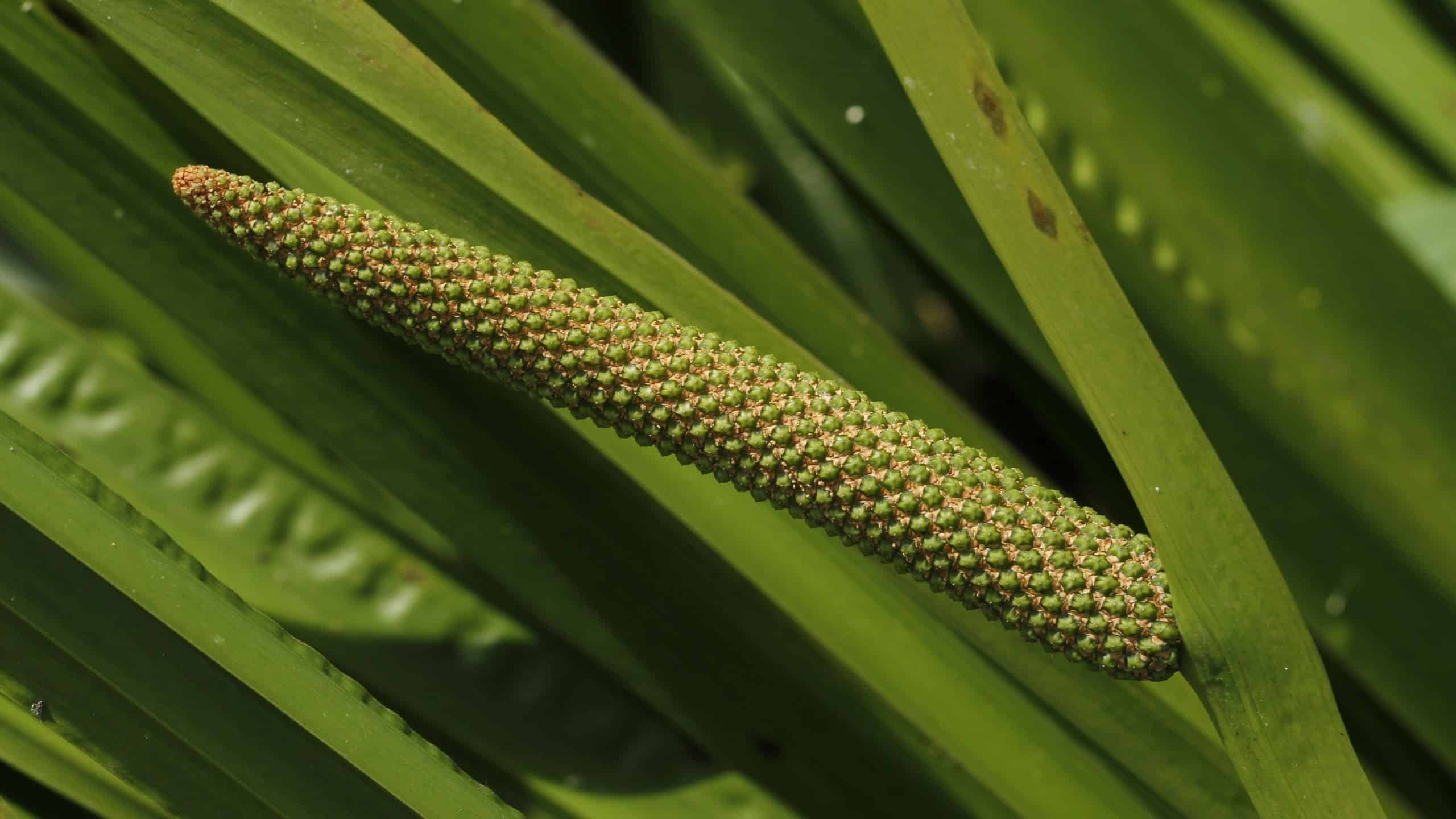
Let’s start with a bit of botanical information.
Sweet flag is a perennial plant that belongs to the Acoraceae family. There aren’t many plants in that family, just a handful of acorus plants.
Sweet flag is Acorus calamus. Like all acorus, it grows with its roots in water: along streams, ponds, and marshes. It is not difficult to cultivate at home; all it needs is a large pot that you keep constantly moist—or even better, half-submerged in a larger container. That’s what I do in my garden.
The plant can be grown from a root cutting, and should grow fairly quickly once established. Again, you have to keep it wet.
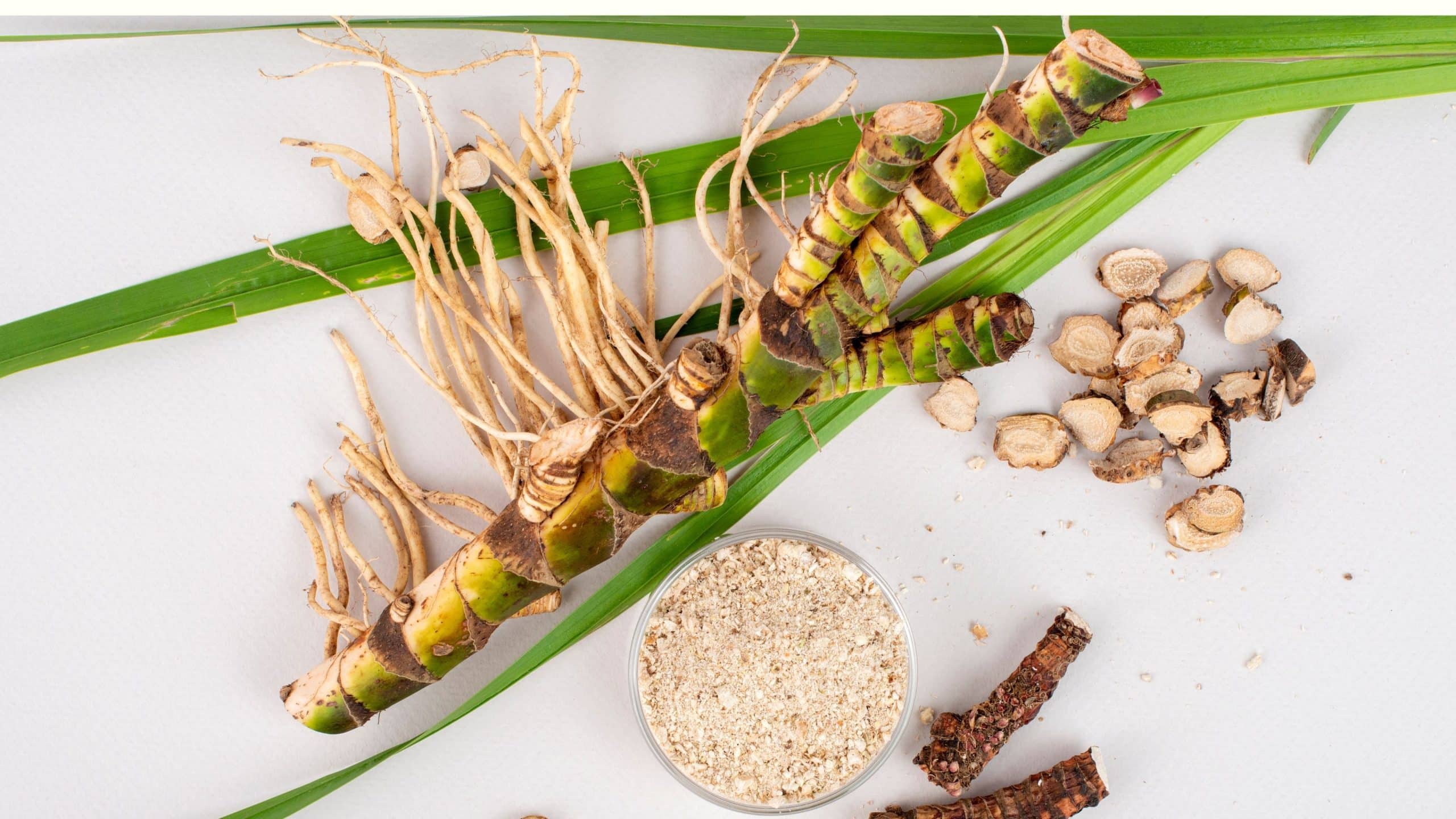
The parts we use are the rhizomes. In common language we say “calamus roots” but we are actually talking about an underground stem that grows horizontally and sends roots (underneath) and leaves going up.
Harvesting is done in early spring or late fall, when the plant’s energy is concentrated in the rhizomes. Rinse the rhizomes thoroughly and brush them carefully. Remove the rootlets, which are less aromatic and more bitter. Then, cut the fresh rhizomes into slices or small cubes and dry them flat on a rack. You could use the gentle heat of a dehydrator if you needed to, to speed up the drying process. But if the heat is too high, you’ll lose aromatic compounds. Keep in mind that if the smell is getting to your nose, it means it has escaped the plant…
Those rhizomes are surprisingly strong, bitter, spicy and aromatic. Make sure they are still aromatic when you take them out of storage, especially if they have been sitting there for a while. Place a small piece in your mouth, let it soak in saliva, then chew it gently. It should create a slight numbing effect in the mouth, accompanied by a strong, pungent taste on the tip of the tongue.
The bitterness is present but nothing like pure bitters such as gentian—it’s much less pronounced. However, the aromatic part leaves a lasting impression.
You can find sweet flag in herbal shops, cut in small pieces of rhizome.
Dried leaves can be used to make a pleasant tea, but they are far less potent than the rhizomes (ref: Moore).
In terms of constituents, here is what you can find in those rhizomes.
Although you will not find much of an astringent or mucilaginous taste. These two dimensions are not very present. What comes out is the strong aromatics and the bitterness.
The energetics: warming and drying.
OK, now let’s talk about the properties and indications.
We’ll start with the digestive tract. Sweet flag is primarily a plant for states of digestive stagnation. The basic digestive processes are underfunctioning. The secretion of digestive enzymes like pepsin, trypsin, hydrochloric acid, bile, is weak. There is not enough juices to do the job properly. Also, contractions of the smooth muscles to churn the food are weak and deficient.
If we use the image of the washing machine, there is not enough soap and water in the machine, and the machine is not turning fast enough.
The end result is a state of digestive stagnation. The food will sit way too long in the different stages of the digestive tract and will ferment. So there are lots of gases being produced. The stomach turns into a fermentation chamber.
There are also cramps, because the tube will churn and churn, but since there are not enough digestive enzymes, the washing machine is turning without the soap. So it keeps turning. And will end up cramping because it gets tired.
That’s when sweet flag comes into the picture. You see, it’s got all the dimensions that we need to support the digestive process. It’s got bitterness to stimulate enzyme production and release. So it is a bitter tonic. It’s got aromatics to calm the production of gases and cramps. We say that it is both carminative (it slows the production of gases) and antispasmodic (it prevents the cramping).
Rudolf Weiss, the famous German doctor and herbalist, said that calamus has a remarkable ability to stimulate appetite and the release of gastric juices (ref: Weiss). Good appetite, in your belly (not in your head), usually means the digestive tract is ready to accept food; a good appetite is a good sign.
So here, the question we, herbalists, ask ourselves is: when do we take sweet flag? Because, you see, if the plant is a pure bitter like gentian (see my episode on gentian), we take the plant about 10 minutes before a meal. When it is pure aromatics, we take it during the digestion, when the bloating and cramps are present. But here, it’s got the two dimensions. So what to do ?
Well, here is what I do in my practice. When there is an overall chronic sluggish digestion, I may add calamus to a daily blend, whether in tincture form or as a tea, to drink throughout the day. Not a lot, but a small portion to support digestive functions. Before meals, I usually go for pure bitters like gentian. And after the meal, if there is lots of cramping and bloating, I may suggest going back to the tea or tincture of calamus.
Let’s take an example of protocol.
Here is another point regarding the properties of calamus on the digestive tract: it is antiparasitic, a property well-known in certain traditions, which seems to be confirmed by animal studies (Nath, 2016).
So you know how you can go to certain countries or regions of the world and catch a nasty bug, cause your immune system is not used to those bugs. What we call “traveler’s diarrhea”. Then you come back home, and the situation lingers. You still have some diarrhea, and you feel like things are still inflamed in your belly. Of course, go see a physician. But also, we have good herbal teas to help get rid of those pathogens.
Walnut leaf is a well-known remedy. Or walnut hull tincture. All the strong aromatic plants like thyme, winter savory, oregano would help. And you can add acorus to the list. Again, you could do a tea blend here, with a bit of dried walnut leaves, a bit of oregano maybe, and a few pieces of acorus rhizomes, to drink throughout the day.
So here, let’s make a little pause, and let me tell you about my trip to the Andes mountain range a few years ago. I spent about a month in Bolivia, Peru, and Chile. I was with my older son, and we had been warned. Do not eat the local food and only drink bottled water. And that is not what we had decided. We wanted to enjoy local foods you can buy in farmers markets, drink the local drinks. And… well… we had a nasty case of traveler’s diarrhea. And we were doing a lot of bus trips, so you can imagine the 10-hour bus trip, fighting mentally to hold it in, and gobbling up Loperamide tablets (which is an antidiarrheic drug) just to survive the bus and the bloody winding road…
I remember one night, we were staying with the locals around Lake Titicaca, and our hostess, an old lady, just took pity on me. I looked miserable. She told me to come with her and showed me a plant. She called it “la muña” (Minthostachys mollis), which is a very strong mint. She told me to drink the tea of it. And gosh, that felt so good.
Back home, it took me a few months to get rid of it. But I did, and those calamus roots, let me tell you, they really helped me to find relief, cause I had lots of spasms, and they probably contributed to getting rid of the bad bugs.
So, that’s my story. Thank you, la muña, and thank you, acorus calamus.
Alright, we stay with the digestive tract to talk about ulcerations this time.
Sweet flag can be used for ulcerations of the esophagus, stomach, or duodenum. Sweet flag seems to have mucous membrane-repairing properties. It is also known to modulate gastric acidity, stimulating production when the stomach is underactive (we talked about that) and calming excess acidity, which can be good when there are ulcerations.
You can combine it with other excellent mucous membrane restorative plants, such as calendula, centella and plantain.
OK, let’s switch gears and talk about menstrual cramps.
Acorus root can help relieve those cramps. Put it in a blend if you can, that will be a little more elegant. Maybe with angelica, a bit of sage, a bit of yarrow, a bit of ginger. You need to take this blend as soon as the pain and cramps begin and drink generously throughout the day. Of course, if you just have calamus, it could help as well on its own, and we’ll talk about quantities and preparations in a few minutes.
Plus a hot water bottle and any other interventions that make you feel better.
During a winter infection, sweet flag will act as a warming diaphoretic. It will support colds and other winter infections. It also has antibacterial and antiviral properties.
And here is an interesting indication, that we got from docteur Cazin, one of our famous herbal docs of the 1800’s here in France. He says to take calamus “during the atonic phase of catarrhal infections.”
We’ve already seen this indication of sluggishness and atony for the digestive tract. Well, here, the same concept applies to the respiratory system. After an acute inflammatory phase, the person may enter an atonic phase where the organ (here, the lungs) lacks the energy to function properly. This state can occur at the end of an infection with lingering symptoms and a lot of tiredness. The aromatic strength of sweet flag can then improve circulation around the organ and facilitate healing.
Remember that in the context of winter infections, herbs should be taken regularly throughout the day. At the end of bronchitis, for example, you could formulate an energetic blend, a bit on the strong-tasting side, with thyme, elecampane, and sweet flag. And please go see your doctor if things are not improving.
Sweet flag’s action on the nervous system is quite interesting.
First, it has a calming and anxiolytic effect (Reddy, 2014). But it also acts as a memory and cognitive stimulant (Malik, 2023). It is also a neuroprotective agent. So it calms you down while centering you and enabling you to think more clearly, while protecting the central nervous system. Very interesting.
If you want to go a bit further in calamus action on the mind, I will link to a long article written by Jim McDonald.
If you don’t know Jim’s work, only he can write this type of article. It is a masterful blend of herbal wisdom, storytelling going across cultures, and weaving in personal experiences. It is warm, funny, accessible, and… well… just Jim.

Now, back to calamus. Applied externally, sweet flag can help resolve infected wounds or chronic ulcers (such as venous ulcers).
This is not surprising given its powerful aromatics. You could combine it with calendula for even stronger action—say 50% sweet flag, 50% calendula, or other combinations using, for example, resinous plants (which are broad-spectrum disinfectants) or propolis.
Sweet flag is antibacterial and effective against certain problematic strains, like Staphylococcus aureus (Khare, 2004).
One last indication, from our famous french herbal doc, Jean Valnet. He mentions using a compress of the tea for “bone conditions.” And he underlines this, meaning it is quite important to him. But Valnet is rather vague. What does that mean, “bone conditions”? If anyone knows how to interpret this indication, please let me know.
In terms of forms and quantities, you’ve got options:
Personally, I like the tea and the tincture. And when I discovered the article from Jim McDonald, I started to chew on the root. So Jim, if you listen to this, just know that your influence goes beyond the Atlantic Ocean.
OK, let’s talk about the precautions.
There has been much discussion about the β-asarone content. Studies in rats show that this isolated substance is carcinogenic if you give lots of it to those poor animals. Extrapolation to humans is unclear. There does not appear to be any incidence in populations that regularly consume sweet flag (for example, in India, a country that uses this plant quite extensively).
That being said, we will apply the following precautionary principles:
As I said a few minutes ago when we talked about constituents, it seems that the American variety does not contain β-asarone and can therefore be used without restriction, whereas the variety from China or India contains much higher levels (ref: Weiss).
And that is it for sweet flag. Take a tiny piece of the rhizomes, put it in your mouth, and feel the power of Vacha! (that is the ayurvedic name, in case you wonder).
Thanks for being here, I will see you very soon for the next episode of TheFrenchHerbal!
Nath P, Yadav AK. Anthelmintic activity of a standardized extract from the rhizomes of Acorus calamus Linn. (Acoraceae) against experimentally induced cestodiasis in rats. J Intercult Ethnopharmacol. 2016 Jun 14;5(4):390-395.
Reddy, S., Rao, G., Shetty, B., & Hn, G. (2014). Effects of Acorus calamus Rhizome Extract on the Neuromodulatory System in Restraint Stress Male Rats.. Turkish neurosurgery, 25 3, 425-31 . https://doi.org/10.5137/1019-5149.jtn.11405-14.1.
Malik, R., Kalra, S., , P., Singh, G., , M., Gahlot, V., Kajal, A., & , R. (2023). Antioxidative and neuroprotective potential of Acorus calamus linn. and Cordia dichotoma G. Forst. In Alzheimer’s type dementia in rodent. Brain Research, 1822. https://doi.org/10.1016/j.brainres.2023.148616.