
Hey there, Christophe from TheFrenchHerbal.
I don’t know if you ever wondered: how did humans begin using medicinal plants in our very ancient past? Did we just come across a dandelion, and then what… we picked it, ate the leaves, boiled the roots? Why would we do that? How does this all start?
I find this absolutely fascinating. I try to imagine what happened throughout the tens of thousands of years. Even though there are still a lot of missing parts, we have pretty good data to help us recreate a story.
I’d like to take you through that story. This will be a multiple-part series focused on the history of herbalism. I will try to explain how we got to today’s practice, focusing mainly on Western civilizations.
In this first installment, we’ll journey through the European and Mediterranean traditions. If you’re ready, let’s hop into the time machine…
To me, the most fascinating question is when exactly did humans start using plants as medicine? The answer is frustratingly vague—phrases like “since time immemorial” are common. But archaeological data pushes the timeline back at least 60,000 years, to our Neanderthal cousins.
You see, in the 1960s, archaeologists excavated the Shanidar Cave in Iraq and made a groundbreaking discovery. They found the remains of a Neanderthal man buried with a bunch of different medicinal plants like yarrow, mallow, centaury, and ephedra.
Why were these plants put in a grave? Not for their ornamental value because, frankly, as much as I like ephedra, it is not the most decorative of plants (I would not bring a bunch of ephedra to a dinner, for instance). Scholars believe they were placed there as protective charms for the afterlife. In the sense that if those plants protected the living against disease, they may safeguard the dead. So they were probably used as remedies.
To this date, this is the oldest-known evidence of medicinal plant use in our human history.

But again, this does not answer the question: how did humans learn to use certain plants and not others?
Before written records, early humans likely relied on instinct—much like animals do today. Wolves eat grass to induce vomiting when sick. Bears rub wild onions on their fur to repel parasites. Chimpanzees chew bitter leaves to expel intestinal worms.
Humans, too, probably started with the only thing they had, way before written records: their instinct. Along with their ability to observe. Observing other animals use their own instinct to forage medicinal plants. If a wolf used certain types of grass, it was probably observed and tried.
That, plus the ability to plan, to think, and the desire to experiment. Curiosity, observation, and experimentation. Trial and error. Of course, errors could be fatal, but that shaped the knowledge too. It probably took many generations to come up with some kind of a basic pharmacy. And that was refined with each generation… this plant to ease the pain, that one to reduce fever, that one to stop bleeding… The transmission was mainly oral back then, from the old to the young.
Remarkably, the same plants (like yarrow, willow bark, chamomile) appear in unconnected cultures across the globe, proving that herbalism wasn’t just random guesswork—it was observation + experimentation refined over millennias.
As humans formed tribes, specialized healers emerged—shamans, medicine men, and wise women—who became the keepers of herbal knowledge. They probably had a strong interest in plants, or maybe they had a gift for healing.
Herbal wisdom was closely guarded by those healers, and passed down only to chosen apprentices. The average person knew basic remedies—plantain for wounds, mint for digestion, willow bark for pain—but the healer held much more sophisticated knowledge:
Did they keep that knowledge secret? Maybe. Probably. Because knowledge represented power to the healer and to the tribe. For the healers, if they revealed too much, they might lose their status. For the tribe, it was also an advantage over other competing tribes.
Here is a fun fact: When 19th-century anthropologists studied what they called “primitive” tribes around the world, they often concluded that these cultures had no advanced medicine. In reality, the healers simply refused to speak to them. That knowledge was not given to just anyone arriving in your country with lots of weapons and a desire to loot.

As societies grew, so did organized herbal knowledge. Each culture developed its own “materia medica”— which is a catalog of medicinal plants, their uses, and preparations. They started to exchange knowledge with other groups. So as trade routes expanded, so did herbal knowledge.
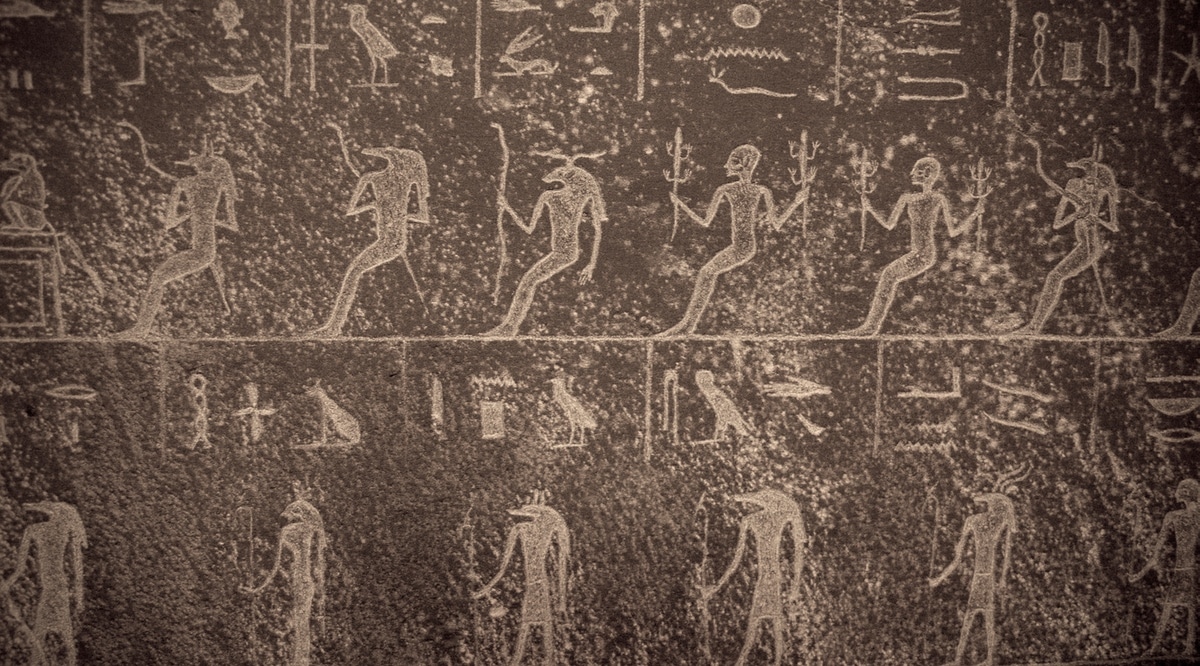
By 1500 BCE, the Egyptians were trading medicinal plants across the Near East and Mediterranean. Clay tablets from this era list:
The Romans took herbalism to a new level. Their legions traveled with physicians, surgeons, and a stock of medicinal plants, ensuring soldiers stayed healthy. Some key remedies:
Roman soldiers were issued garlic rations to prevent infections. The word “salary” comes from sal (salt), but some historians joke it should come from allium—Latin for garlic—since it was so essential to their health!
When we think of ancient medicine, Hippocrates (who lived in 460–370 BC) is the first name that comes to mind. And rightly so—he revolutionized medicine by:
But was he a great herbalist? Not particularly. While he obviously used plants (they were the only remedies back then), his real contribution was turning healing into an organized system. His focus was on observation, diagnosis, and holistic care, not herbal discovery.
Now, one of the most influential herbalists of antiquity was Pedanius Dioscorides (who lived in the years 40 to 90 AD). Dioscorides was a Greek physician who traveled with Emperor Nero’s armies, documenting plants across the Roman Empire. I don’t know if you came across his name, but he is a well-known and respected figure of our herbal past.
His five-volume masterpiece, De Materia Medica, described around 600 plants with:
Why was De Materia Medica so revolutionary? Well…
Dioscorides’ work was so respected that medieval monks copied it by hand for centuries. Some of these illuminated manuscripts are now priceless.
If Hippocrates was the father of medicine, Galen of Pergamon (129–216 AD) was its most dominant son (so to speak)—a figure so influential that his theories dominated Western medicine until the 17th century. In France, we taught Galenic medicine until very late, but that will be for another episode…
Galen was born in Asia Minor (which is modern Turkey today), and studied at Alexandria’s legendary medical school.
He became a gladiator surgeon, treating wounds and learning anatomy (human dissection was forbidden, so he studied animals instead). His skill earned him a position as personal physician to Emperor Marcus Aurelius.
Galen built his knowledge and practice on Hippocrates’ theories, formalizing the Four Humors—a system that explained health and disease based on a balance of:
Illness was an imbalance between those 4 humors. A productive cough for instance was too much phlegm, required warming and drying expectorants like thyme maybe.
The 4 associated constitutions were kind of a caricature of certain types of people, helping the practitioner to make a quick read on the person in front of her or him, and make recommendations.

Plants were classified by their “energetics”:
Sound familiar? This is the same system used in eastern traditions like Chinese or Ayurvedic Medicine. So “Eastern” and “Western” herbalism were once based upon similar energetics constructs.
Galen’s system was brilliant in theory but flawed in practice. On the positive side, it was a holistic system, and quite standardized, providing a framework for doctors to follow.
On the negative side, it was very rigid and complicated. There were different degrees of warming or drying, which was hard to understand and sometimes not really reflecting practical observations. Also, it seems that Galen looked down on folk healers, who used simple herbs, simple remedies without his complex theories and classifications. There were also aggressive, sometimes dangerous, with drastic purges used to “balance humors,” although this reflects a lot more the period and the practices back then than Galen himself.
Also attributed to Galen is the famous Theriac, a very complicated mix of substances positioned as a panacea, a cure-all remedy that took a very long time to prepare. It contained more than 60 ingredients, including exotic spices like saffron and cinnamon; resins from far-away places like myrrh; viper flesh; and another long list of ingredients. It had to be aged for years to make it stronger. It was extremely expensive, so only the rich could afford it.
This gives us a taste for the centuries to come, where we will see a split between the simple practice of folk remedies, and the complicated practice of doctors and apothecaries, who were using very complex blends.
As we wrap up this first part, here are some key takeaways from the past:
First of all, “natural” does not mean “new age”. There is nothing new in herbal remedies. This isn’t a fad born in the 1970s. Sure, there was a revival taking place, I would say, between the 1970s and the 1990s, depending on the western country. But the roots of that medicine is very old. Hippocrates was one of the first Western proponents of a healthy diet and lifestyle.
Second, warming/cooling/moistening/drying for herbs is not just an Eastern concept. It was the foundation of western medicine for 1,500 years. We just lost it with the understanding of anatomy, physiology, and modern medicine. But they do pair well together. The goal here is not to replace science, but to bring different views, different perspectives, to the same problem.
So to conclude, I would say that for millennia, humans had no choice but to rely on plants. If a remedy didn’t work, people died. Modern skepticism often ignores thousands of years of empirical evidence. Sure, evidence-based medicine brings enormous value. But it doesn’t have to be to the detriment of our long traditional past.
That’s it for the first part of this series. I hope you enjoyed it. In the next installments, I will explore other periods of our herbal history.
Thanks for being here, I will see you soon for the next episode of TheFrenchHerbal!