Hey there, Christophe from TheFrenchHerbal.
Today we’re talking about a medicinal plant that is pretty hairy and a little prickly. It grows all around my place. I don’t know if it grows where you live, but it’s got a wide distribution around the world. And it’s been kind of forgotten, like many herbs of the past. Its name is blessed thistle or holy thistle. A real classic of French herbalism, and I’m going to explain how to harvest it, process it, and use it. So stay tuned.
Before we start, I’d like to remind you that I am not a medical doctor, pharmacist, or healthcare professional. I’m here to share information with you. This does not, in any way, replace medical care, nor is it intended to provide medical diagnosis or prescriptions.
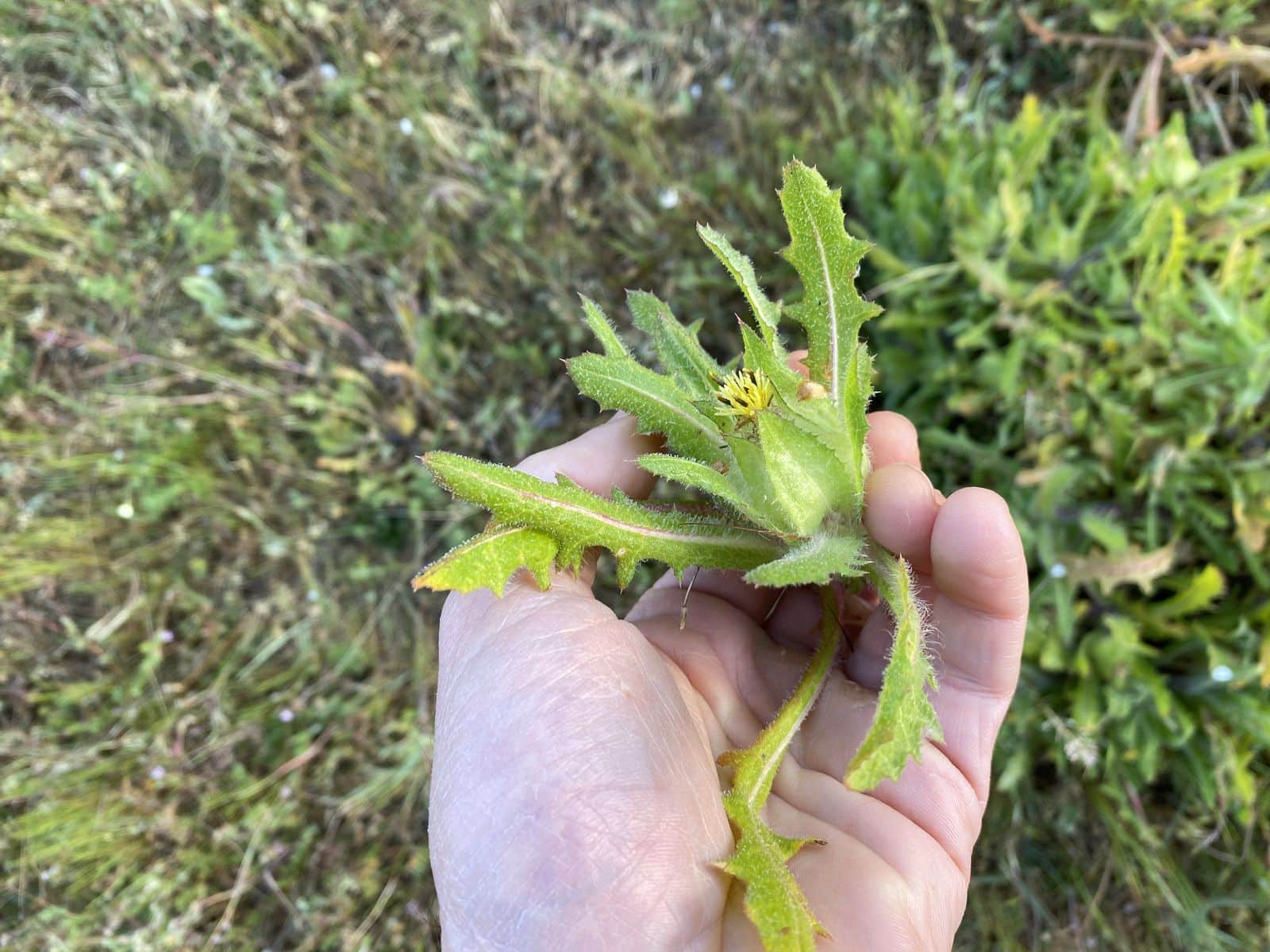
Let’s start with a bit of botany. Blessed thistle belongs to the large Asteraceae family. Its Latin name is Cnicus benedictus or Centaurea benedicta. In French, it’s also called blessed centaury or “sweating centaury”… because it is a diaphoretic herb, it “makes you sweat” during a fever, and we’ll come back to that in a few minutes.
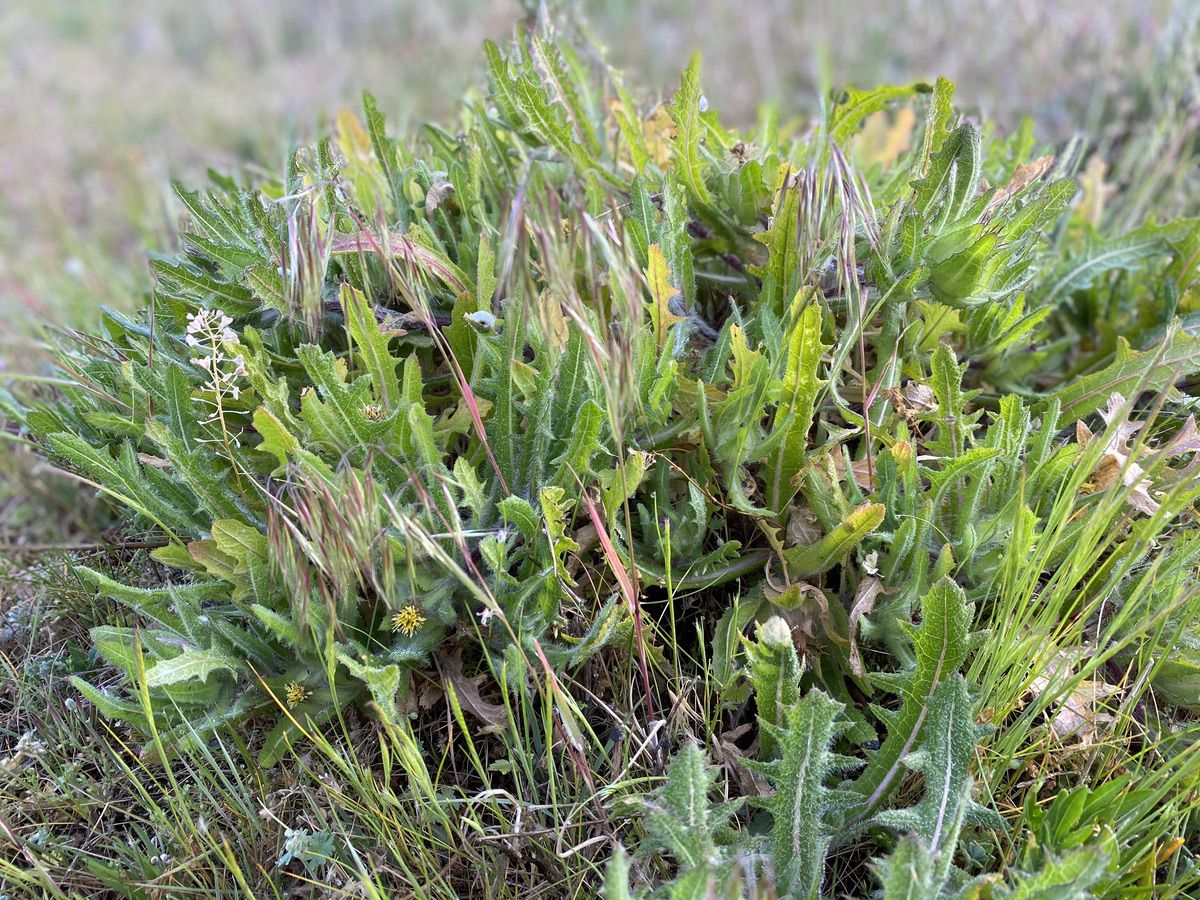
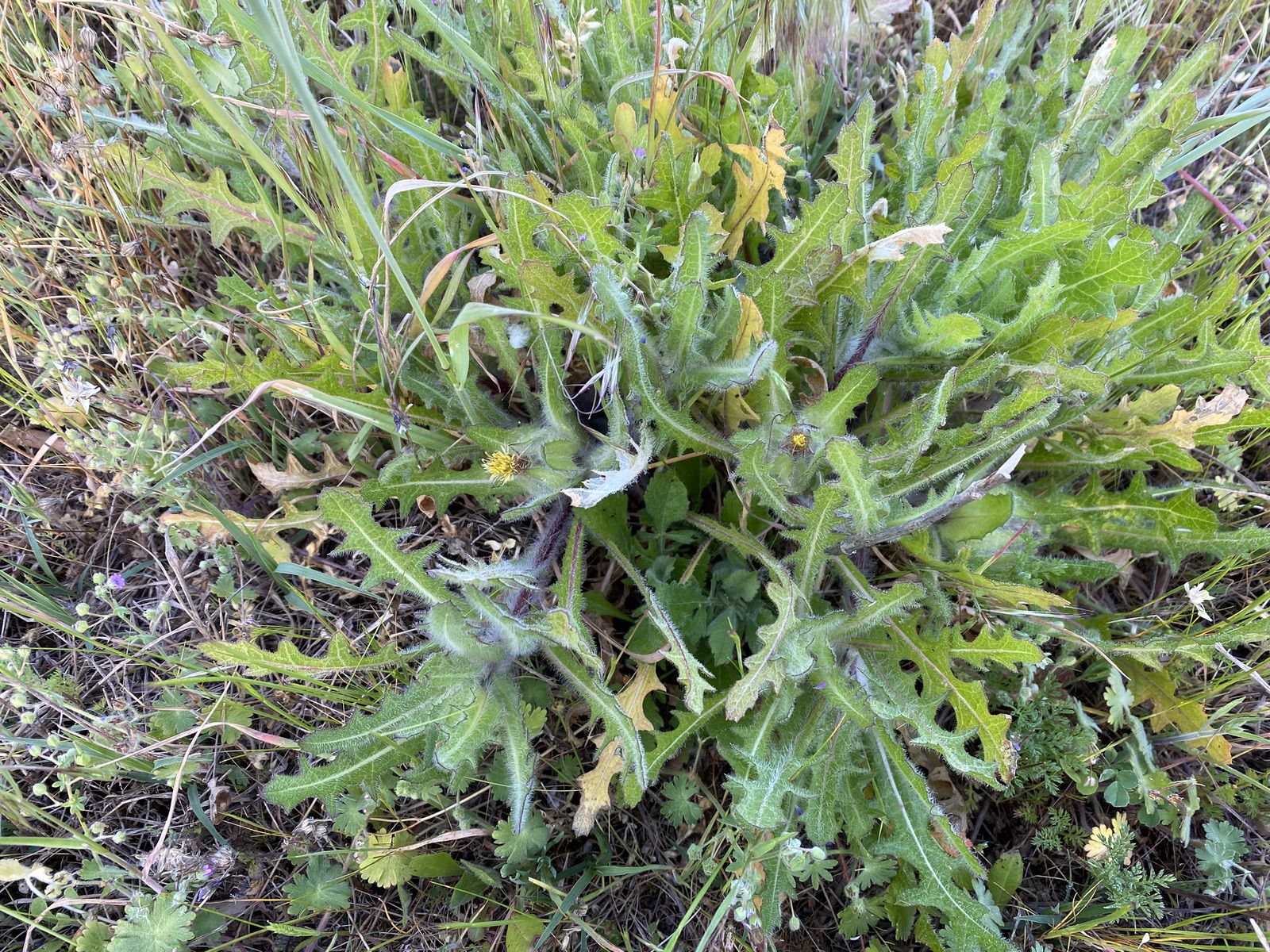
It’s an annual plant from the Mediterranean region. Where I live, I find it in dry, sandy, poor soils. It tolerates drought really well. It usually grows low to the ground. Sometimes it’s small, sometimes you’ll find big specimens with a diameter of 20 inches (50 cm) or more.
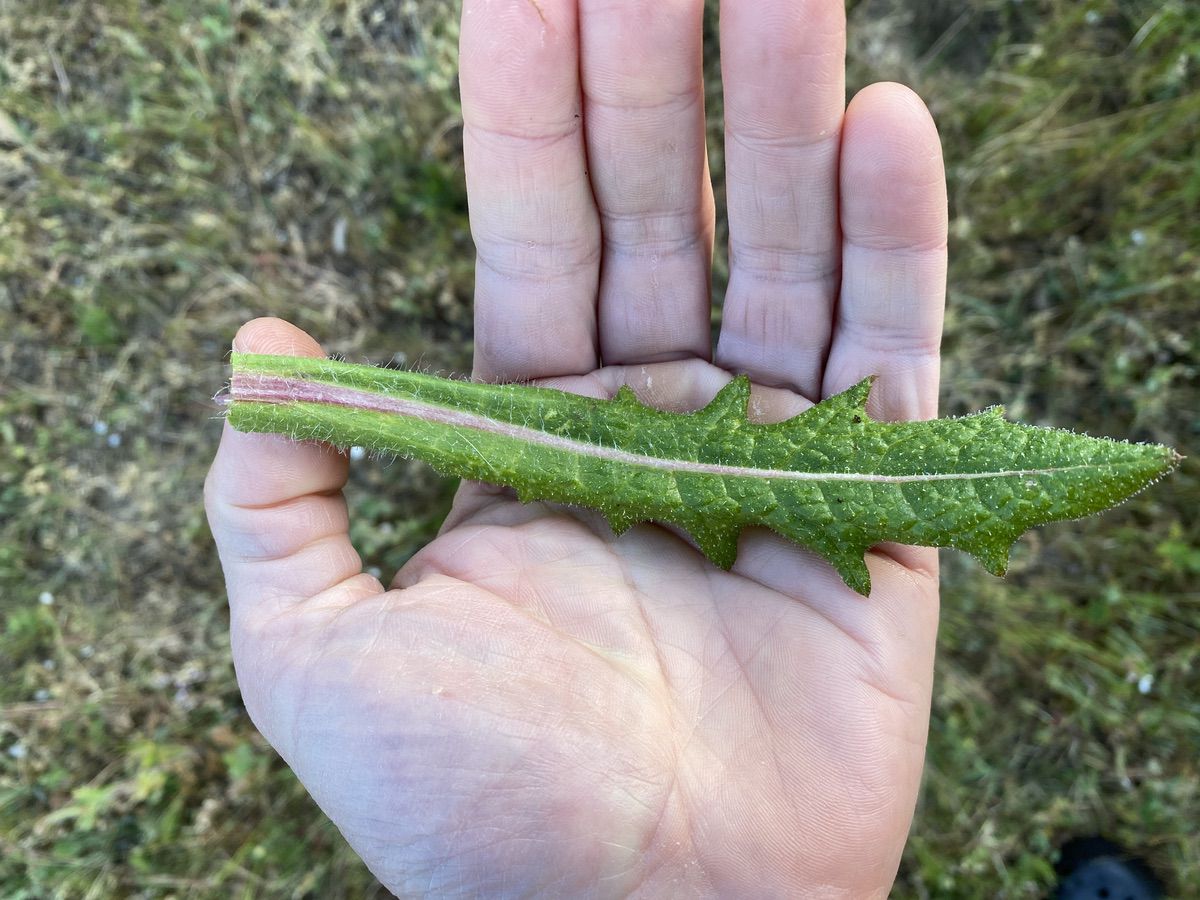
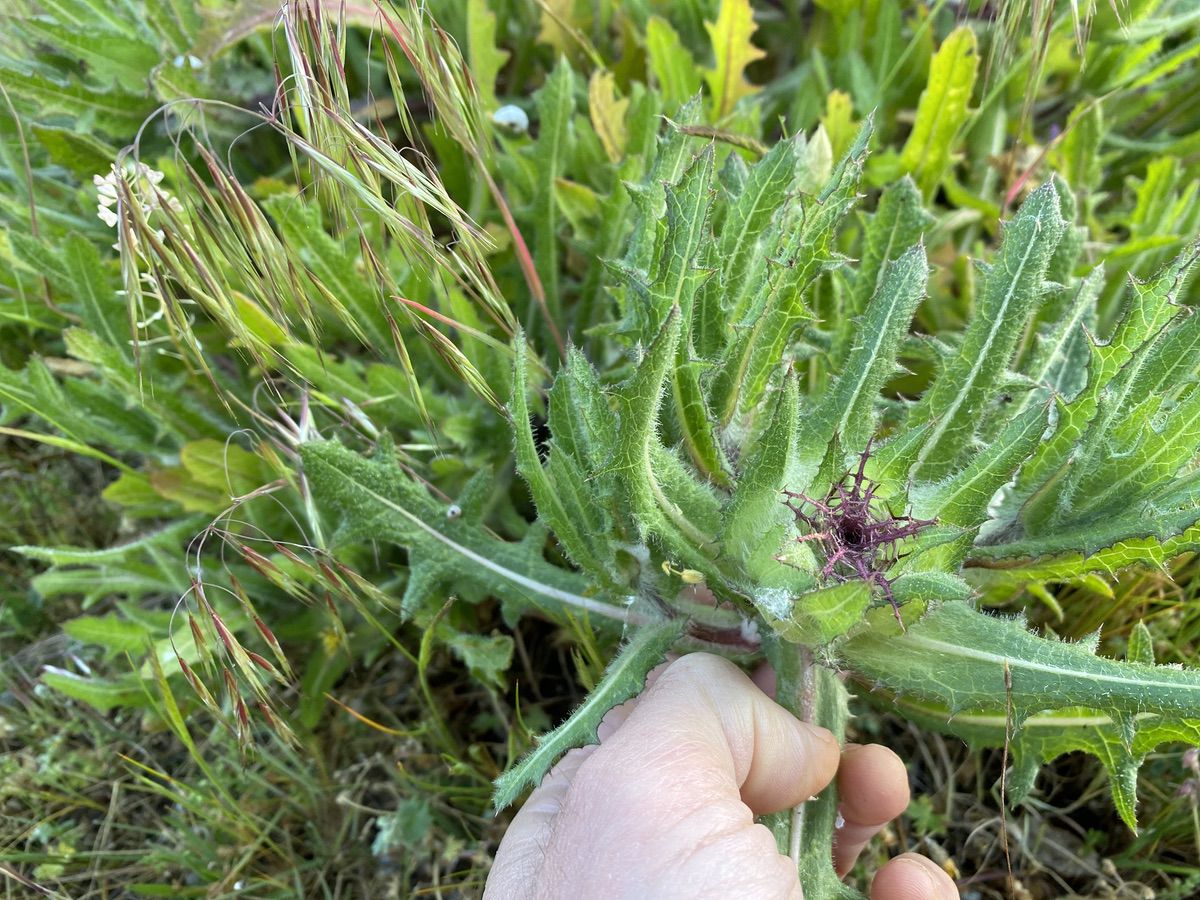
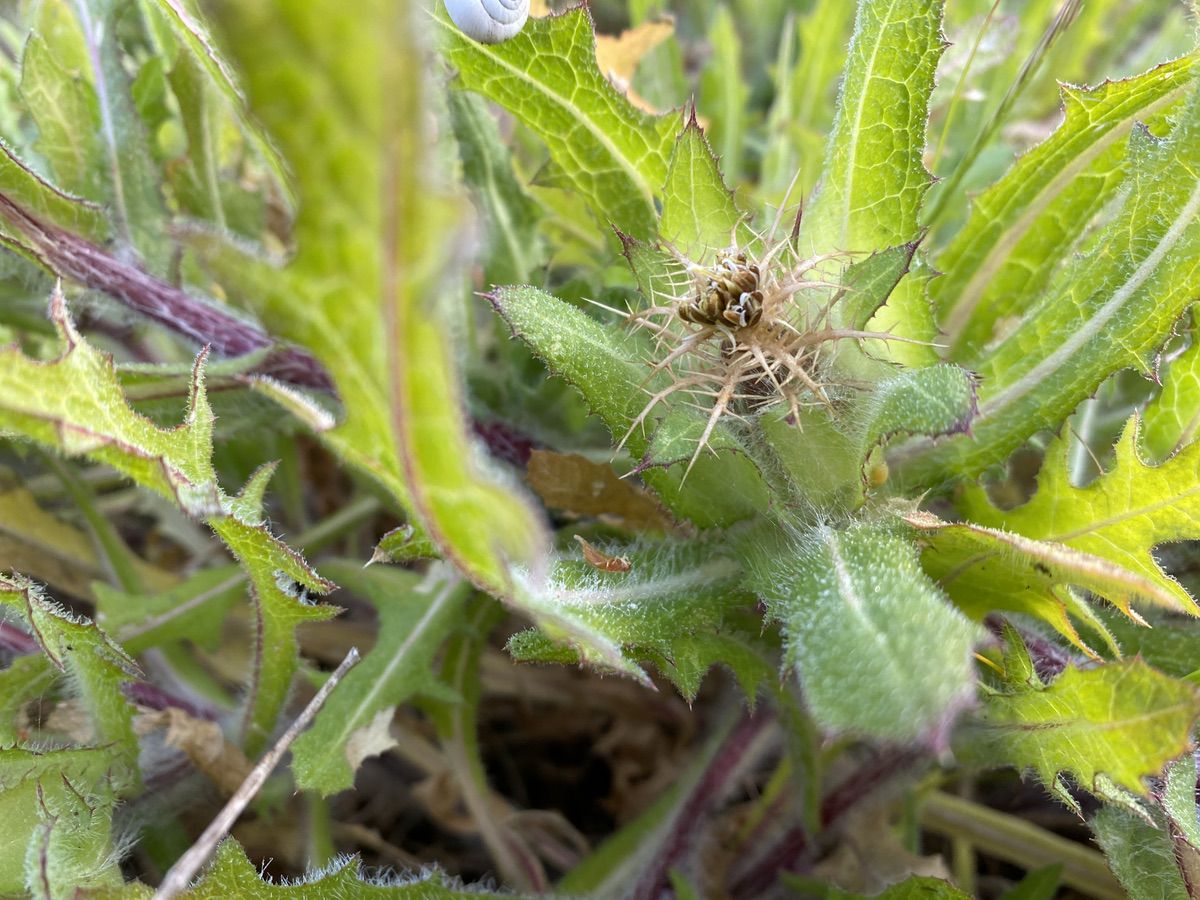
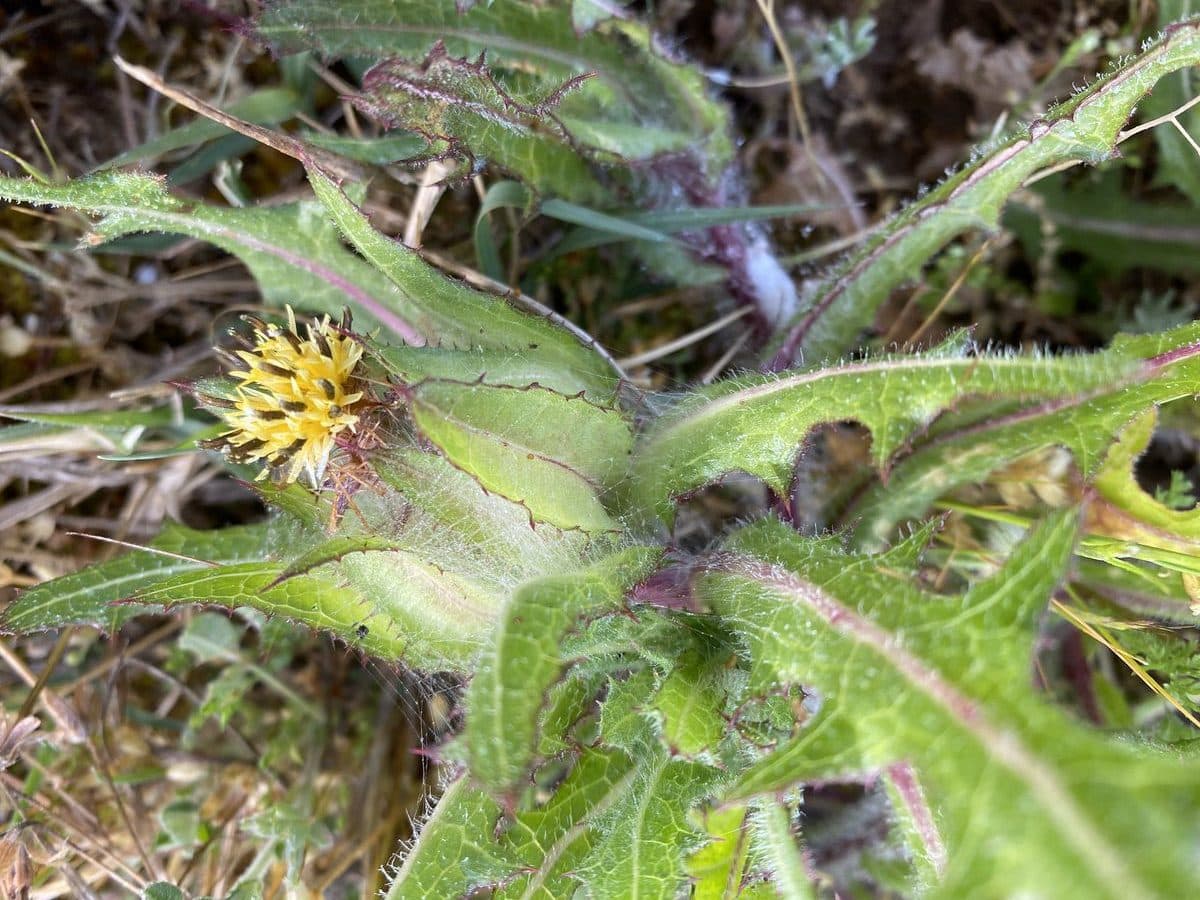
It has a woolly look, with lots of little hairs. The leaves are pale green, covered in white hairs, with spiny teeth along the edges. They also have white veins. The stems and the central vein of the leaves, on the other hand, are reddish. You can see all of that on the video version of this episode.
The flowers are yellow, tiny and tubular, and arranged in a flower head. The bracts are sharp and prickly, so be careful when harvesting. The plant usually flowers from April to June or July.
In terms of harvesting, we use all the aerial parts of blessed thistle. If you harvest with respect for the plant, you’ll only take a small part of it, so it has time to finish its life cycle and drop its seeds, and we can keep enjoying it year after year.
All the parts above ground are useful: leaves, flowers, stems. In general, we wait until the plant starts flowering to harvest—that’s the optimal time. But honestly, I’ve sometimes harvested later, after the first flowers, when I needed it. I’m pretty down-to-earth when it comes to plants, and I like harvesting fresh, based on actual need, rather than harvesting at the optimal time, drying it, and then using it much later. But that’s just me.
You dry the plant flat on a rack. It’s pretty bulky because of all the hairs. Once dry, you can cut it into pieces and store it in paper bags. Be careful though—once dry, those little hairs break off and can become irritating.
If we look at the historical uses of blessed thistle and stick to what Paul-Victor Fournier, this great French botanist and herbalist, says in his Dictionary of Medicinal Plants, there’s not much use during antiquity or the Middle Ages. Its reputation really took off later, in the 16th century, and that’s when blessed thistle became very popular. It was almost seen as a panacea.
And I think that’s probably due to its diaphoretic properties—it was used to support fevers, at a time when infections were extremely common, and a good, healthy fever was key to the resolution of the infection and healing. Then there was something called “intermittent fevers,” caused by malaria, which was present in France back then, in all the swampy areas. To support these fevers and help the person, many very bitter plants were used—from quinine bark to blessed thistle, gentian, and others.
Then, starting in the 19th century, interest dropped sharply in the medical world with the rise of pharmaceuticals. The plant stayed rooted in folk tradition and kept a solid place in herbal shops in the early 1900s.
In terms of constituents, we have :
The energetics of the plant: cooling and drying. Cooling because it’s bitter, and drying because it is a choleretic and diuretic, it stimulates the evacuation of fluids and waste products.
OK, let’s move on to its medicinal properties.
Today, honestly, it’s one of those forgotten medicinal plants. I don’t know if you hear about blessed thistle very often—it’s pretty rare. One of its main characteristics is that it’s bitter. And I know I’ve already talked to you about bitterness in my episode on gentian. Well, guess what? I’m going to do it again, because it’s a super important concept.
It’s very likely that humans evolved in a world full of bitter flavors. Many wild plants are bitter. Today, we’ve forgotten that because we took plants that were originally wild and crossbred them over and over to make them bigger, prettier, and more productive—all at the expense of flavor, nutrients, and medicinal properties. Even endives aren’t very bitter anymore.
This bitter taste has a very strong and very specific effect on the whole digestive tract. It’s a tonic effect. That’s why these plants are called bitter tonics. When we take bitters a few minutes before a meal or at the very beginning of a meal, our digestive organs start secreting more digestive juices—starting in the mouth with better saliva production, then in the stomach, liver, pancreas, and small intestine.
On top of that, the smooth muscles of all the digestive organs contract better and massage the food and the digestive enzymes more efficiently. This overall digestive stimulation is really welcome, especially at a time when we see so many cases of weak, sluggish digestion.
Don’t think bitter tonics are miraculous or that they work instantly. Yes, there’s a fairly immediate effect—but there’s also a deep, long-term effect, like with all tonics. A real rebuilding of digestive function. So you need to be patient and give those bitters time. Take them for several weeks if needed, even several months for long-standing conditions.
Another action of bitters is a cleansing, detox effect. Many natural poisons are bitter. So we think that as soon as something very bitter hits our taste buds, a signal is sent to the brain saying something like: “Warning, potential toxin—let’s metabolize this as efficiently as possible.”
As a result, liver and kidney functions get activated. These plants have a draining energetic effect in the sense that they drain toxic waste out of the body, through bile excretion, ending up in the stool (at least the portion that is not reabsorbed), through the kidneys, ending up in urine. A well-known effect of strongly diuretic plants, for instance, is to help us eliminate uric acid.
So here, we have both choleretic and diuretic properties. Bitterness is responsible for the choleretic part.
And just to be clear, we have lots of bitters in our herbal toolbox. But blessed thistle, no one talks about it anymore. Forgotten. We’ve leaned on other bitters like artichoke leaf, Roman chamomile or gentian, but it’s been at the expense of the richness of our materia medica.
Just because a plant is bitter doesn’t mean it’s interchangeable with another bitter plant. The chemical profiles can be completely different. Bitterness can come from alkaloids, like berberine in barberry; from iridoids, like in gentian; from diterpenes like in motherwort, or from sesquiterpene lactones, like in blessed thistle.
We need to preserve all this diversity of bitters. It’s essential if we want to keep our digestive and elimination systems in optimal shape. And I’m not saying you need to eat bitters every day—not necessarily. Although I am tempted to give you that piece of advice. But if you are not used to it, your digestive tract may rebel at the beginning. So best is to start slow, use bitters from time to time, then ramp it up if you feel that it’s helping you.
And one last point: I mentioned that blessed thistle contains some flavolignans similar to what is found in milk thistle, that great liver protector. So we believe that it could help an inflamed liver. This has been demonstrated in animal models after all (Mohammed & al., 2024).
Let’s come back to the idea of the “bitter tonic” and look at what Paul-Victor Fournier says: “It is mainly used for general atony, lack of appetite, and weakness of the digestive tract.”
General atony means lack of tone—a state of fatigue. In the past, bitters were used to help a person return to an optimal state through better nutrition. You stimulate the parasympathetic nervous system, activate the whole “rest, repair, and nourish” axis, and at the same time, you slightly pull energy away from the sympathetic “fight or flight” stress axis. You get out of your head and back into your gut. That’s the energetic signature of bitters.
Let’s move on to another property and talk about the skin. The skin is essential for regulating internal heat. Pores open, sweat is produced, and that’s how we release excess heat. This process—sweating—is absolutely crucial during a fever.
In the past, one key category of plants was diaphoretic plants—plants that help us sweat better and exchange heat more efficiently during fevers. In old texts, you’ll see just how important this function was in supporting infections with fevers. We need to remember this ancient wisdom and bring it into modern practice.
And here, we need to make the distinction between a plant that actively provokes sweating, and a plant that gently lets sweating happen when the body needs it. Here is the difference. If you take a ginger tea, if you put enough ginger in the preparation, you will sweat whether you feel fine, or feverish, whether you are hot or cold. Enough ginger makes you actively sweat.
Blessed thistle and many other diaphoretics don’t do that. Take a peppermint tea, you won’t sweat. Take an elderflower tea, you won’t sweat. Same for a blessed thistle tea. Now, if you run a fever, if you’re body needs to evacuate heat, those diaphoretic plants will open up the pores of the skin to let sweating happen more freely. In the US, Eclectic doctors, in the 1800’s, used the terms “stimulant diaphoretic” for a ginger or cayenne pepper, compared to “relaxing diaphoretic” for a peppermint or lemon balm. There is a difference. Stimulant diaphoretics would be used for a fever that seems stuck and that is not high enough, thus blocking the healing process. Relaxing diaphoretics would be used for high fevers with fairly dry skin, to alow the sweating process to start.
And you know what I’m going to say: if there’s a fever, get a medical diagnosis first.
So to conclude on this point, blessed thistle would be called a “relaxing diaphoretic”.
Here’s a property I didn’t know about and discovered by digging into old texts. Blessed thistle is described as an expectorant. It’s recommended for chronic bronchial secretions, to help the lungs eliminate waste. Fournier mentions that it is useful at the end of a lung infection, when there’s shortness of breath, the person is having trouble regaining his or her lung capacity, and there is progression toward asthma.
In a more modern take, you could add it to a blend for allergies that affect the lungs, to clear and open up the respiratory tract. Plus, when there’s an allergic condition, there’s chronic production of inflammatory substances—and guess which organ is responsible for eliminating those? Yep, the liver—which we stimulate at the same time thanks to the bitterness of blessed thistle.
Dr. Leclerc talks about blessed thistle for joint pain. It seems the plant works by promoting the elimination of uric acid—so again, a draining and eliminative action, helping remove inflammatory substances.
That actually reminds me of other bitters used in the past for joint inflammation, like buckbean, also called bogbean (Menyanthes trifoliata). Very bitter, very draining, and potentially useful for clearing inflammatory waste from the joints.
For external use, as a tea, Fournier mentions it for ulcers and chilblains, and more generally for small wounds or healing issues.
Here’s another interesting use that has nothing to do with medicine. Fournier explains that blessed thistle leaves can replace hops in beer making. Apparently, after World War I, Germany—unable to import hops—started cultivating blessed thistle to brew beer. They eventually dropped the idea and went back to hops.
In terms of forms and quantities:
A few precautions:
And that’s it for this small, hairy, and completely forgotten plant. Thanks for listening, I will see you soon for the next episode of TheFrenchHerbal.
Tiwana, G., Fua, J., Lu, L., Cheesman, M., & ECock, C. (2021). A Review of the Traditional Uses, Medicinal Properties and Phytochemistry of Centaurea benedicta L.. Pharmacognosy Journal, 13, 798-812. https://doi.org/10.5530/pj.2021.13.102.
Sousa, O., Gonçalves, G., Queiroz, L., Ferreira, E., Santos, B., Filho, A., & Taranto, A. (2021). Cnicin from Centaurea benedicta L. is an active compound against skin inflammation in a mouse model. . https://doi.org/10.21203/rs.3.rs-1124507/v1.
Mohammed, M., & Kadhim, H. (2024). The hepatoprotective effects of the polyphenol-enriched n-butanol fraction of Cnicus benedictus against carbon tetrachloride-induced liver fibrosis in rats: In vivo study. Toxicology Reports, 14. https://doi.org/10.1016/j.toxrep.2024.101850.
Paul-Victor Fournier, “Dictionnaire des Plantes Médicinales et Vénéneuses de France”, 1947