Hey there, Christophe from TheFrenchHerbal.
If you have ever tasted very strong black tea, red wine, or an unripe fruit (like persimmon, for instance) and you felt your mouth suddenly go dry and rough, you have experienced tannins.
I wanted to do a video on tannins because way back when I studied plants, I was taught a few things that were incorrect based on what we know today. No blame on my teachers; they were great herbalists. But back then, we used to say things that sounded categorical. Like big tannin molecules do not penetrate in circulation, and small ones do. Well, not exactly.
Tannins are very useful plant constituents. We use them all the time. They play a big defensive role for the plant, and they play a big role in our natural pharmacy.
So, if you stay with me, in this episode, I’d like to take you through what I learned about tannins those last few years, things that are a lot more nuanced.
Sounds good? Well, let’s get started…
First of all, why do plants produce tannins? Is it to please us, to help us with our medical conditions?
Certainly not. They make those compounds as a defense mechanism.
As we will see later, tannins bind to proteins. Protein found in food, protein found in our own mucus. And they will precipitate those proteins. So they can interfere with the digestion of herbivores. Plants don’t like herbivores. And it is the same effect in omnivores too, by the way; we’ll have to come back to that in a few minutes.
So… when animals eat tannin-rich leaves or barks, the tannins will bind to digestive enzymes or dietary proteins, making the food much harder to digest.
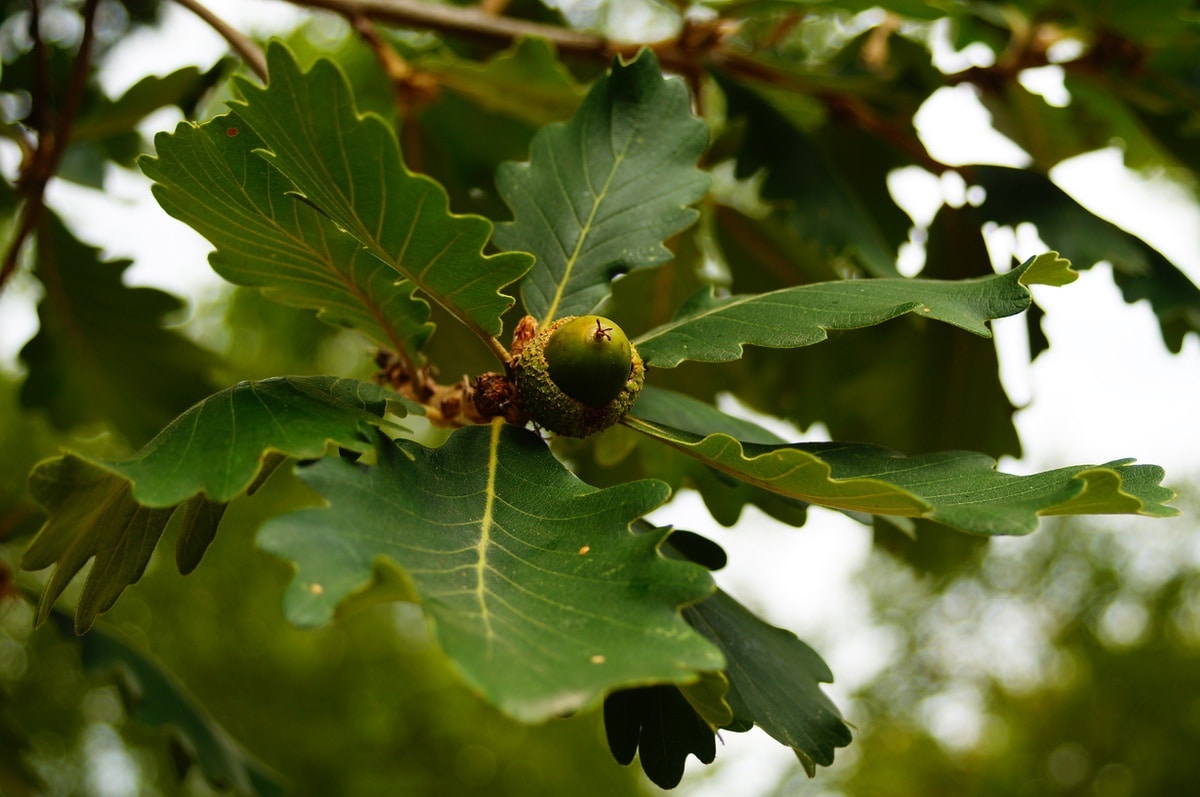
This reduces the nutritional value of the food and will discourage the herbivore from eating that plant. Animals will eat something else. In other words, tannins act as antinutrients in a lot of non-adapted mammals. Now, some species (e.g., goats and deer) are adapted; they produce special proteins in their saliva that bind tannins before they reach the gut, reducing their antinutrient effects.
You will find lots of tannins in unripe fruits, because the plant needs to protect it at this stage; the seeds are not mature yet. As the fruit matures, tannin levels usually decrease, making the fruit more palatable and encouraging animals to disperse the seeds. Pretty clever!
There is a famous study done in the 1980s on African acacias. That study has been kind of debunked, but still, I love that story. When giraffes start eating the leaves of one acacia plant, it will pump tannins into the leaves within 5 to 10 minutes. The damaged leaves will also release a gas that acts as an alarm signal to all the acacia trees nearby, and they will all pump tannins into their leaves, up to 200 to 400% more, as a protection. This is just fascinating, how plants communicate.
Tannins can also inhibit the growth of certain bacteria and fungi. They protect plants against pathogens. Some animals will take advantage of that. For instance, I had a discussion a while back with a herbal practitioner who specializes in herd animals. And he told me that the diversity of plants on the grazing field is directly linked to the ability of the animal to maintain a good health status. Logical, right? The more diverse the food, the better. Animals like goats will graze on barks rich in tannins to fend off certain infections. They know their plants, and they know when to reach for tannins, even though it is also an antinutrient. And these days, when farmers remove all trees and bushes on their field, you can guess what happens.
So in summary, tannins protect the plant against bacterial and fungal infection, but also against herbivores by acting as an antinutrient.
So what are tannins exactly?
They are a group of plant constituents, very common in the plant kingdom, belonging to the large family of polyphenols. Their main characteristic is their ability to bind to proteins. They attach themselves to protein and form complexes that become insoluble in fluids and precipitate.
They have a particular affinity for proline, an amino acid found in our saliva. And not just proline, tannins also interact with other salivary components like mucins. In the past, we thought this binding would precipitate the proteins, thus explaining the mouth-puckering effect. Imagine a layer of precipitate that coats the inside of your mouth and gives it this dry and rough texture.
But there is another hypothesis being explored, saying that tannins modify the lubricating properties of saliva without precipitation. That is still an active area of research.
In any case, the feeling is that there is no more lubrication and that there is tightening of the tissues. That is what we call astringency. Astringency is not a taste. Instead, it is a tactile sensation perceived in the mouth. And a quick reminder here: bitterness (found in gentian, for example) or sourness (found in lemon, for example) are not astringency! Astringency is different; do not confuse those three.
Anyway, so this feeling will go away after a while, but it gives you a feel for what will happen further down in your digestive tract. What happens in your mouth will also happen, to some extent, lower down in your gut. I say “to some extent” because the effect will change due to variations of pH, due to the action of digestive enzymes, and with the gut flora that will transform tannins. But there will be some astringency lower down as well.
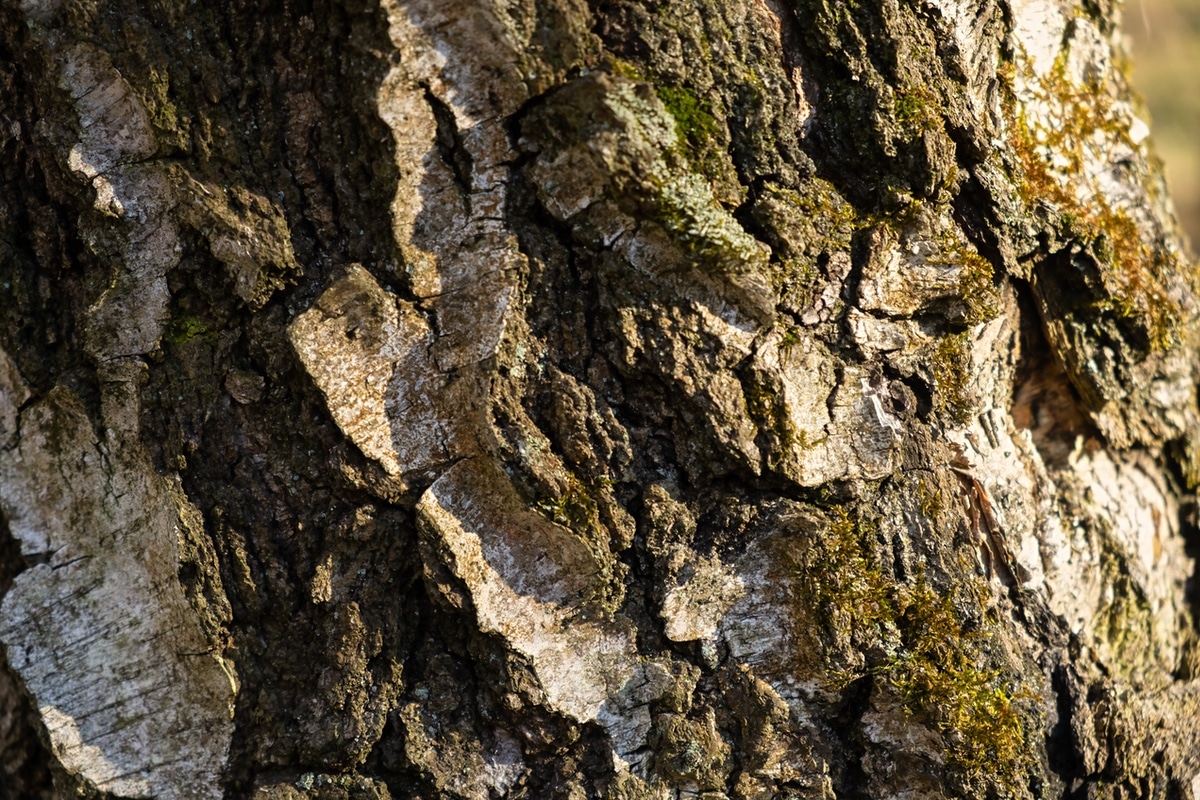
And tannins not only react with the proteins of our mucus and secretions. They also react with the proteins of our flesh, of our tissues. You see, the name “tannin” comes from the historical process of tanning leather to stabilize animal skins. Tannins bind strongly to collagen, the main protein in our tissues.
If you understand those two points, you understand a big part of their medicinal properties.
So, one more time:
They seal the tissues; they plug leaks, if you will. They tighten things up when they are too loose.
The binding is done mainly through the OH group of the tannin molecule, what we call the hydroxyl group. This OH group binds to the part of the proteins that contains the nitrogen element.
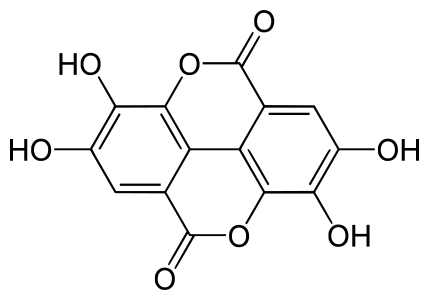
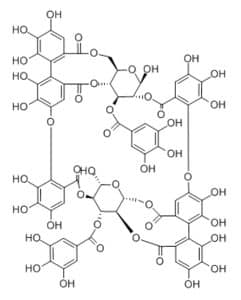
I will put a few pictures of tannins on my website so that you can see all those OH groups. Ellagic acid (which is a tannin) has 4 OH groups. But oenothein B (which is another tannin) has more than 20.
In my mind, I imagine an octopus. That is my tannin molecule. Each tentacle is a hydroxyl group. And it will grab the protein in mucus or in the tissues it is in contact with. As you can imagine, the more tentacles a tannin has, the more binding it will achieve. That is why large tannin molecules, with lots of hydroxyl groups, will be more astringent.
 |
 |
|---|
There is more to this, though. Sorry, but when we try to simplify nature, we take shortcuts, which means it can also be oversimplistic. For tannins, there is also a matter of the flexibility of the molecule and the type of bonds it has.
But hey, let’s relax a bit. We don’t need to geek out too much on the flexibility and number of OH groups to understand tannins and the astringency of plants (which I’ve kind of been doing for a few minutes now, I realize). There is a much simpler way. Just feel it in your mouth. The more mouth puckering you feel, the more astringent it is. Again, go find that unripe persimmon and drop me a comment.
That being said, if you are curious and you want to understand a bit of the plant chemistry, then look up the major tannins and see how big that octopus is and how many tentacles it has.
Alright, here is another important fact. Tannins are primarily divided into two families: hydrolysable and condensed tannins. Other types exist, such as phlorotannins in brown algae, but let’s keep it simple and talk about the two largest groups.
The first group is called hydrolysable tannins.
These tannin molecules are big, and they are built around a central sugar molecule, usually glucose, to which several phenolic acids are attached. When they are hydrolyzed by our digestive tract, in other words, when the bonds between glucose and phenolic acids are broken, they release smaller molecules.
Here are two very well-known hydrolysable tannins:
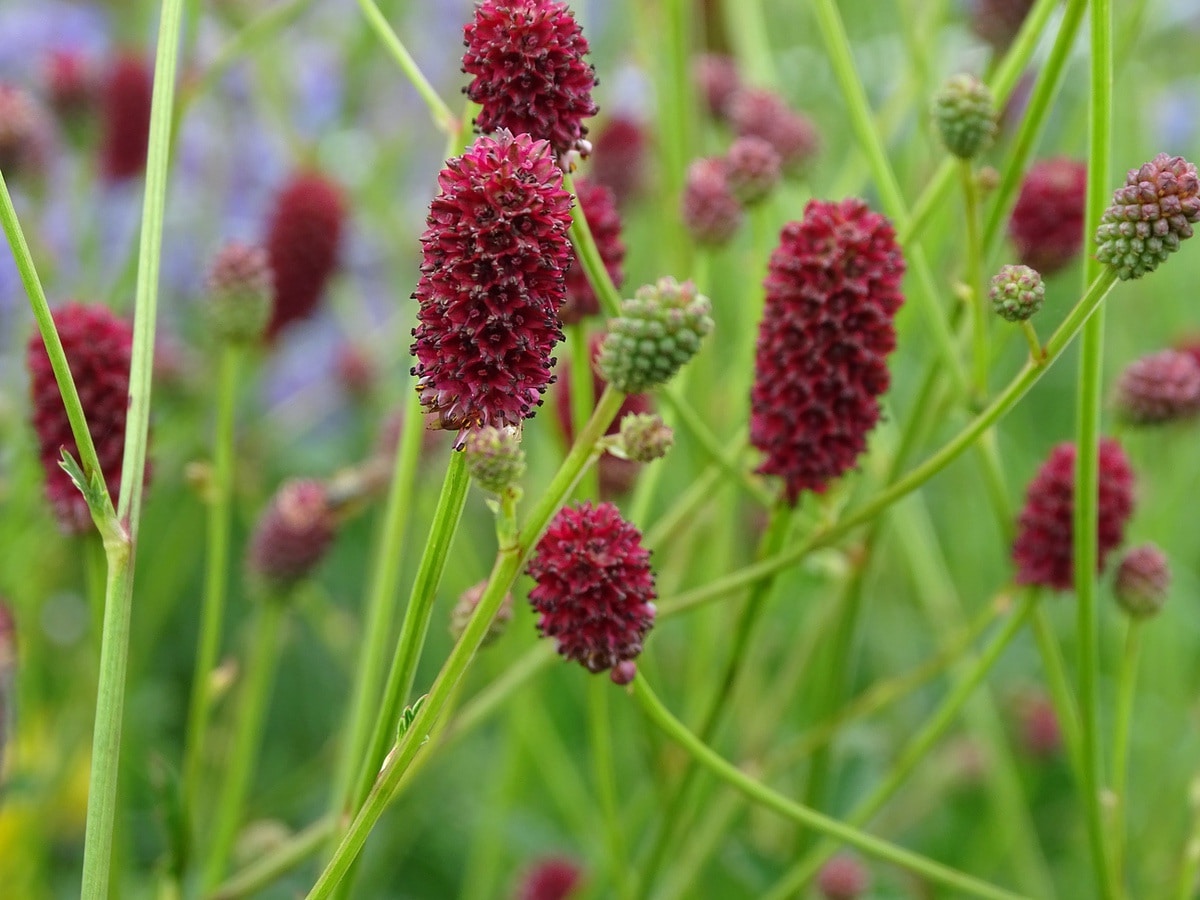
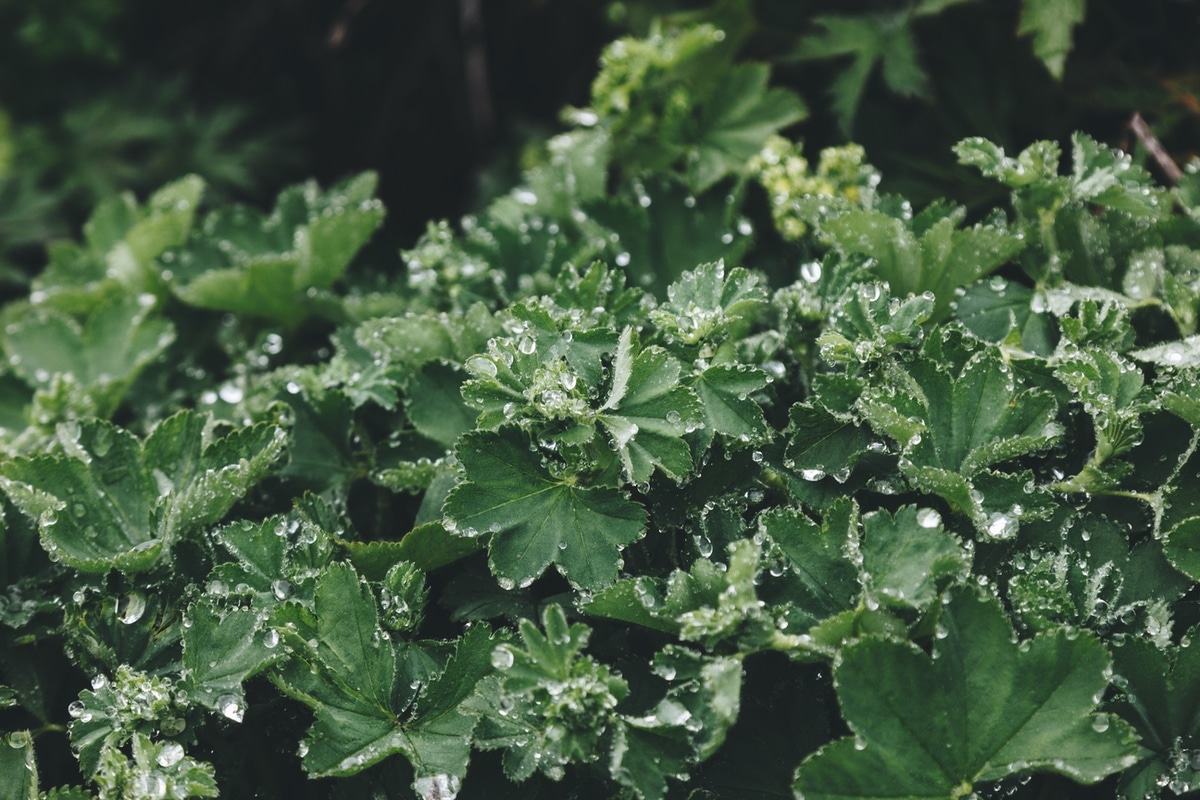
Hydrolysable tannins are found in plants such as oak, witch hazel, pomegranate, great burnet, etc.
The second group is called condensed tannins, also known as proanthocyanidins (or PACs).
These compounds are made of chains of flavonoid units. Unlike hydrolyzable tannins, they are more resistant to degradation and cannot be easily broken down by hydrolysis in our digestive process.
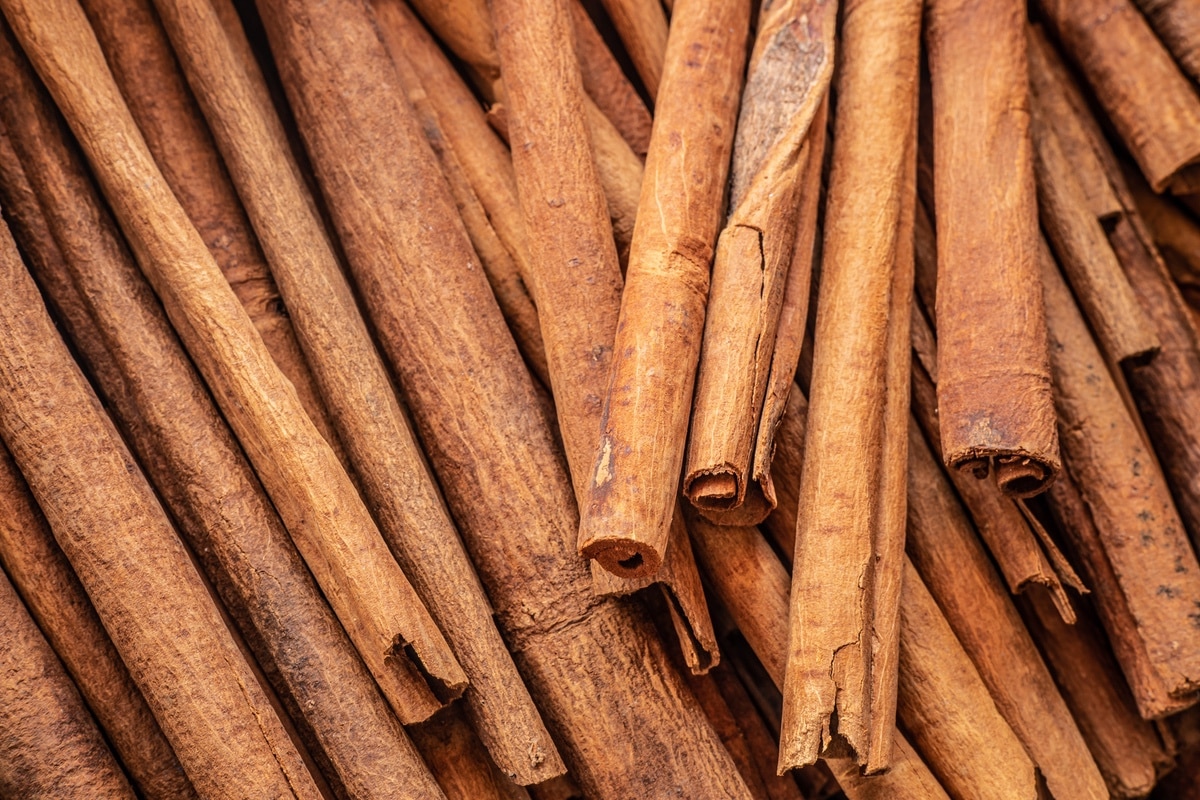
Condensed tannins are very widespread in the plant kingdom. They occur in grape seeds, cacao, many tree barks including cinnamon, hawthorn, tea, cranberry, and many other plants.
Which brings us to the medicinal properties of tannins. Finally, yeay!
When tannins come into contact with tissues or mucous membranes, they will :
Because of these effects, tannin-rich plants have traditionally been used to support:
In certain cases (like inflammation of the mouth or diarrhea), the beneficial effects are mainly local, meaning they occur directly where the tannins are applied to the tissue. But some tannins can also be metabolized by our gut and penetrate circulation (in other words, they can be absorbed by the intestinal tract). If the metabolites can penetrate circulation, they will also be beneficial on certain tissues like arteries and veins, which explains the effect on bleeding, venous insufficiencies, vaginal discharges, etc.
So then, what type of tannins will lead to absorption in the gut and a systemic effect and benefits on the vascular system?
Well, large tannin molecules, if they remain whole, have limited absorption in the intestinal tract. They are just too big. I was taught that hydrolyzable tannins, because they are big, do not penetrate the blood. However, several processes take place during digestion. Hydrolysable tannins will break down into smaller compounds such as gallic acid or ellagic acid.
Gallic acid can be directly absorbed and have systemic effects. Ellagic acid, on the other hand, is weakly absorbed. However, the gut bacteria can transform ellagic acid into molecules called urolithins, which have been detected in human blood after consumption of certain foods such as pomegranate. Amazing, right? When the gut cannot do the job, the microbiome will provide a little help.
Condensed tannins (the proanthocyanidins) are also metabolized by gut bacteria into smaller compounds (with names I am unable to pronounce, like phenyl-γ-valerolactones) which may contribute to a systemic effect (e.g., vascular health).
Therefore, while many tannins act locally in the digestive tract, some of their metabolites will also produce systemic effects. I insist on this point because to this date, some people keep repeating the fact that tannins are too big to be absorbed, which is simply not true. Actually, it seems that any tannins will be broken down to smaller stuff that will go inside to some extent. Sure, some more than others. Proanthocyanidins are known for their beneficial effects on the vascular system. But do not underestimate plants rich in hydrolyzable tannins.
Here is an important point, at least to me as a practitioner: the more tannin a plant contains, the less subtle its effect will be. At one extreme, you could use oak galls, which can contain more than 50% tannins in dry weight. And by the way, oak galls were given internally in the past, but not anymore; they are just way too high in tannin content; there is toxicity associated.
Other plants are very tannic. Like herb-robert (which is a type of geranium), witch hazel, oak bark, pomegranate peel, etc. These plants would be useful for tissues that are very flaccid and so red and inflamed that they lost their integrity, their structure. They are red, puffy, and leaky.
On the other hand, if you had a small to moderate inflammation, be it in the mouth, throat, or intestinal tract, a mildly astringent plant will be much better suited for the situation. Much more elegant. Or maybe mixing the astringent plant with some aromatics or something else depending on the objective. Sometimes, a mucosal inflammation will respond better to soothing mucilages than to the astringency of tannins.
Basically, the more a tissue is inflamed and has lost its integrity, with lots of fluid leakage, the more astringency you would look for. In other cases, go easy with tannins.
Alright, let’s finish with some safety considerations. Although tannins are natural compounds widely present in foods and plants, excessive consumption can have some drawbacks.
The first one is that they will interfere with nutrient absorption, supplements, and drug absorption. Tannins can reduce absorption of minerals like iron (so careful if anemia and iron deficiency) and they interact strongly with alkaloid-type drugs (e.g., quinine, ephedrine), although they could also interact with other types of medications. So separate tannin-rich preparations from meals and medications by at least 2 hours.
With tannins, more is not better. At some point, the person will get nauseated and will have some gut discomfort if the preparation is too tannic. Again, a little tannin, combined with other plant constituents, can go a long way, unless the situation calls for a strongly tannic preparation, which would usually be taken in the short term.
And by the way, if you are an herbalist, you might be wondering… did he forget to mention that thing with alkaloids, the thing where if you mix tannins with alkaloids, a big sludge will appear at the bottom of the jar… Or not? This will be the subject of my next episode, which will be fairly short, but I will shed some light on that phenomenon.
Well, that’s it, folks. I hope you found those explanations useful for your herbal practice. Thanks for being here, I will see you very soon for the next episode of TheFrenchHerbal!